Botanical family
Asteraceae
Description
Botanical characteristics
The Asteraceae are predominantly annual or perennial herbaceous plants, although in some tropical areas there are woody species, often subshrubs. They can appear with a caulescent or scapose habit, that is with well-developed stems or with a reduced stem and leaves arranged in basal rosettes.
The leaves are generally simple and arranged alternately along the stem, more rarely opposite, and sometimes gathered in basal rosettes or, more rarely, apical ones.
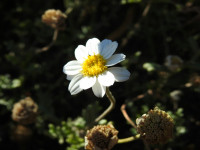
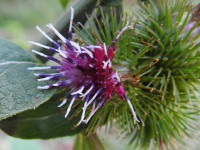
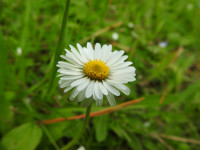
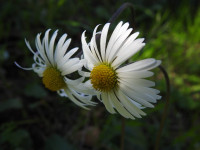
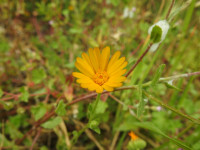
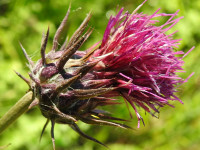
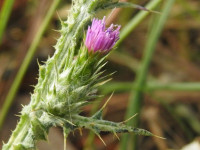
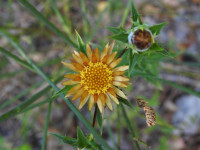
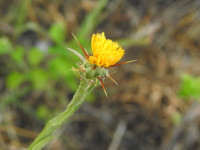
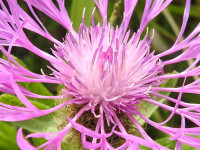
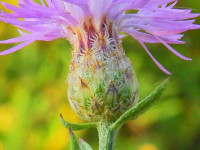
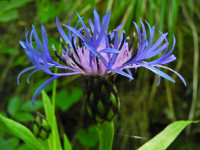
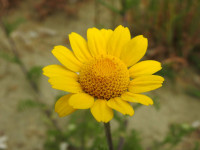
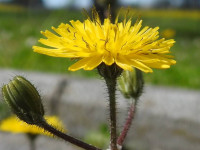
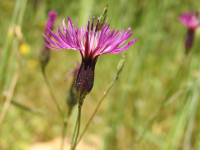
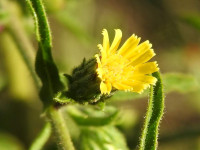
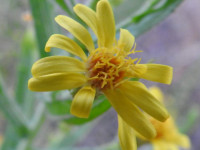
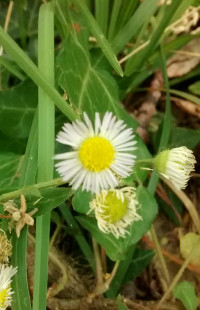
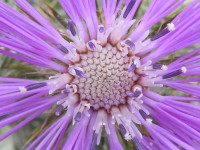
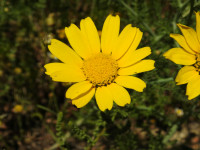
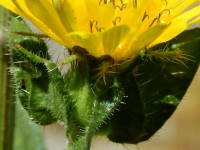
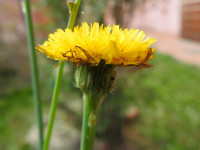
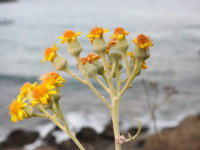
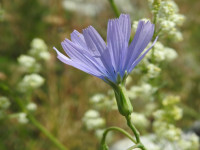
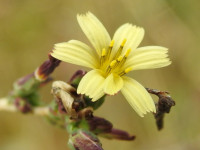
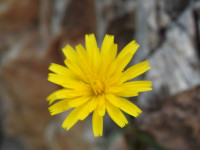
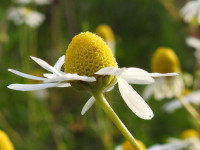
The most distinctive feature of the family is the particular inflorescence called a head (or “capitulum”), which can be solitary or aggregated in more complex groups such as panicles or umbels of heads. The head is made up of numerous small flowers called florets, which can be of two types: tubular florets, with a radially symmetrical (actinomorphic) corolla and five lobes, and ligulate florets, with bilateral symmetry (zygomorphic) and a corolla shaped like a ligule, fused and with 3-5 lobes.
The calyx is generally transformed into a pappus, a structure of hairs, bristles or scales, which facilitates fruit dispersal. In some cases the pappus is absent.
The androecium consists of five epipetalous stamens (attached to the corolla), with anthers fused to form a tube surrounding the stigma. The ovary is inferior, bicarpellary and unilocular, with a single ovule per carpel.
The fruit is an achene called a cypsela, often equipped with a pappus that facilitates dispersal by wind.
Distribution and diversity
The family has a cosmopolitan distribution, present in all temperate and tropical regions of the world, with particular abundance in the Americas, Europe, Africa and Asia. It is widespread in Italy, where numerous spontaneous species belong to this family.
The Asteraceae are the angiosperm family with the greatest number of species: it includes about 1715 genera and over 23,000 species worldwide.
The origin of the family has been identified in South America, where the most ancestral groups are found. From there, between the Paleocene and Eocene (about 42-60 million years ago), they spread to other continents, giving rise to the extraordinary current biodiversity.
Main genera and representative species
Among the most important and well-known genera of Asteraceae are:
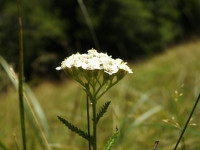
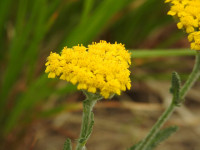
- Achillea, with species such as Achillea millefolium (yarrow), common in Europe and Italy, often with heads gathered in umbels.
- Artemisia, which includes medicinal species such as wormwood (Artemisia absinthium).
- Cynara, including the artichoke (Cynara cardunculus subsp. scolymus) and thistle.
- Helianthus, with the sunflower (Helianthus annuus), cultivated for seeds and oil.
- Taraxacum, with dandelion (Taraxacum officinale), a very widespread wild plant.
- Lactuca, which includes lettuce (Lactuca sativa), a cultivated species.
- Cichorium, with chicory and radicchio.
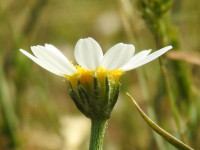
- Matricaria and Anthemis, with chamomile species.
- Tanacetum, such as pyrethrum, used for insecticides.
- Calendula, with pot marigold.
These genera include both wild plants typical of the Italian flora and species of cultivated or medicinal interest.
Etymology
The name “Asteraceae” derives from the genus Aster, whose name means “star” in Greek, referring to the typical star-shaped form of the heads. The alternative name “Compositae” refers to the composition of the head inflorescence, which is actually a compact group of many small flowers, often mistaken for a single flower.
Curiosities and uses
The Asteraceae are of great ecological and economic importance. They are fundamental for many ecosystems as a source of nectar and pollen for pollinators, especially insects.
Many species are cultivated for food use, such as lettuce, radicchio, chicory, artichoke, sunflower and Jerusalem artichoke. Others have medicinal and pharmaceutical uses, such as chamomile, arnica and calendula. Some species are exploited for the production of natural substances, such as pyrethrum for insecticides or safflower for dyes.
Furthermore, some Asteraceae are appreciated as ornamental plants for the beauty and variety of their heads.
Sources
- Wikipedia
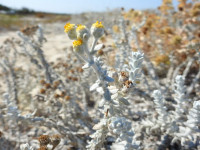
Species of the family
61 species catalogued · Page 1 of 2

Explore
Other botanical families