Botanical family
Asparagaceae
Description
Botanical characteristics
Plants belonging to the family Asparagaceae are monocotyledonous angiosperms, characterized by a remarkable variety of forms and adaptations. The typical habit ranges from herbaceous to shrubby and sometimes arboreal, with species that can appear as perennial rhizomatous or bulbous plants. The leaves are generally simple, often lanceolate or linear, and can be arranged alternately or basally, with entire margins; in many species they are coriaceous or succulent, a feature that favors adaptation to arid or semi-arid climates.
The flowers are usually hermaphroditic, with a perianth formed by tepals (not distinguishable into sepals and petals) that can be free or partially fused, often arranged in raceme or umbel inflorescences. The floral structure is generally trimerous, typical of monocotyledons. The fruits are mostly berries or capsules containing seeds variable in shape and size.
A distinctive characteristic of the family is the great morphological heterogeneity due to the inclusion of different groups previously classified in separate families such as Liliaceae. The recent classification, which considers the family in a broad sense (sensu lato), includes groups with very different characteristics, but united by phylogenetic relationships confirmed by molecular studies.
Distribution and diversity
The family has a cosmopolitan distribution, with species present in many regions of the world, especially in temperate and subtropical zones. It is particularly represented in the Americas, Africa, Eurasia, and Australia. The Asparagaceae include a high number of genera, about 114, and over 2900 species, distributed in seven main subfamilies.
This wide diversity reflects a broad range of habitats, from deserts to humid forests, to grasslands and mountainous areas. The family is also present in the Mediterranean area, with several spontaneous species in Italy.
Main genera and representative species
Among the most important genera is Asparagus, which includes well-known species such as the common asparagus (Asparagus officinalis), widely cultivated and consumed as a vegetable. Other notable genera are Agave, with succulent plants typical of arid regions, and Yucca, known for its stiff and pointed leaves.
In Italy, species of Asparagus are mainly present, but also of Dracaena (although rarer and often cultivated as ornamental), Convallaria (with the well-known lily of the valley), Polygonatum, and several species of Ruscus (such as butcher's broom). The subfamily Scilloideae includes bulbous genera such as Hyacinthoides and Scilla, frequently observed in the spontaneous Mediterranean flora.
Etymology
The name of the family derives from the type genus Asparagus, whose name comes from the Greek "asparagos", which indicated the plant known since antiquity, mainly used for horticulture and food.
Curiosities and uses
Numerous species of the family have significant economic and cultural value. Asparagus officinalis is a horticultural crop appreciated worldwide for its edible shoots. Some species of Agave are used in the production of fibers, alcoholic beverages (such as tequila), and sweeteners.
Many genera have an important ornamental role, such as Yucca, Hosta, and Dracaena, valued for their decorative appearance and resistance. In the ecological field, Asparagaceae contribute to the plant biodiversity of various ecosystems, providing habitat and food resources for insects and other animals.
Sources
- Wikipedia
Species of the family
7 species catalogued

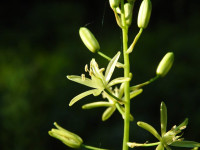
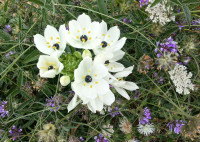
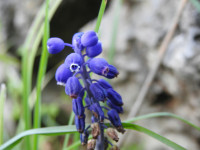
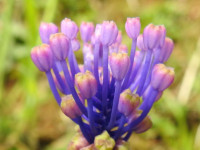
Explore
Other botanical families