Botanical species
Glebionis coronaria
(L.) Spach
Crowndaisy
Description
Morphological description
Annual herbaceous plant 20 to 60 cm tall, with an erect and very branched habit. The stem is glabrous, that is hairless, and has an ascending and scapose appearance, with numerous branches that give the plant a dense and articulated structure. The emitted odor is intense and aromatic, a distinctive characteristic of the species.
The leaves are light green, sessile and bipinnatipartite, that is divided into lanceolate lobes which in turn divide into smaller often toothed lobes. The lower leaves are larger and pinnatifid, while the upper ones tend to be narrower, oblong-lanceolate, sometimes clasping the stem and with toothed or entire margins.
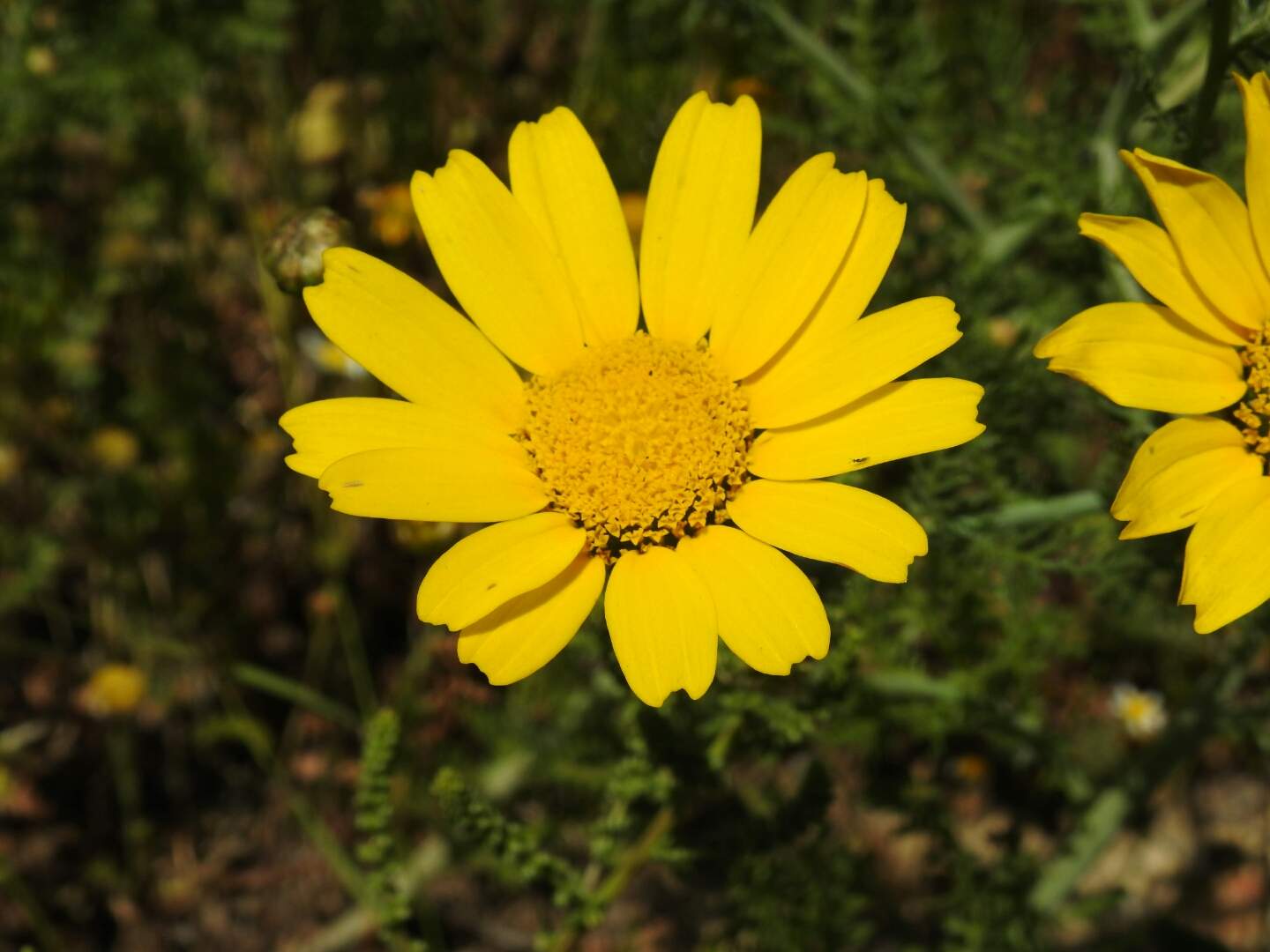
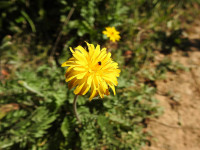
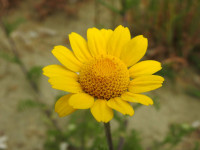
The inflorescence consists of solitary heads, varying in size from 30 to 50 mm in diameter, placed at the apex of the peduncles, which are thickened towards the end. The heads have a crown of ligules (peripheral flowers) of intense yellow or yellow-white color, sometimes with partial orange shades. In the center there is a disc composed of numerous tubular florets of yellow-orange color. The scales of the involucre (modified calyx) are oval and often characterized by blackish edges.
The fruits are achenes 2-3 mm long; those derived from the outer (ray) flowers are clearly trigonous with winged angles, while those of the disc are compressed, with four angles and a more pronounced posterior ridge. No pappus or specialized dispersal structures are present.
The root system is not described in detail in the sources, but since it is an annual species common in disturbed habitats, a taproot or fibrous root system can be assumed, suitable for rapid establishment in light and well-drained soils.
Habitat and distribution
It is a typically Mediterranean species, classified as Steno-Mediterranean, with distribution limited to the coastal areas of the Mediterranean basin, also known as an entity of the “Olive area”. In Italy it grows mainly from the plain up to 600 meters altitude, in anthropized environments such as cultivated fields, uncultivated lands, road edges, ruins and areas exposed to full sun.
It prefers well-drained and sunny soils, often disturbed by agricultural activity, where it behaves as a weed species. Its presence is frequent especially in regions with Mediterranean climate, with extension also in the coastal areas of Southern Europe, North Africa and the Middle East.
Flowering period
Flowering occurs from April to August, with greater abundance during the summer months. The period may vary slightly depending on altitude and latitude, but in general the species is visible in flower from late spring until the end of summer.
Ecology and pollination
The species is pollinated by pollinating insects, attracted by the bright color of its flowers and the aromatic scent. The structure of the head, with peripheral ligulate flowers and central tubular ones, is typical of Asteraceae and favors entomophilous pollination. No particular pollination strategies other than normal insect visits are reported.
Seed dispersal occurs mainly by natural fall of the achenes, which do not have winged or feathery structures for aerial transport. Probably human activity and animal passage also contribute to the spread of seeds in agricultural and uncultivated soils.
Curiosities and traditional uses
Known for a long time as a weed of Mediterranean crops, Glebionis coronaria is also appreciated for its food and medicinal uses. The leaves and young shoots are edible and used as vegetables or to flavor dishes, especially in Eastern cuisine, where it is widespread for its characteristic aroma and antioxidant properties.
Studies conducted in the Mediterranean, particularly at the CNR of Sassari, have shown that it is a good forage plant for grazing sheep, with positive effects on milk production. Furthermore, it is rich in essential oils with antifungal properties, useful during forage ensiling.
In traditional medicine it is known for its aromatic and antioxidant potentials, although pharmaceutical uses should be considered with caution and under specialist supervision. No particular folkloric or ritual references associated with the species are recorded.
Etymology
The specific name “coronaria” derives from the Latin corona (crown, wedding crown), referring to the “crown-like” arrangement of the ligulate flowers around the central disc. The Italian common name “Crowndaisy” recalls the color of the flowers and the resemblance to chrysanthemums, well-known ornamental flowers.
The current genus, Glebionis, has an unclear etymology, while the former genus Chrysanthemum derives from the Greek chrysos (gold) and anthos (flower), meaning “golden flower”, precisely because of the characteristic yellow color of the heads.
Sources
- Acta Plantarum - Flora delle regioni italiane (actaplantarum.org)
- Acta Plantarum - Scheda di Mirna Medri
- Tela Botanica / H. Coste, Flore descriptive et illustrée de la France
Characteristics
Scheda botanica
| Famiglia | Asteraceae |
|---|---|
| Fioritura | aprile – agosto |
| Forma biologica | Scapose |
| Habitat | edible plant, with yellow flowers, with fragrant flowers |
| Uso alimentare | Commestibile |
Domande frequenti
- Quando fiorisce Crowndaisy?
- Crowndaisy fiorisce aprile – agosto.
- È commestibile Crowndaisy?
- Crowndaisy è considerata commestibile. Verifica sempre le parti eduli e la preparazione corretta prima del consumo.
- Che tipo di pianta è Crowndaisy?
- Crowndaisy è una Therophytes (Scapose) secondo la classificazione di Raunkiaer.
- A quale famiglia appartiene Crowndaisy?
- Crowndaisy appartiene alla famiglia botanica Asteraceae.
Where I found it (3 sightings)
Classification
- Kingdom
- Plantae
- Family
- Asteraceae
- Full name
- Glebionis coronaria (L.) Spach
- Synonyms
- Chrysanthemum coronarium L.; Pinardia coronaria (L.) Less.; Xanthophthalmum coronarium (L.) P.D.Sell
- Life form
- Therophytes scapose
Similar species
Search for species with similar characteristicsFurther reading
Noticed an error in the identification? Write to me
Other species of the same family
Asteraceae
Explore
Other species of Asteraceae