Botanical species
Lactuca perennis
L.
Mountain Lettuce
Description
Morphological description
Perennial herbaceous plant, rock lettuce presents an erect or ascending habit, generally between 20 and 90 cm tall. The stem is glabrous, robust, branched especially in the upper part, often with glaucous reflections and sometimes reddish. The root system is fleshy, vertical and fusiform, brown in color.
The lower leaves form a basal rosette and are pinnatisect, with lanceolate or linear lobes that can be toothed or entire. These larger leaves reach lengths up to 30 cm and have a winged petiole. The cauline leaves, on the other hand, are progressively smaller (8-15 cm), sessile and clasping the stem through rounded auricles, with a lanceolate-linear shape and generally entire margin.
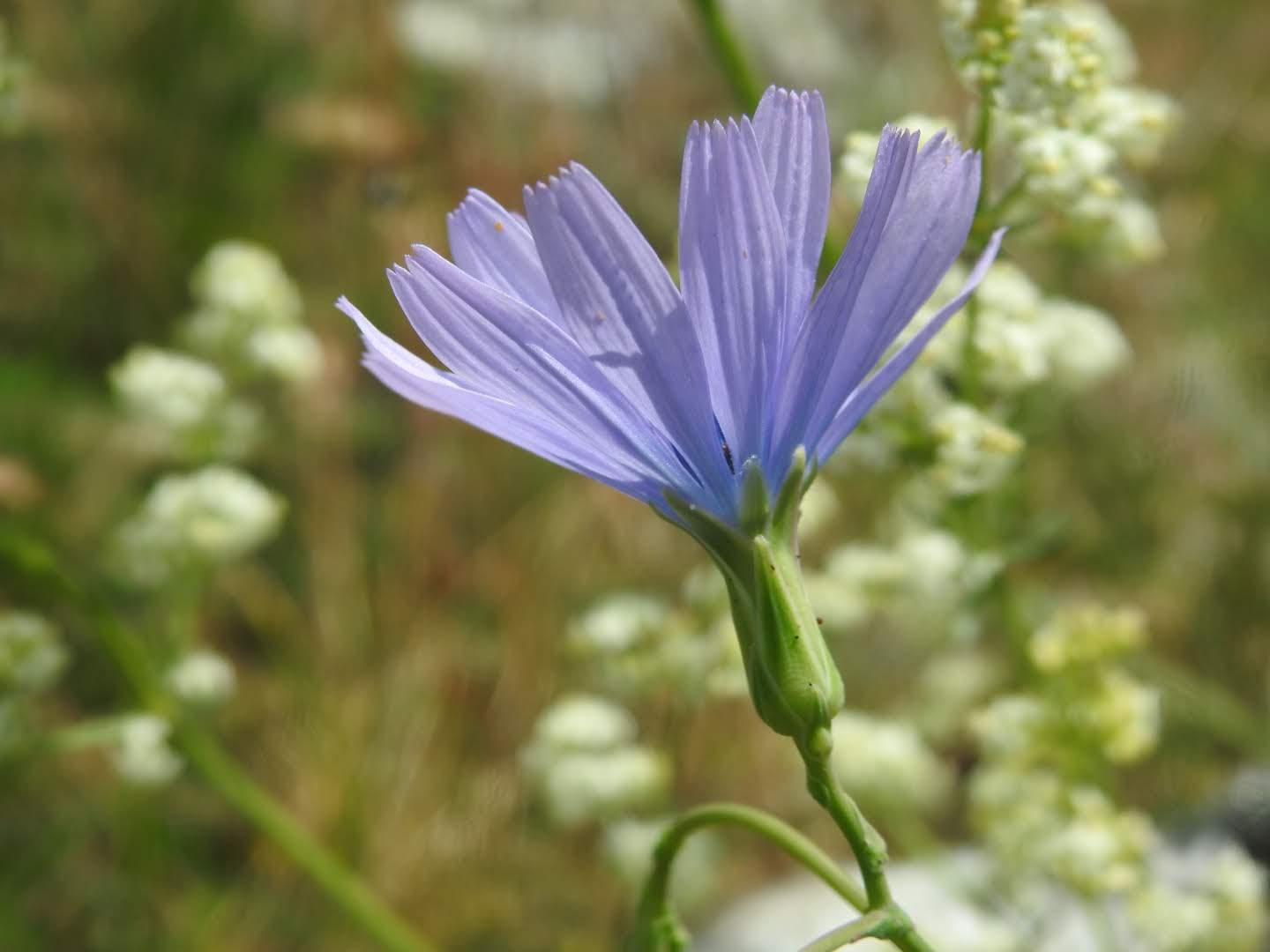
The inflorescence consists of numerous capitula 3-4 cm in diameter, arranged in a loose and corymbiform panicle, with peduncles often scaly and pendulous before flowering. The involucre is conical, narrow and 1.5–2.5 cm long, composed of 2-3 series of imbricated, obtuse and frequently reddish scales.
The flowers are all ligulate, hermaphroditic, violet or bluish violet in color, rarely white. Each capitulum contains about 15-20 flowers, about 20-25 mm long, with the peripheral flowers exceeding the involucre in length.
The fruit is a glabrous achene, black or lead-gray in color, 6-7 mm long (up to 10-15 mm according to some sources), with longitudinal striations and a long beak similar in size to the achene body. The pappus consists of white, simple hairs about 6-7 mm long, which facilitate anemochorous dispersal.
Habitat and distribution
Rock lettuce is a typical species of the western Mediterranean regions and southwestern Europe, present in Italy mainly in mountainous and hilly areas with calcareous substrate. In Italy it is found in the Trieste Karst, in the Alps — particularly on dry and sunny slopes —, in the Euganean Hills, in Liguria and along the Peninsula, from the Tuscan-Emilian Apennines to Abruzzo. It is also present in more southern areas such as Monte Taburno, Monte di Galvanico, Pignola, Abriola and the Pollino Massif.
It prefers habitats characterized by cliffs, screes, walls and rocks, with sunny exposure and xerothermophilous climate. It grows at altitudes between 100 and 1500 meters above sea level, sometimes up to 2000 m, in calcareous and dry environments typical of garrigues and dry grasslands.
Flowering period
Flowering occurs mainly between March and July, with possible variations depending on altitude and geographic area. In higher reliefs, vegetation may appear later, while in mild climate areas flowering begins already in spring.
Ecology and pollination
Rock lettuce, thanks to its ligulate flowers and lilac-violet colors, attracts a variety of pollinating insects, particularly bees and butterflies, which favor pollination. The plant produces numerous capitula, each with several hermaphroditic flowers, maximizing reproductive opportunities.
Seed dispersal occurs mainly through the feathery pappus, which allows the achenes to be carried by the wind over variable distances, facilitating colonization of new rocky and stony habitats. This strategy is typical of xerothermophilous species living in open and sunny environments.
Curiosities and traditional uses
Rock lettuce is an edible plant: young basal rosettes are sometimes collected and eaten raw as salad, appreciated for their delicate flavor. Although it contains latex, it is not known for significant pharmaceutical applications or established medicinal uses, and therefore any therapeutic use should be evaluated with caution.
The common name “rock lettuce” refers both to the resemblance to other lettuces due to the presence of latex, and to its preference for rocky environments (“rupestre” means “living on rocks”).
Etymology
The genus name Lactuca derives from the Latin lac, lactis, meaning “milk”, referring to the milky white latex that characterizes these plants. The specific epithet perennis means “perennial”, indicating the species’ multi-year vegetative cycle.
The common name “rock lettuce” emphasizes the resemblance to edible lettuces and its typical habitat, characterized by rocky and dry environments.
Sources
- Prof. S. Pignatti, Flora d’Italia
- Acta Plantarum - Flora delle regioni italiane (scheda di Anja Michelucci)
- World Flora Online (WFO)
Characteristics
Where I found it (4 sightings)
Classification
- Kingdom
- Plantae
- Family
- Asteraceae
- Full name
- Lactuca perennis L.
- Life form
- Emicriptofite scapose
Similar species
Search for species with similar characteristicsFurther reading
Noticed an error in the identification? Write to me
Other species of the same family
Asteraceae
Explore
Other species of Asteraceae