Botanical species
Hieracium tomentosum
L.
Woolly Hawkweed
Description
Morphological description
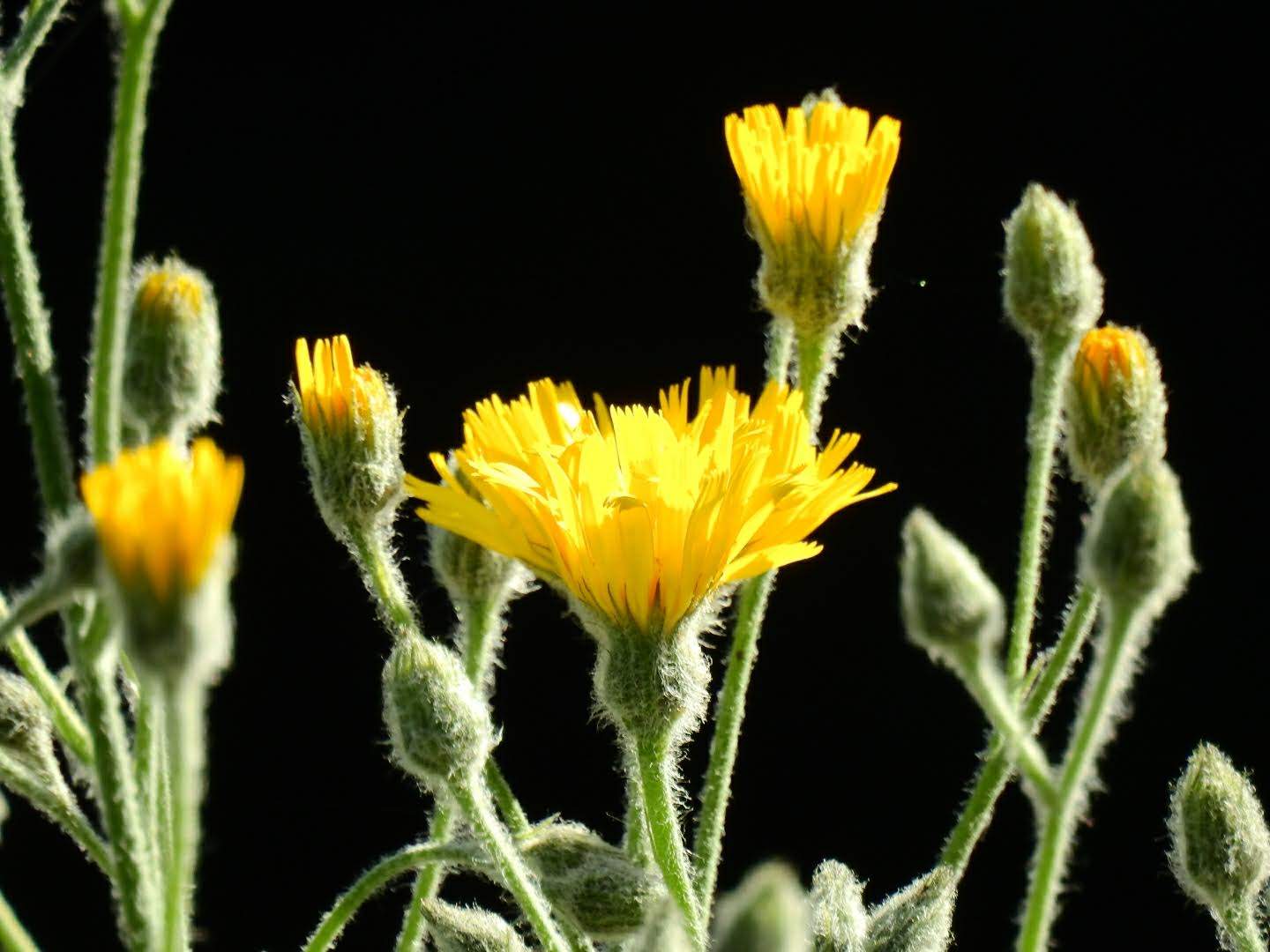
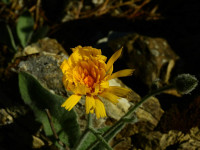
Perennial herbaceous plant of medium size, with a height ranging between 10 and 50 cm, characterized by an erect stem, often branched and deeply forked in the upper part. The entire plant is covered by a dense woolliness of white or gray-whitish hairs, giving it a tomentose and felted appearance. The hairs are mainly woolly and feathery, 1 to 5 mm long, arranged in a felted manner, without the presence of stellate or glandular hairs.
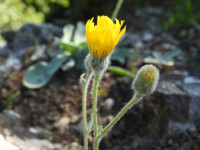
The stem is lignified at the base, with a tufted habit and tomentose surface, bearing 2-5 sessile cauline leaves, while most leaves are concentrated at the base. The basal leaves vary in shape from ovate to elliptic-lanceolate, with entire or slightly sinuate-lobed margins, thick and herbaceous in texture. Their size ranges between 6 and 15 cm in length and 2-4 cm in width, with a short petiole often evident. The leaves, as well as the stem, are covered by a woolly pubescence that gives a gray-silvery or yellowish color.
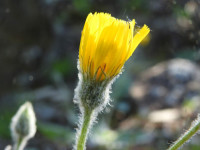
The capitula, from 1 up to 7 per plant, are relatively large, with a diameter ranging between 2 and 3 cm. The involucre is hemispherical or ovate, 12 to 18 mm long, composed of densely woolly and tomentose bracts, which protect the inflorescence. The flowers, all ligulate and hermaphroditic, are golden yellow in color, with styles also yellow. The achenes, i.e. the dry fruits typical of the Asteraceae family, are black, about 3.5-4 mm long, and are topped by a white-brownish pappus that facilitates wind dispersal.
The root system consists of a robust woody and superficial rhizome, dark in color, which allows the plant to overwinter and regenerate year after year.
Habitat and distribution
This species is a subendemic of the Italian alpine and Apennine area, with a presence mainly concentrated in the western Alpine arc, from Valle d’Aosta to Liguria, extending to the Apuan Alps and the northern Apennines (in localities such as Spedaletto, Fumajolo, Ventasso, Pietra di Bismantova). More sporadic reports also concern the central Apennines and the neighboring mountains of France and Switzerland.
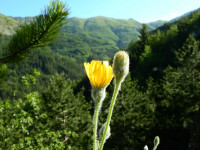
It grows mainly in orophilous environments, i.e. mountainous, preferring rocky places, cliffs, rocks, screes, and debris. The growth altitude generally varies from 500 up to 2000 meters above sea level. Typical habitats include rocky meadows, dry slopes, rupestrian steppe, and pine woods at submontane and subalpine elevations. It prefers well-drained soils, often poor and with sunny or semi-shaded exposure.
Flowering period
Flowering is mainly concentrated in the months of May, June, and July, with possible variations related to altitude and latitude. In some locations, the beginning of flowering can extend until early August, but generally ends in summer. This period coincides with the most favorable season for the growth and reproduction of the species in the mountain environment.
Ecology and pollination
The flowering of the yellow capitula attracts a variety of pollinating insects, especially hymenopterans (bees, bumblebees) and dipterans, which play a key role in pollination. The hermaphroditic inflorescences allow some reproductive flexibility, with the possibility of self-pollination or cross-pollination depending on environmental conditions and pollinator availability.
The dispersal of the achenes occurs mainly through the feathery pappus, which facilitates seed transport by wind, allowing the species to colonize open and rocky environments even distant from the mother plant. The robust woody rhizome also ensures the ability to overwinter and maintain stable populations over time, even under environmental stress conditions.
Curiosities and traditional uses
The genus name derives from the Greek “ierax”, meaning sparrowhawk. In popular tradition, it was believed that this bird fed on Hieracium plants to improve its eyesight. The specific name "tomentosum" refers to the dense covering of woolly hairs that characterizes the entire plant, giving it a velvety and cottony appearance.
No specific and traditional medicinal or food uses are documented for this species. However, the genus Hieracium in general has sometimes been used in herbal medicine for astringent and anti-inflammatory properties, although the species tomentosum is not among the most cited for this purpose. Its presence in mountain landscapes contributes to biodiversity and the balance of rocky ecosystems.
Etymology
The scientific name "Hieracium tomentosum" derives from two terms:
- Hieracium: from the Greek “ierax” (sparrowhawk). It was anciently believed that the sparrowhawk fed on these plants to improve its visual ability.
- tomentosum: from Latin, meaning “covered with dense hairs and thick cottony down,” a clear reference to the characteristic woolly pubescence that envelops the stem, leaves, and capitula.
The Italian common name “Woolly Hawkweed” precisely recalls this double characteristic, combining the reference to the bird with the particular tomentose texture of the plant.
Sources
- Prof. S. Pignatti, Flora d'Italia
- Acta Plantarum - Flora delle regioni italiane (sheet by Mirna Medri)
- World Flora Online (WFO)
Characteristics
Where I found it (11 sightings)
Classification
- Kingdom
- Plantae
- Family
- Asteraceae
- Full name
- Hieracium tomentosum L.
- Life form
- Emicriptofite scapose
Similar species
Search for species with similar characteristicsFurther reading
Noticed an error in the identification? Write to me
Other species of the same family
Asteraceae
Explore
Other species of Asteraceae