Botanical species
Carduus nutans
L.
Musk Thistle
Description
Morphological description
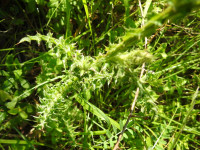
Biennial herbaceous plant, the Musk Thistle reaches a height between 30 and 100 cm. It has an erect stem, generally sparsely branched, characterized by wings 2-4 mm thick that extend along its surface; these wings are interrupted and equipped with robust spines 3-6 mm long. The stem cross-section is angular, giving the plant a robust and spiny appearance.
The leaf apparatus consists of pinnatisect or pinnatifid leaves, varying in size from 2-8 cm in width to 8-30 cm in length, with 6-8 pairs of lateral segments of triangular-ovate shape and 5-8 mm in length. These segments have spinulose margins and an apex ending in an acuminate spine 4-6 mm long. The leaves are green, with a spiny surface and crenate-dentate margin. The central part of the leaf is undivided and about 5-6 mm wide.
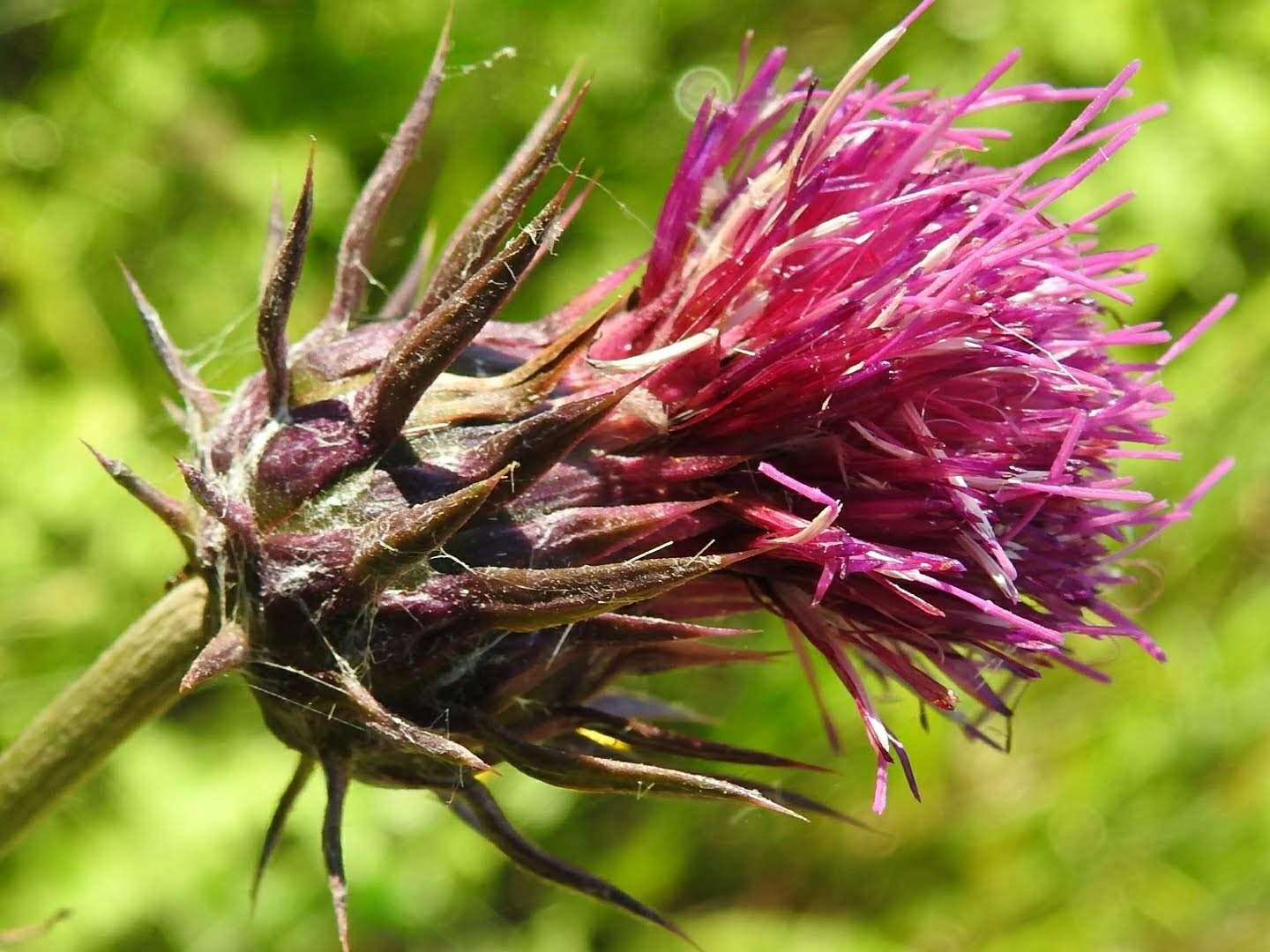
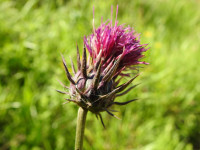
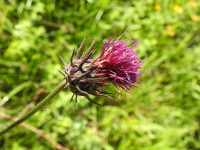
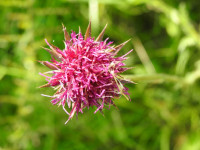
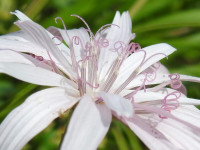
The capitula, typical of the Asteraceae family, are single or grouped in a limited number (4-6) and are located at the apex of the stem and branches. They have a diameter of 3-5 cm and are frequently pendulous, inclined downward, a characteristic from which the species name derives. The involucre is hemispherical or campanulate, 2-3 cm wide, composed of outer bracts (or scales) with a median constriction that makes them characteristically folded downward; these bracts are spiny and can be glabrous or covered by white cobwebby tomentum. The inner bracts are often purplish, while the corolla is tubular, about 18-22 mm long, with five lobes and purplish-pink color, sometimes tending to white.
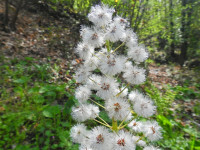
The fruit is a smooth achene, 3-5 mm long, gray-yellowish in color with light brown streaks. It is equipped with a pappus made of white, rough, non-feathery bristles up to 2 cm long, facilitating anemochorous dispersal.
The root system is taproot and fusiform, well developed to firmly anchor the plant in the substrate.
Habitat and distribution
The Musk Thistle is widely distributed in Western Europe, from Scandinavia to the Iberian Peninsula, and is present in many Italian regions, where it grows from the plains up to about 1700 meters altitude. It prefers open, well-sunny and dry habitats, such as uncultivated lands, pastures, road edges, rubble, and disturbed soils. It adapts to different soil types, provided they are well-drained and not too moist, showing good tolerance for hilly and subalpine environments.
The species is common in Mediterranean and temperate climates, where its flowering extends through the warm months and can last until autumn in protected climatic conditions.
Flowering period
The Musk Thistle typically flowers between May and August, with a possible extension of flowering until November in environments sheltered from bad weather. This temporal variability is influenced by local climatic conditions and altitude, with later flowering in milder and protected environments.
Ecology and pollination
The plant plays an important role in open ecosystems, providing food resources for a variety of pollinating insects, particularly bees and butterflies attracted by the purplish-pink tubular flowers. The funnel-shaped corolla and the structure of the capitulum facilitate entomophilous pollination.
Seed dispersal occurs mainly through an anemochorous mechanism, thanks to the pappus of long and light bristles that favor transport by wind. The reproductive strategy is biennial: in the first year the plant forms a basal rosette of leaves, while in the second year it develops the flowering stem and produces seeds.
Curiosities and traditional uses
The Italian name "cardo rosso" refers to the intense purplish color of the flowers. The root of the scientific name "Carduus" probably derives from ancient Greek "ardis," meaning "point" or "spine," referring to the numerous spines that characterize the plant.
Historically, the less spiny leaves have been used in cooking similarly to artichokes, as an edible vegetable. In popular medicine, the plant has been used as an antipyretic and liver depurative, although such uses are not supported by modern clinical evidence and should be considered with caution.
An interesting aspect concerns the musky scent of the flowers, which in the past led to alternative classifications of the species. Moreover, the Musk Thistle is known for its symbolic value, being present in the Scottish emblem with the motto "nemo me impune lacessit" ("no one provokes me with impunity"). The plant has also been linked to popular legends and folk beliefs, such as the one that it was born from the Earth's pain for the death of a fisherman friend of the gods Pan and Diana.
Etymology
The scientific term "Carduus" derives from the Greek "ardis," meaning "point" or "arrow," alluding to the plant's spines. The specific epithet "nutans" means "inclined" or "pendulous," referring to the characteristic of the capitula that, at maturity, recline or hang. The Italian common name "cardo rosso" simply and directly describes the vivid color of the flowers, which ranges from purplish to fuchsia.
Sources
- Acta Plantarum - Flora delle regioni italiane (actaplantarum.org)
- Acta Plantarum - Flora delle regioni italiane (scheda di Mirna Medri)
- World Flora Online (WFO)
Characteristics
Scheda botanica
| Famiglia | Asteraceae |
|---|---|
| Fioritura | maggio – agosto |
| Forma biologica | Biennials |
| Habitat | with fuchsia flowers, spiny plant |
Domande frequenti
- Quando fiorisce Musk Thistle?
- Musk Thistle fiorisce maggio – agosto.
- Che tipo di pianta è Musk Thistle?
- Musk Thistle è una Hemicryptophytes (Biennials) secondo la classificazione di Raunkiaer.
- A quale famiglia appartiene Musk Thistle?
- Musk Thistle appartiene alla famiglia botanica Asteraceae.
Where I found it (5 sightings)
Classification
- Kingdom
- Plantae
- Family
- Asteraceae
- Full name
- Carduus nutans L.
- Life form
- Hemicryptophytes biennials
Similar species
Search for species with similar characteristicsFurther reading
Noticed an error in the identification? Write to me
Other species of the same family
Asteraceae

Explore
Other species of Asteraceae