Botanical species
Chondrilla juncea
L.
Skeleton Weed
Description
Morphological description
Biennial or perennial herbaceous plant, with a scapose habit and height varying between 30 and 120 cm. The stem is erect, cylindrical and angular, often branched-ascending, with a glabrous surface in the upper part and glaucous with rough bristles and backward-pointing spinules of 1-2 mm in the lower part. The branches are thin, rigid and sparse, giving the plant a slender and branched structure.
The basal leaves are gathered in a rosette adhering to the ground, oblanceolate in shape, 4-8 cm long and 1.5-3.5 cm wide, with crenate-dentate or runcinate (with rounded teeth) margins, often coarsely toothed. During flowering, these basal leaves tend to dry out and fall off. The cauline leaves are linear, narrow (2-10 cm long by 1-8 mm wide), generally smaller, with spiny or spinulose edges, and arranged along the stem parallel to the sun rays, a characteristic that earned the plant the nickname "compass plant".
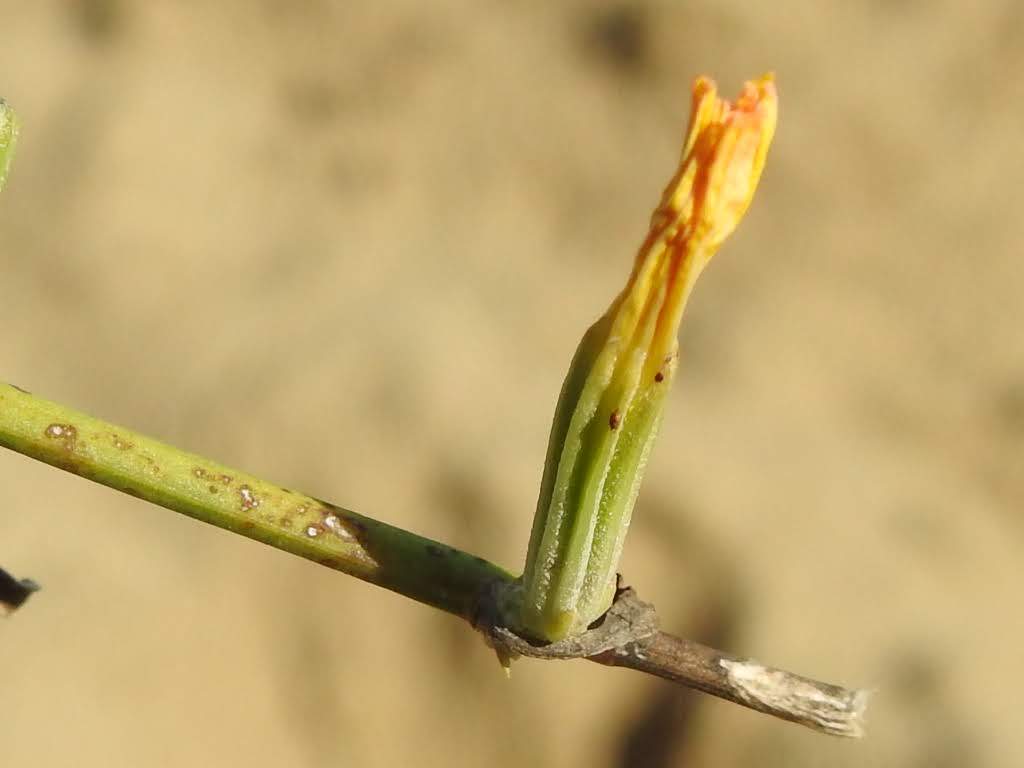
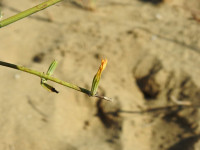
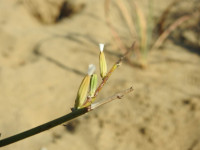
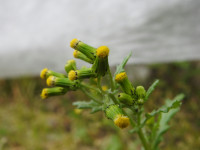
The flower heads are numerous, subsessile (almost without peduncle), often grouped in clusters of 2-5 elements placed in the leaf axils or terminal on the branches. The involucre is narrow, cylindrical, 10-12 mm long and about 5 mm wide, composed of biseriate scales: the lower ones are ovate (1-2 mm), the upper ones linear and acuminate (0.5-1 mm wide by 8-14 mm long). The flowers are all ligulate, bright yellow in color, about 10-13 mm long, with actinomorphic symmetry and scapose habit.
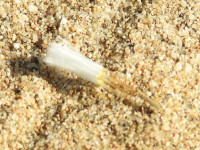
The fruit is a spatulate achene, about 3.5 mm long, with a muricate surface (provided with small outgrowths) and a filiform beak about 4 mm long, at the base of which is a pappus of white, non-plumose, 6-8 mm long and denticulate bristles, which facilitates anemochory (wind dispersal). The root system is taprooted, with a robust main root.
Habitat and distribution
The species is widespread throughout Italy and much of the Mediterranean basin, with documented presence also in central and southern Europe, North Africa and western Asia. It prefers thermophilic and arid environments, such as uncultivated lands, dry meadows, edges of paths, roads and abandoned cultivated fields. It adapts to different types of soil, preferring well-drained, sandy or rocky soils. It grows from sea level up to about 1700 meters altitude, with greater presence in hilly and foothill areas.
It is often associated with synanthropic environments, i.e., linked to human settlements and disturbed areas, where it can form stable populations although in recent decades a certain rarefaction has been observed in some areas.
Flowering period
Flowering generally extends from June to September, peaking in the summer months, in line with the Mediterranean climate. In more northern or mountainous areas, flowering may occur later, up to early autumn.
Ecology and pollination
The plant is mainly pollinated by pollinating insects attracted by the bright yellow color of the ligulate flowers. The structure of the flower heads, with numerous ligulate flowers, facilitates access to small pollinating insects, particularly wild bees and other hymenopterans. Seed dispersal occurs thanks to the plumose pappus which allows transport over short and medium distances by wind.
The arrangement of the leaves along the sun rays in a parallel manner (a characteristic called "compass plant") is an ecological adaptation that reduces direct exposure to high temperatures and intense light, optimizing tolerance to drought conditions.
Curiosities and traditional uses
Skeleton Weed is a medicinal and edible plant traditionally used in various Italian areas. The young basal rosettes, before flowering, are consumed raw in mixed salads, appreciated for their slightly sour and delicate flavor. In Tuscany it is considered one of the most prized salad herbs, while in Romagna it is sometimes used cooked as a filling for piadine.
The scapes (flowering stems) can be harvested and cooked like asparagus, often used to prepare omelets or other simple dishes. From a medicinal point of view, no particularly relevant therapeutic properties are recognized, although a mild soporific action is known if consumed in large quantities and an antacid effect for the stomach.
The plant is part of a group of species called "compass herbs" for the particular arrangement of the leaves, traditionally used as an indicator of orientation relative to the sun.
Etymology
The scientific name derives from the Greek "chondros" meaning "seed" or "lump", referring to the latex secretion that coagulates quickly upon contact with air, typical of the plant. The epithet "juncea" refers to the stem's appearance similar to that of rushes (Juncus spp.), i.e., thin, erect and cylindrical.
The Italian common name "lattugaccio" recalls the relationship with lettuce (Lactuca spp.) and the presence of white latex, while "comune" distinguishes this species from others with similar characteristics.
Sources
- Prof. S. Pignatti, "Flora d'Italia"
- Acta Plantarum - Flora delle regioni italiane (scheda di Antonino Messina)
- Tela Botanica / H. Coste, "Flore descriptive et illustrée de la France"
- World Flora Online (WFO)
Characteristics
Scheda botanica
| Famiglia | Asteraceae |
|---|---|
| Fioritura | giugno – agosto |
| Forma biologica | Scapose |
| Habitat | with yellow flowers, biennial plant, plant with a scapose habit |
Domande frequenti
- Quando fiorisce Skeleton Weed?
- Skeleton Weed fiorisce giugno – agosto.
- Che tipo di pianta è Skeleton Weed?
- Skeleton Weed è una Hemicryptophytes (Scapose) secondo la classificazione di Raunkiaer.
- A quale famiglia appartiene Skeleton Weed?
- Skeleton Weed appartiene alla famiglia botanica Asteraceae.
Where I found it (14 sightings)
Classification
- Kingdom
- Plantae
- Family
- Asteraceae
- Full name
- Chondrilla juncea L.
- Life form
- Hemicryptophytes scapose
Similar species
Search for species with similar characteristicsFurther reading
Noticed an error in the identification? Write to me
Other species of the same family
Asteraceae
Explore
Other species of Asteraceae