Botanical species
Centaurea paniculata
L.
Jersey Knapweed
Description
Morphological description
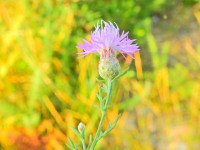
Biennial plant belonging to the family Asteraceae, characterized by a branched and ascending habit with a widely branched and polycephalous stem. The height of the plant can vary, but it generally remains within modest dimensions, typical of biennial herbaceous species.
The leaves are arranged along the stem and have a 2-pinnatisect structure, that is twice pinnate, with narrow, thin lobes 1 to 2 mm wide, giving the entire leaf a fine and delicate appearance. This particular leaf is a distinctive trait of the species and contributes to its typical appearance.
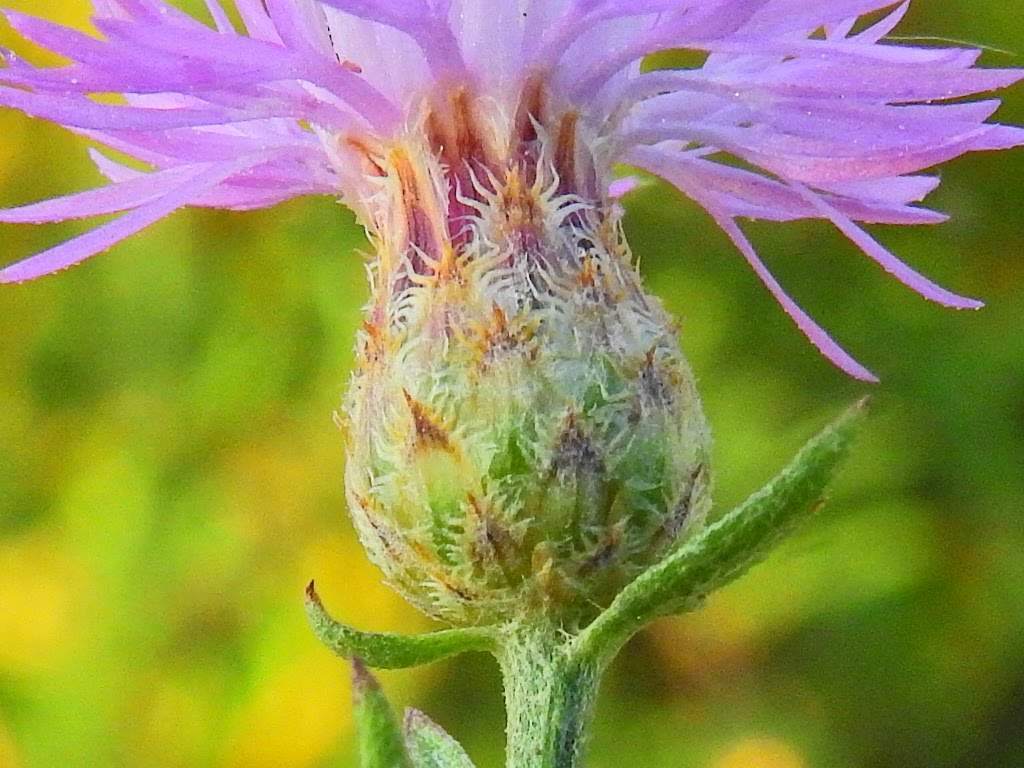
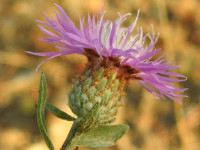
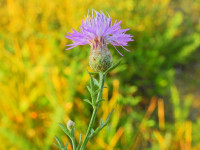
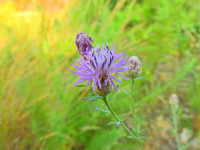
The flowers, gathered in generally small capitula, show a lilac color (light purple), with numerous tubular petals, whose symmetry is actinomorphic (radial). The scales surrounding the capitula have a triangular appendage ending in a short, non-spiny cilia, but equipped with longer and regularly combed cilia on the sides, an important element for species recognition.
The pappus, present in each capitulum, can vary in development but is never absent: this element aids seed dispersal by wind. The fruit, typical of Asteraceae, is an achene provided with a pappus.
The roots have not been described in detail in specific sources, but like many biennial herbaceous species, it is likely that they have a taproot system that allows good anchorage and absorption in dry soils.
Habitat and distribution
This species is typical of dry steppe meadows, belonging to the Brometalia community, and frequents anthropized environments, where it adapts to poor and well-drained soil conditions. It grows mainly in Mediterranean climate areas, with a preference for sunny exposures.
In Italy it is distributed mainly in the Tyrrhenian regions, from which the common name derives, but its presence extends to various areas of the Mediterranean, where it prefers open herbaceous habitats of steppe or semi-arid type.
The growth altitude is generally concentrated in hilly and flat areas, where the soil is dry and often calcareous or rocky, conditions that favor its survival and competition with other herbaceous species.
Flowering period
Flowering occurs mainly between June and July, with possible geographical variations related to altitude and local climate: in warmer and lower areas flowering occurs earlier, while in cooler and mountainous zones it may extend slightly beyond July.
Ecology and pollination
The species relies on entomophilous pollination, with pollinating insects attracted by the lilac color of the flowers and their tubular structure, suitable to host small pollinating insects such as bees, bumblebees, and butterflies. The presence of the pappus facilitates anemochorous seed dispersal, allowing effective spreading even in open and windy environments.
The fact that the plant is biennial allows a life cycle alternating an intense vegetative phase in the first year with a flowering and reproductive phase in the second, with seed production and dispersal.
Curiosities and traditional uses
No specific ethnobotanical applications or traditional uses of this species are known, nor information on established medicinal or food uses. Its presence in dry and steppe meadows makes it more relevant from an ecological and floristic point of view than practical or cultural.
Etymology
The genus name, Centaurea, derives from the mythological figure of the centaur Chiron, linked by ancient popular traditions to the medicinal use of some species of the genus. The specific epithet paniculata refers to the arrangement of the capitula in panicle inflorescences, that is with flowering branches arranged in a branched and open manner.
The Italian common name, "Jersey Knapweed", recalls both the typical lilac color of the flowers, similar to that of other Knapweeds, and the geographical area of greatest distribution, the Italian Tyrrhenian coast.
Sources
- Prof. S. Pignatti, Flora d’Italia (database)
Characteristics
Scheda botanica
| Famiglia | Asteraceae |
|---|---|
| Fioritura | giugno – luglio |
| Forma biologica | Biennials |
| Habitat | with lilac flowers |
Domande frequenti
- Quando fiorisce Jersey Knapweed?
- Jersey Knapweed fiorisce giugno – luglio.
- Che tipo di pianta è Jersey Knapweed?
- Jersey Knapweed è una Hemicryptophytes (Biennials) secondo la classificazione di Raunkiaer.
- A quale famiglia appartiene Jersey Knapweed?
- Jersey Knapweed appartiene alla famiglia botanica Asteraceae.
Where I found it (20 sightings)
Classification
- Kingdom
- Plantae
- Family
- Asteraceae
- Full name
- Centaurea paniculata L.
- Synonyms
- Acosta paniculata (L.) Holub
- Life form
- Hemicryptophytes biennials
Similar species
Search for species with similar characteristicsNoticed an error in the identification? Write to me
Other species of the same family
Asteraceae
Explore
Other species of Asteraceae