Botanical family
Orchidaceae
Description
Botanical characteristics
Orchidaceae are perennial herbaceous plants, monocotyledons, distinguished by their extraordinary morphological diversity and the structural complexity of their flowers. The habit is very varied: they include terrestrial, epiphytic, and occasionally climbing species, some lacking chlorophyll and therefore mycoheterotrophic. In European genera, the stem is simple and erect, while in tropical epiphytic species pseudobulbs can be observed, thickened organs that store water and nutrients.
The leaves are always entire, with parallel veins (except for the genus Goodyera), linear or fleshy in shape, often with a sheathing base and sometimes arranged in basal rosettes. Leaf arrangement can be alternate, distichous, or rarely opposite. In tropical orchids, aerial roots are covered by velamen, a protective tissue made of dead air-filled cells, giving them a whitish and waterproof appearance, while in European species underground rhizotubers or rhizomes with filamentous roots are more frequent.
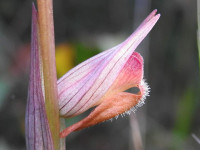
The flowers are pentacyclic and zygomorphic, with a perianth consisting of two whorls of three tepals each: the three outer ones are sepals, generally similar to each other, and the three inner ones are petals, one of which, the labellum, stands out for shape and color, often extended into a spur containing nectar. Most flowers are resupinate, meaning they undergo a 180° twist that brings the labellum from the upper to the lower position, facilitating pollination. The androecium and gynoecium are fused into a gynostemium, which can end in a fleshy rostellum. The number of fertile stamens varies: in most genera there is only one, while in the section Diandrae (genus Cypripedium) there are two.
Pollen is aggregated in masses called pollinia, which are equipped with a sticky gland (retinaculum) that allows them to adhere to pollinating insects. The ovary is inferior, sessile or pedunculate, and the fruit is generally a capsule with three or six ribs that opens to release numerous minute seeds lacking endosperm, whose germination often depends on symbiosis with mycorrhizal fungi.
Distribution and diversity
Orchids are a cosmopolitan family, widespread in almost all environments on the planet, from the Arctic zone to subantarctic regions, with a range extending from north of the Arctic Circle to Patagonia and Macquarie Island near Antarctica. Most species are concentrated in the tropical and subtropical zones of Asia, Central America, and South America, while only about 15% grow in temperate and cold regions.
The family includes about 25,000 recognized species (some estimates reach 30,000), distributed in about 800 genera, making it one of the richest families in species among flowering plants. In Italy, about 189 species and subspecies are found spontaneously, grouped into about 29 genera, almost exclusively terrestrial.
Main genera and representative species
Among the most important genera globally are Cypripedium, known for its slipper orchids, and tropical genera such as Bulbophyllum, Paphiopedilum, Phragmipedium, Cattleya, and Grammatophyllum. Flower sizes vary enormously: from less than 1 mm in Platystele to over 70 cm in Phragmipedium caudatum.
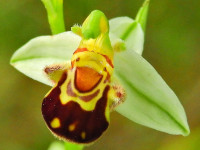
In Italy, among the most widespread genera are Ophrys, known for its species that mimic pollinating insects, Orchis, Serapias, Dactylorhiza, Epipactis, and Platanthera. These genera include species typical of temperate and Mediterranean environments, generally with terrestrial habit and underground roots.
Etymology
The name "Orchidaceae" derives from the type genus Orchis, whose Latin name means "testicle," referring to the shape of some tuberous roots of these plants, which indeed resemble testicles. This denomination is historically linked to folklore and ancient beliefs about the aphrodisiac properties of some orchids.
Curiosities and uses
Orchids are famous for their intricate pollination strategies, often based on species-specific relationships with pollinating insects. Some species emit delicate fragrances, while others may have unpleasant odors to attract particular pollinators.
From an ornamental point of view, orchids are among the most appreciated and cultivated plants, with over 60,000 hybrids and varieties developed by floriculturists. Some species also have food or medicinal value in different cultures, although these uses are not extensively treated in the consulted sources.
Sources
- Wikipedia
- Botanical database (specific information on morphology and botanical characters)
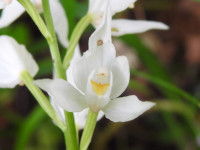
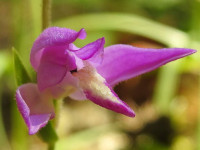
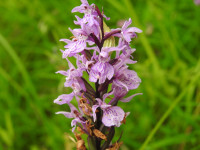
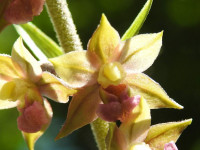
Species of the family
28 species catalogued



Explore
Other botanical families