Description
Botanical characteristics
The plants belonging to this family predominantly have an herbaceous habit, both annual and perennial, although there are also shrubby, bushy forms and even some tree or liana species, particularly in Indian regions. The most common biological forms are hemicryptophytes and therophytes, with a lesser presence of chamaephytes and nanophanerophytes. The stems are often quadrangular, a characteristic due to the presence of collenchyma bundles at the four corners, and can be decumbent or erect, simple or branched. The indumentum is generally pubescent, with simple hairs, and in some species, glands containing aromatic essential oils are present.
The leaves are arranged along the stem oppositely, often decussate, and sometimes whorled. They can be sessile or petiolate, with very variable shapes: from lanceolate to ovate, with entire, toothed, or lobed margins, and in some cases also pinnate.
The inflorescences are typically thyrsoid or racemose, consisting of overlapping axillary whorls formed by multiple flowers (from 2 to 20), arranged circularly and resting on leafy bracts that can also be colored or spiny. The bracts of the next whorl are arranged alternately.
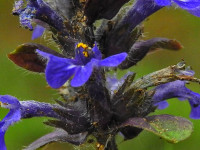
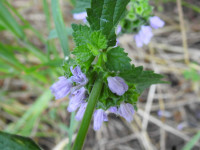
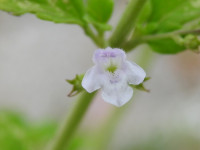
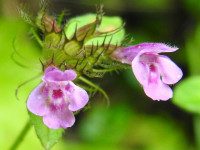
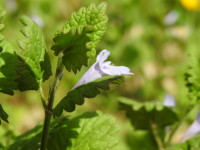
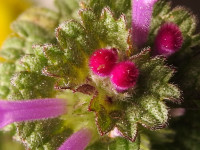
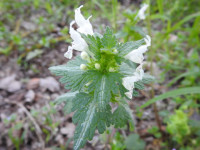
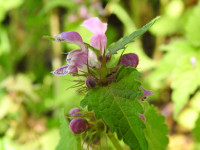
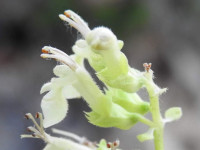
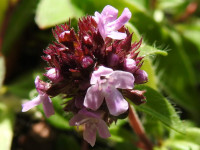
The flowers are hermaphroditic, generally zygomorphic, with a gamosepalous calyx formed by 5 equal or subequal lobes, often lanceolate or triangular, sometimes also spiny. The calyx can be weakly bilabiate and presents from 5 to 10 veins. The corolla is gamopetalous and typically bilabiate, with a tube dilated at the apex and two lips: the upper one, short and hood-shaped, and the lower one, flattened and formed by three lobes. However, some species show variations, such as apparently actinomorphic corollas or absent lips. The stamens are generally four, didynamous (two longer and two shorter), adnate to the corolla and positioned under the upper lip; in some genera, they are reduced to two. The ovary is superior, bicarpellary with four apparent lobes due to false septa, and possesses four ovules. The style is filiform with a bifid stigma.
The fruit is a schizocarp formed by four dry or fleshy nutlets, rounded or winged, sometimes flat or truncated, which separate easily to release the seeds, which are generally endosperm-free.
Distinctive characters of the family are the quadrangular stem, the presence of glandular hairs with essential oils, opposite leaves without stipules, inflorescences with axillary whorls, flowers with gamosepalous calyx and corolla with 5 parts, didynamous stamens, superior ovary, and schizocarp fruit with four nutlets.
Distribution and diversity
This family is widely distributed worldwide, with a particularly rich center of diversification in the Mediterranean basin, where many species thrive in degraded environments such as Mediterranean maquis, garrigues, and rocky, calcareous, or sandy soils. Worldwide it includes numerous genera and species, many of which are adapted to xerophilous conditions.
Main genera and representative species
Among the most important genera of the family are Lamium, Mentha (mint), Salvia, Rosmarinus (rosemary), Ocimum (basil), Ajuga, and Teucrium. In Italy, many wild species of these genera are present, some of which are well known and used both in cooking and in folk medicine. For example, rosemary and mint are widely spread and appreciated, as well as cultivated basil and some species of Salvia.
Etymology
The family name derives from the type genus Lamium. The origin of the term may date back to the Greek "laimos," meaning "throat" or "gullet," referring to the bilabiate shape of the corolla, or from other Greek words such as "lamos" (wide cavity) or from the name of a Libyan queen, "Làmia." The latter hypothesis is linked to a legend in which the queen swallowed children, similarly to how the flower of the plant envelops pollinating insects. The scientific name "Lamiaceae" was officially defined in the 19th century, evolving from the previous name "Labiate."
Curiosities and uses
Many species of this family are known for the production of aromatic essential oils and play an important role in cooking as aromatic herbs and seasonings. They are also used in perfumery, liqueur production, and pharmacy for their aromatic and medicinal properties. The ecological importance of the family is linked to entomogamous pollination, favored by insects such as bees, bumblebees, wasps, butterflies, flies, and beetles. The presence of hairs in the flower throats limits access to insects unsuitable for pollination, thus optimizing reproduction.
Sources
- Wikipedia
Species of the family
27 species catalogued


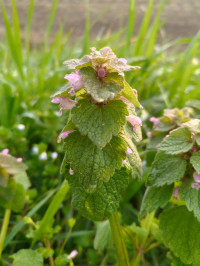
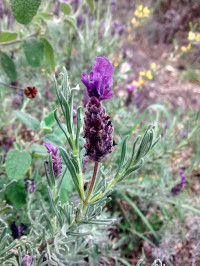
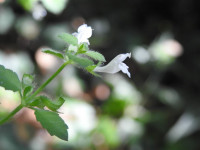
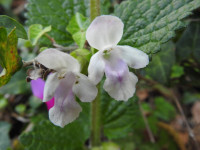

Explore
Other botanical families