Botanical species
Glechoma hirsuta
Waldst. & Kit.
Ellera terrestre pelosa
Description
Morphological description
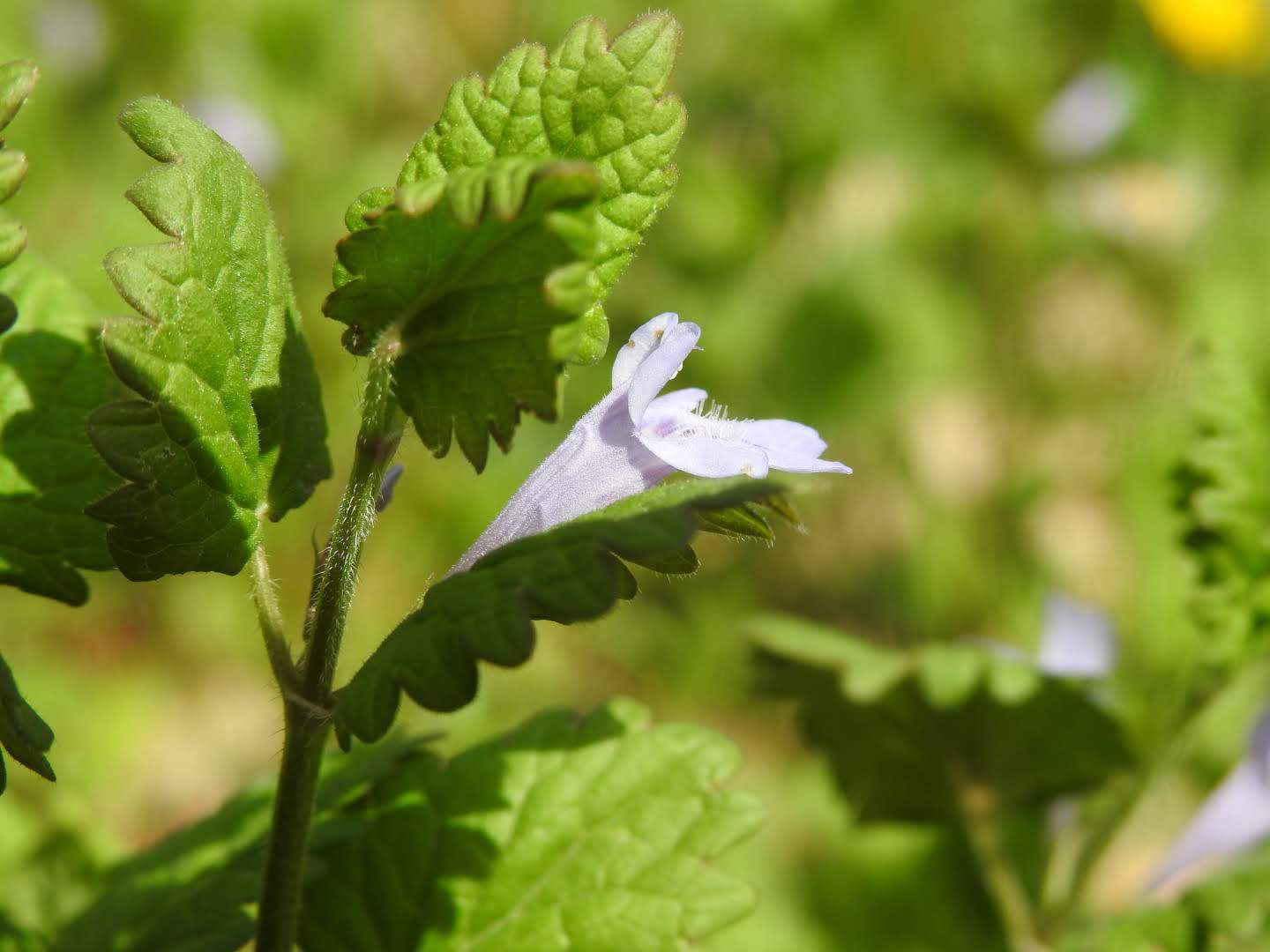
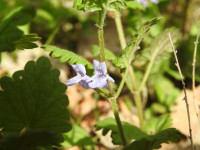
The hairy ground ivy is a perennial herbaceous plant belonging to the family Lamiaceae, characterized by a creeping habit that allows it to easily cover the ground. Its height is modest, generally less than 30 cm, but its horizontal spread can be extensive thanks to stems that root at the nodes in contact with the soil.
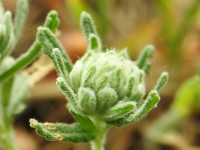
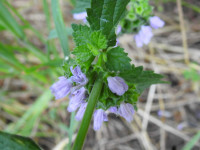
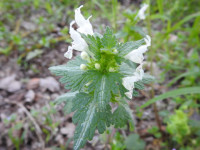
The stem has a hirsute surface, meaning covered with dense hairiness, which gives the plant a rather "rough" appearance compared to other related species. The leaves are opposite, with a petiole about 3-4 mm long, and have a orbicular or reniform shape; the blade is densely hairy and shows a dentate margin with teeth wide at the base between 0.3 and 0.5 mm, of variable size between 2 and 3.5 mm. This characteristic hairiness is a distinctive trait that helps to differentiate it from the very similar species Glechoma hederacea, from which it also differs for generally larger size.
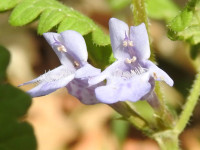
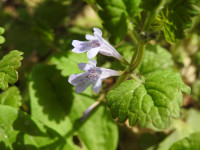
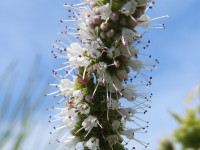
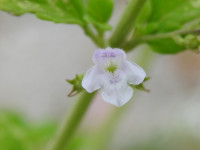
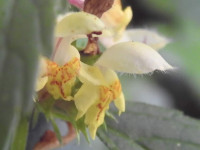
The flowers are large and lilac-colored, arranged in opposite whorls along the stems. The corolla is bilabiate, 14 to 18 mm long, with the upper lip shorter and the lower lip wider and often marked by darker spots. The flowers emerge from April to June, forming inflorescences that attract numerous pollinating insects.
The fruit is a schizocarp typical of Lamiaceae, which divides into four dry mericarps, each containing one seed. The root system is rhizomatous and fibrous, favoring the plant's ability to expand rapidly in favorable environments.
Habitat and distribution
The hairy ground ivy prefers wooded and shady environments, where the soil is generally moist and rich in organic matter. It often grows at the edges of deciduous and mixed forests, in clearings and under shrub cover, in conditions of partial shade or half-shade.
The species is widespread in Italy, mainly in the central-southern regions and in mountainous or submontane areas, with an altitude ranging from a few meters up to about 1000 meters above sea level. In the Mediterranean basin it is found in similar habitats, characterized by temperate climates and fresh, well-drained soils.
The preferred soil is generally clayey or silty, with good water retention capacity but without prolonged water stagnation. The ideal exposure is north-facing or in areas protected from direct sunlight, where the plant maintains good humidity and moderate temperature.
Flowering period
The flowering of the hairy ground ivy extends from February to June, with a main peak in spring, between April and May. In some areas with milder climate the flowering can start slightly earlier, while in colder and mountainous areas it tends to be delayed towards the warmer months of spring.
Ecology and pollination
This species relies on pollinating insects, particularly bees and bumblebees, attracted by the lilac color of the flowers and the presence of nectar. The bilabiate corolla and its size facilitate access to nectar by these insects, ensuring effective entomophilous pollination.
Seed dispersal occurs mainly through schizocarps that open at maturity releasing seeds onto the surrounding soil, but the species propagates mainly vegetatively, thanks to creeping stems that root easily.
Curiosities and traditional uses
There are no specific data regarding traditional food or medicinal uses of the hairy ground ivy. However, the species is closely related to Glechoma hederacea, known in the past for medicinal properties such as anti-inflammatory and digestive effects. The evergreen aspect and dense hairiness may have contributed to some local use as an ornamental plant or for herbaceous ground cover in woods and gardens.
Etymology
The genus name Glechoma derives from the Greek "glechon", a term used to indicate aromatic plants of the family Lamiaceae. The specific epithet "hirsuta" refers to the dense and evident hairiness covering stems and leaves, a distinctive trait of the species compared to others in the genus.
The Italian common name "ellera terrestre pelosa" emphasizes precisely the similarity with common ground ivy (Glechoma hederacea), adding "pelosa" to highlight the hair coverage that distinguishes this species.
Sources
- Prof. S. Pignatti, "Flora d'Italia"
Characteristics
Where I found it (4 sightings)
Classification
- Kingdom
- Plantae
- Family
- Lamiaceae
- Full name
- Glechoma hirsuta Waldst. & Kit.
- Synonyms
- Glechoma hederacea L. subsp. hirsuta (Waldst. & Kit.) F.Herm.
- Life form
- Emicriptofite reptanti
Similar species
Search for species with similar characteristicsFurther reading
Noticed an error in the identification? Write to me
Other species of the same family
Lamiaceae
Explore
Other species of Lamiaceae