Botanical species
Melissa officinalis
L.
Balm
Description
Morphological description
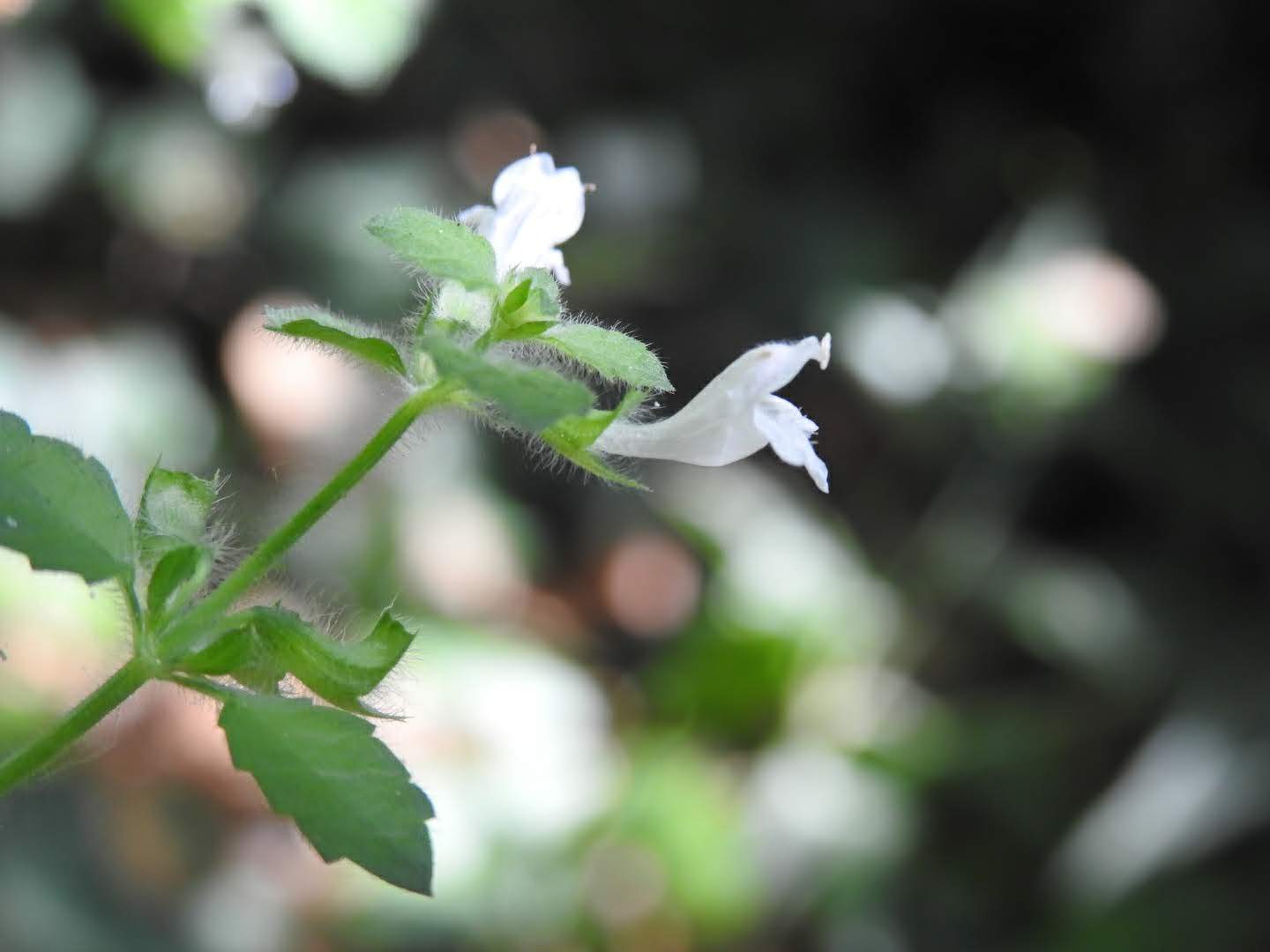
Perennial herbaceous plant, Melissa officinalis presents erect, quadrangular and branched stems, reaching a height between 30 and 90 cm. The stem is characterized by a hirsute surface, with patent bristly hairs arranged mainly along the edges and at the nodes, where tufts of whitish hairs form. The base of the plant consists of a superficial rhizome, which allows it to perennialize and expand horizontally.
The leaves are opposite, petiolate and ovate in shape, with variable sizes from 3-8 cm in length and 4-5 cm in width. The lower leaves often have a cordate base, while the upper ones are more cuneate. The leaf margin is crenate-dentate, with 6-14 rounded teeth per side. The leaf surface is herbaceous, slightly hairy especially on the upper side, while the underside is dotted with numerous glands.
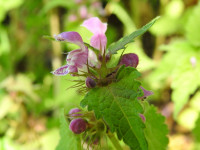
The flowers are arranged in axillary verticillasters, composed of 2-8 flowers each, on short peduncles of 2-5 mm. The bracts accompanying the flowers are lanceolate, entire and about 1.5-4 mm long. The calyx is tubular, campanulate and bilabiate, 6-9 mm long, with a tridentate upper lip and a lower lip with two narrow and pointed teeth; at fruiting the calyx remains sub-5-angled. The corolla, 10-14 mm long, is sympetalous and bilabiate, with an emarginate upper lip and a trilobed lower lip, in which the median lobe is more developed than the lateral ones. The flower color varies from pale yellow or cream yellow to white or light pink after fertilization. The anthers are four, curved and convergent.
The fruit is a tetrachene composed of four small brownish nutlets, elliptical in shape and about 1.6-2 mm long by 0.8-1 mm wide, with a mucilaginous surface when in contact with water.
The plant emits a characteristic lemon scent due to the presence of an essential oil rich in geranial, citronellal, linalool, geraniol and eugenol, which also confers aromatic and officinal properties.
Habitat and distribution
Melissa officinalis is a species of western Asian origin, but widely naturalized throughout the Mediterranean basin and cultivated since ancient times in Italy. In nature it is mainly found in anthropized environments such as uncultivated lands, sunny and dry places, field edges, path banks, and near houses and ruins. It prefers well-drained soils and sunny or partially shaded exposures, at altitudes between 0 and 1000 meters above sea level.
In Italy, due to the reduction of traditional cultivations and the growing disinterest in herbal medicine, the species has almost completely disappeared in the wild, remaining mainly as a cultivated plant in gardens.
Flowering period
Flowering generally extends from June to August, with possible local variations related to climatic and altitudinal conditions. The flowers, hermaphroditic and fertile, are ready to attract pollinating insects during this period.
Ecology and pollination
Melissa officinalis is a melliferous plant highly appreciated by bees, as suggested by the origin of the genus name. The main pollinating insects are honeybees and other hymenopterans that collect nectar and pollen from the flowers. The arrangement of the flowers in verticillasters allows good exposure to insect passage.
The species reproduces by seed and by vegetative propagation through the rhizome. Seed dispersal occurs locally, with the nutlets able to adhere to moist substrates thanks to the mucilage. The presence of a superficial rhizome allows the plant to survive winters and expand in favorable areas.
Curiosities and traditional uses
Melissa officinalis has been known and cultivated for over two thousand years, especially for its aromatic, officinal and melliferous properties. The genus name derives from the Greek "mèlitta," meaning honey bee, referring to its ability to attract these pollinating insects.
Historically, it has been used medicinally for its calming, digestive and antispasmodic properties. Preparations based on Balm, such as the "spirit of Balm" and "Balm water" developed by the Discalced Carmelites, were used as sedatives, digestives and remedies against nausea and seasickness. In modern phytotherapy, Balm extract is used to treat nervous disorders such as anxiety, insomnia, nervous tension and nervous headaches.
The essential oil has antiviral, antibacterial and insect-repellent properties, and is also used externally on herpes, insect bites, rheumatic pains and neuralgias. However, it is important to use it with caution, as it can irritate sensitive skin and interfere with some therapies, particularly those for thyroid dysfunctions.
In cooking, Balm leaves can replace lemon to flavor soups, salads, desserts, liqueurs, and beverages such as milk and wine. Dried leaves are also used in potpourri and scented sachets.
Numerous historical figures, from the Greek physician Dioscorides to the Roman naturalist Pliny the Elder, as well as Arab doctors and Paracelsus, have praised the virtues of this plant, which in the Middle Ages was cultivated in monastery medicinal gardens and became a symbol of calm and long life.
Etymology
The name Melissa derives from the Greek "mèlitta" (μέλισσα), meaning bee, referring to the strong attraction the plant exerts on these insects and its role as a melliferous plant. The specific name "officinalis" indicates the traditional use of the plant in pharmaceutical workshops and herbalist shops.
The Italian common name "erba limona" or "erba cedrina" refers to the characteristic scent of the leaves, similar to that of lemon, which makes the plant widely recognizable and appreciated for its aromatic properties.
Sources
- Prof. S. Pignatti, "Flora d'Italia"
- Acta Plantarum - Flora delle regioni italiane (scheda di Marinella Zepigi)
- World Flora Online (WFO)
Characteristics
Scheda botanica
| Famiglia | Lamiaceae |
|---|---|
| Fioritura | maggio – agosto |
| Forma biologica | Scapose |
| Habitat | with white flowers, edible plant, fragrant plant |
| Uso alimentare | Commestibile |
| Uso officinale | Pianta officinale |
Domande frequenti
- Quando fiorisce Balm?
- Balm fiorisce maggio – agosto.
- È commestibile Balm?
- Balm è considerata commestibile. Verifica sempre le parti eduli e la preparazione corretta prima del consumo.
- Che tipo di pianta è Balm?
- Balm è una Hemicryptophytes (Scapose) secondo la classificazione di Raunkiaer.
- A quale famiglia appartiene Balm?
- Balm appartiene alla famiglia botanica Lamiaceae.
Where I found it (3 sightings)
Classification
- Kingdom
- Plantae
- Family
- Lamiaceae
- Full name
- Melissa officinalis L.
- Life form
- Hemicryptophytes scapose
Similar species
Search for species with similar characteristicsFurther reading
Noticed an error in the identification? Write to me
Other species of the same family
Lamiaceae
Explore
Other species of Lamiaceae