Botanical species
Ballota nigra
L.
Black Horehound
Description
Morphological description
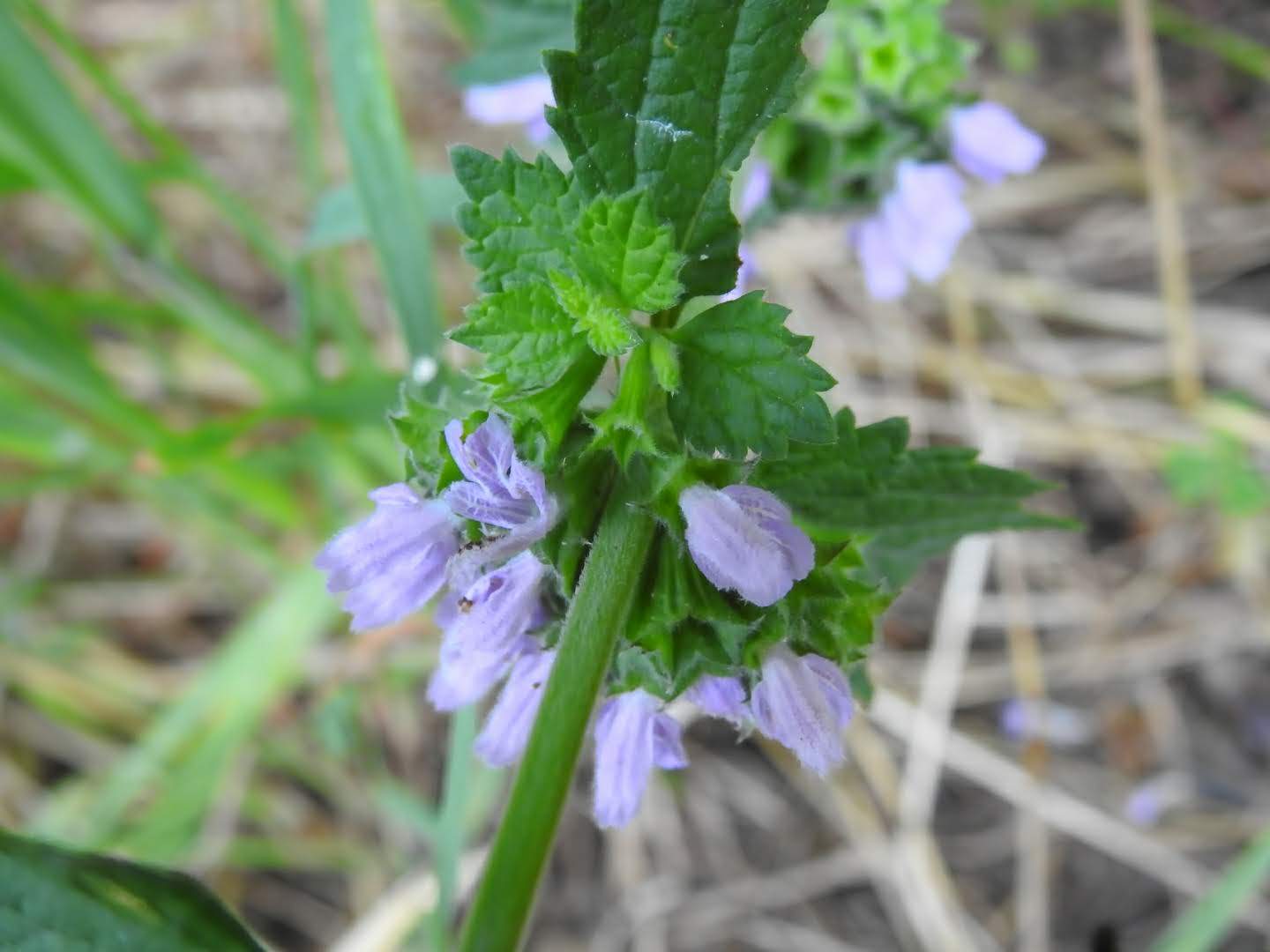
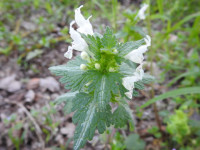
Perennial herbaceous plant, with a scapose habit and height varying between 20 and 120 cm, characterized by an unpleasant and fetid odor, particularly evident when the plant is crushed. The stems are ascending, woody at the base, branched and covered with a dense pubescence of retrorse, flexible or tomentose hairs, gray-green in color, which give a rough and hairy surface.
The leaves are opposite, with a petiole 1 to 3 cm long, oval-lanceolate, oval or even with a more rounded blade, with a cordate or cuneate base and an acuminate apex. The margin is crenulate-toothed, with irregular and quite evident teeth. The leaf surface is hairy-velvety or tomentose, gray-green in color, with a well-visible network of veins and herbaceous texture.
The inflorescence consists of dense verticillasters, subglobose or slightly unilateral, formed by 15-30 flowers, located in the axil of the upper leaves. At the base of the verticillasters there are linear-subulate bracteoles about 3-9 mm long. The calyx is funnel-shaped, actinomorphic and 7 to 13 mm long, with 10 well-marked veins and five triangular and mucronate teeth, generally folded lengthwise along the median line. The calyx teeth vary in length and position depending on the subspecies.
The corolla is bilabiate, about 10-15 mm long, with color varying from pink, to lilac up to white; the upper lip is convex, hairy outside and slightly convex, while the lower lip is trilobed, with the median lobe larger, emarginate or bilobed and often spotted with white. The stamens are four, didynamous, with parallel filaments; the ovary is superior with bifid stigma.
The fruit consists of four smooth nutlets, dark chestnut in color, rounded at the apex, typical of the genus.
The root system is fibrous and well developed, suitable for perennial plants that regenerate annually from buds located at ground level.
The chromosome number is 2n=22.
Habitat and distribution
The species is widespread throughout the Mediterranean area, with a range extended along the coasts and temperate inland areas, but with presences that also extend north and east of Europe. In Italy it is present practically throughout the territory, from the plains up to about 1300 meters altitude, with a higher concentration in the central-southern regions and on the major islands.
It preferably grows in anthropized and ruderal environments, such as uncultivated areas, roadsides, hedges, ruins, and nutrient-rich soils, showing a strong affinity for nitrophilous soils. It prefers sunny or partially shaded exposures, with thermophilic conditions.
The species is polymorphic in the Italian territory, with at least four subspecies that differ mainly in calyx characteristics and geographic distribution: subsp. nigra, subsp. foetida, subsp. uncinata and subsp. velutina, some of which are more frequent in certain areas, for example subsp. uncinata in Sardinia, Sicily and Corsica, while subsp. foetida is prevalent in the peninsula up to Campania.
Flowering period
Flowering extends from May to August, with possible local variations related to altitude and latitude. In warmer climates and Mediterranean areas, flowering can start early in May and continue until September. The plant presents a polymorphic cycle that allows a prolonged production of flowers during the summer season.
Ecology and pollination
The plant produces bilabiate flowers with a colored and visible corolla, which attract pollinating insects, particularly bees and other entomophilous pollinators. The bilabiate structure and the arrangement of the stamens favor cross-pollination, while the presence of a strong and characteristic odor can discourage some herbivores.
Dissemination is barochorous, that is, it occurs by seed fall near the mother plant. The nutlets, small and smooth, settle on the ground favoring colonization of new sites, especially in disturbed areas.
Curiosities and traditional uses
The genus name recalls the pungent and unpleasant odor of the plant, which is a distinctive character and has influenced its limited use in herbal and medicinal fields. Historically, the plant is known for its sedative properties, useful to calm states of anxiety, insomnia, hysteria and nervousness, as well as to alleviate cough, particularly whooping cough. Furthermore, it stimulates bile secretion and possesses astringent and vulnerary properties useful in topical applications for wounds and skin irritations.
The unpleasant odor has however always limited the spread of medicinal and food use, although in the past infusions were often mixed with aromatic herbs such as anise, linden and chamomile to improve taste and aroma. Nevertheless, the plant is still considered officinal and is used in phytotherapy.
Etymology
The scientific name derives from the Latin nigra, meaning "black", probably referring to the blackening of the plant after drying or to the dark color of the nutlets. The genus name Ballota has Greek origins (ballote), meaning "rejection" or "refusal", alluding to the bad odor of the plant which makes it unappealing to herbivorous animals.
The common Italian name "cimiciotta" is probably linked to the unpleasant odor, similar to that of some bugs, which characterizes the entire plant.
Sources
- Prof. P.V. Arrigoni, "Flora analitica della Toscana", "Flora dell'Isola di Sardegna"
- Acta Plantarum - Flora delle regioni italiane (scheda di Anja Michelucci)
- World Flora Online (WFO)
Characteristics
Where I found it (4 sightings)
Classification
- Kingdom
- Plantae
- Family
- Lamiaceae
- Full name
- Ballota nigra L.
- Life form
- Emicriptofite scapose
Similar species
Search for species with similar characteristicsNoticed an error in the identification? Write to me
Other species of the same family
Lamiaceae
Explore
Other species of Lamiaceae