Botanical family
Fabaceae
Description
Botanical characteristics
Fabaceae are a family of dicotyledonous plants that includes herbaceous plants, shrubs, and trees, often with very varied habit depending on the subfamily to which they belong. The leaves are generally compound, often imparipinnate, but they can also be paripinnate, digitate, trifoliate, or simple; sometimes the leaves are transformed into tendrils or spines. Stipules are present, often equipped with extrafloral nectaries that attract ants and other insects.
The flowers are hermaphroditic and typically pentamerous, with a mostly gamosepalous calyx; the ovary is superior (rarely semi-inferior) and formed by a single unilocular carpel with one style and an apical stigma. The floral structure varies greatly among the subfamilies:
- Caesalpinioideae: zygomorphic but not papilionaceous flowers, with five free petals (often reduced), and mostly free stamens. They are trees or shrubs typical of equatorial and subtropical areas.
- Mimosoideae (included in the mimosoid clade of Caesalpinioideae): actinomorphic flowers, with numerous free and showy stamens, often gathered in dense spike- or pompom-shaped inflorescences; trees or shrubs of warm regions.
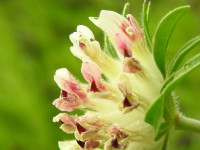
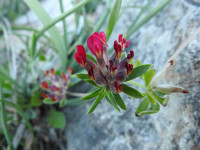
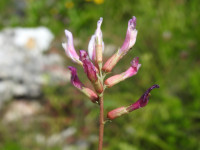
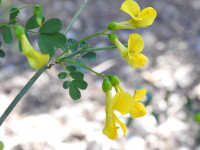
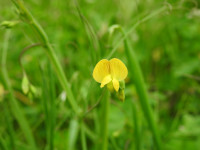
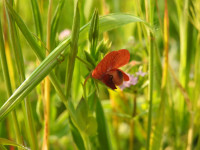
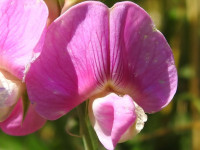
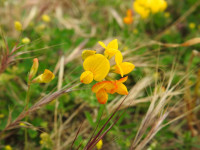
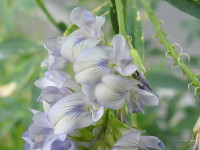
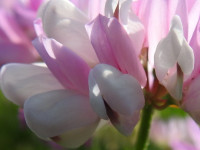
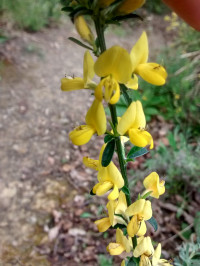
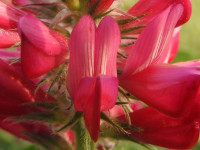
- Faboideae (Papilionoideae): zygomorphic and papilionaceous flowers, that is with a large upper petal called the standard, two lateral petals (the wings), and two lower petals fused to form the keel. The stamens are generally ten, often diadelphous (nine fused plus one free). This subfamily mainly includes herbaceous plants, but also shrubs and rarely trees.
The characteristic fruit is the legume or pod, formed by a carpel enclosing the seeds. The legume can be dehiscent, opening along two sutures, or modified into indehiscent forms such as the loment, in which the fruit divides into segments (e.g., peanut). The seeds often show pleurogram markings.
An important ecological feature is the symbiosis with bacteria of the genus Rhizobium present in the roots, which fix atmospheric nitrogen by transforming it into compounds usable by the plant, improving soil fertility.
Distribution and diversity
Fabaceae have a cosmopolitan distribution, present on all continents, including the most isolated regions such as Greenland and Pacific islands. The family adapts to a wide range of habitats, from tropical forests to deserts.
It includes about 800 genera and over 18,000 species, divided into six main subfamilies:
- Caesalpinioideae (including the mimosoid clade),
- Cercidoideae,
- Detarioideae,
- Dialioideae,
- Duparquetioideae,
- Faboideae (the largest, with about 14,000 species).
Main genera and representative species
Among the most important and well-known genera worldwide and in Italy are:
- Phaseolus (common bean),
- Pisum (pea),
- Vicia (fava bean),
- Lupinus (lupine),
- Cicer (chickpea),
- Lens (lentil),
- Lathyrus (grass pea),
- Acacia (mimosas and robinias),
- Cercis (Judas tree),
- Ceratonia (carob),
- Tamarindus (tamarind),
- Laburnum (golden chain),
- Robinia (robinia or false acacia).
In Italy, many species belonging to the subfamily Faboideae are wild or cultivated, such as the pea (Pisum sativum), the fava bean (Vicia faba), the lupine (Lupinus spp.), and the carob (Ceratonia siliqua). The Judas tree (Cercis siliquastrum) is a widely spread ornamental shrub.
Etymology
The name "Fabaceae" derives from the genus Faba, a Latin term that indicated the bean. The synonym "Papilionaceae" refers to the "butterfly-like" appearance (from the Latin papilio, butterfly) of the typical flower of the species of the subfamily Faboideae, characterized by the papilionaceous corolla.
Curiosities and uses
Fabaceae play a fundamental ecological role thanks to their ability to fix atmospheric nitrogen through a symbiosis with root bacteria, thus contributing to improving soil fertility. This characteristic is exploited in agriculture in the practice of green manure, that is crop rotation with legumes to naturally fertilize the soil.
Many species of the family are of great food importance for humans and livestock, such as beans, peas, fava beans, chickpeas, lentils, peanuts, soybeans, and lupines. Some trees produce valuable woods or resins (e.g., Dalbergia, Hymenaea), while others are used as ornamental plants for the beauty of their flowers (golden chain, Judas tree, mimosas).
Sources
- Wikipedia
- Database piante-spontanee.it
Species of the family
26 species catalogued
Explore
Other botanical families