Botanical species
Lotus creticus
L.
Cretan Bird's-foot-trefoil
Description
Morphological description
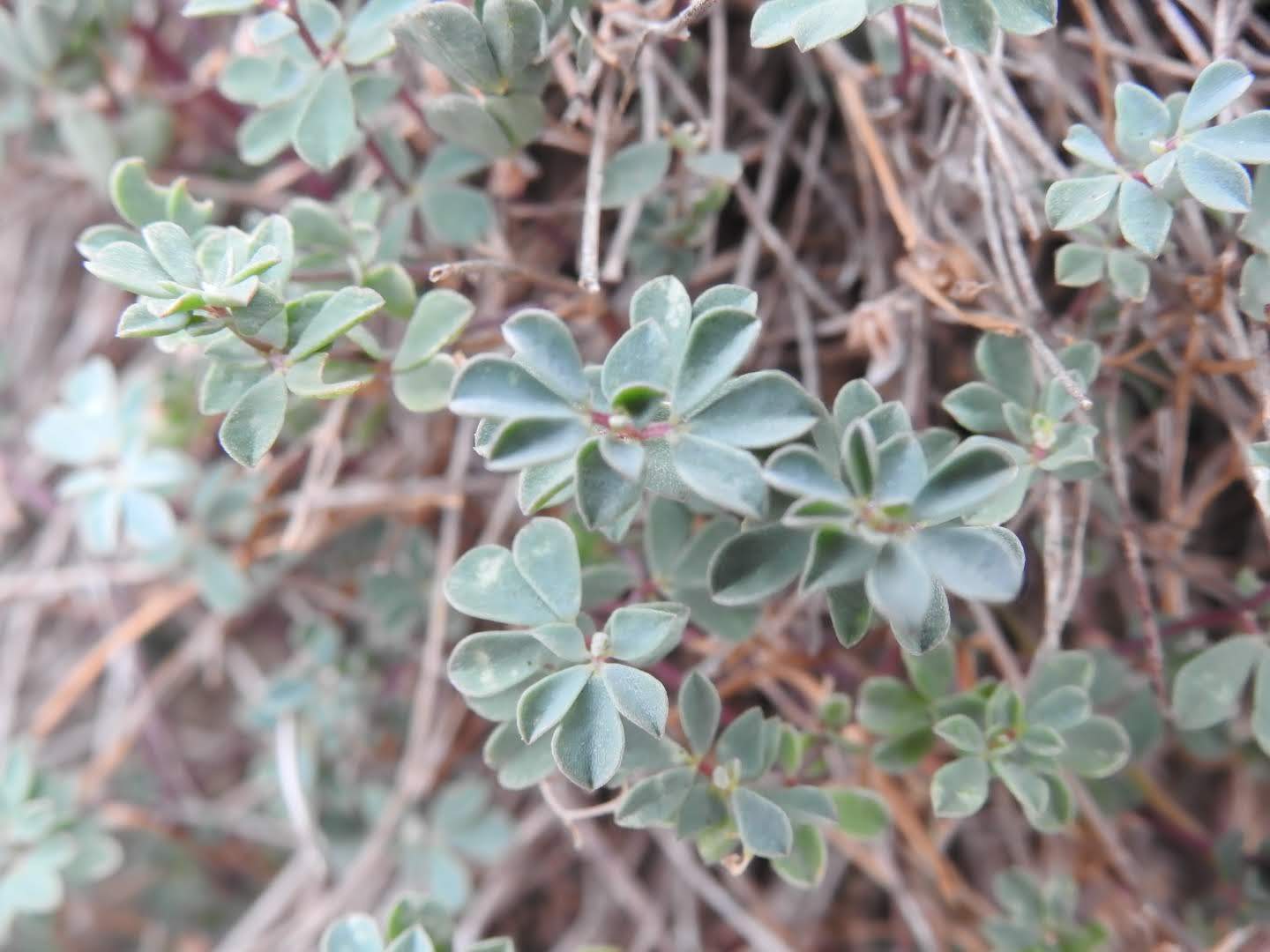
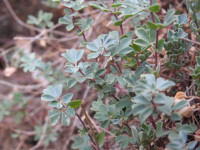
The Cretan Bird's-foot-trefoil is a perennial plant belonging to the Fabaceae family, characterized by a compact and bushy habit typical of Mediterranean coastal species. It has an herbaceous stem, often silky to the touch, which grows prostrate or slightly ascending, adapting to exposed and windy environmental conditions.
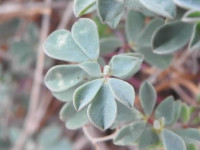
The leaves are trifoliate, with leaflets of ovate or ovate-lanceolate shape, small in size (about 4-10 mm long), herbaceous in texture and covered with a slight silky pubescence that gives a light greenish-yellow hue. The petiole of the leaves is very short, about 1 mm, giving a compact appearance to the foliage.
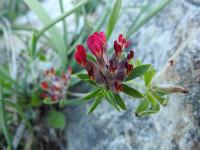
The flowers are arranged in umbels composed of 2 to 7 flowers, each 12 to 16 mm long. The corolla is bright yellow, with shades ranging from pure yellow to yellow-greenish; the flower has the typical Fabaceae structure, with an entire standard and a keel with a short body and a long, slightly curved and spotted beak, protruding beyond the wings. The calyx is 7.5-9 mm long, slightly bilabiate, with sharp lateral teeth, slightly smaller than the others.
The fruit is a straight or almost straight legume, about 3-4 cm long and very thin (about 2 mm in diameter). The root system, typical of legumes, contributes to nitrogen fixation in the soil, promoting growth in poor and sandy environments.
Habitat and distribution
The Cretan Bird's-foot-trefoil is a species typical of Mediterranean coastal environments, preferring marine habitats with sandy and well-drained substrates. It frequently grows on coastal dunes and sandy beach areas, where moisture and salinity are moderate.
In Italy, it is widespread along the Mediterranean coasts, from Liguria to Sicily and Sardinia, adapting to temperate and warm climates with sunny exposure. The species is generally found at low altitudes, from the coastline up to a few dozen meters above sea level, rarely higher.
The preferred soil type is loose, sandy, often nutrient-poor, where the plant plays an important role in substrate stabilization and colonization of challenging environments.
Flowering period
The flowering of the Cretan Bird's-foot-trefoil typically extends from February to June, with a peak in the Mediterranean spring. In some areas with milder climates, flowering can begin as early as late winter, while in cooler zones it tends to be concentrated more in spring.
Ecology and pollination
The species relies on pollinating insects, particularly hymenopterans such as bees and bumblebees, which are attracted by the bright yellow color of the flowers and the nectar produced. The flower structure, with the keel bearing a prominent beak, facilitates mechanical pollination, ensuring contact with the reproductive organs during insect visits.
Seed dispersal occurs through legumes that open at maturity, releasing light seeds that can be transported by wind or water in coastal areas, promoting colonization of new sandy zones.
Curiosities and traditional uses
No specific medicinal or food uses of the Cretan Bird's-foot-trefoil are documented in Italian or Mediterranean tradition. However, like many coastal legumes, the plant has a fundamental ecological role in dune stabilization and coastal erosion prevention, contributing to maintaining the environmental balance of marine habitats.
The common name “ginestrino” refers to the resemblance of the flowers to those of the broom, although it is a distinct species belonging to the genus Lotus.
Etymology
The scientific name of the genus, Lotus, derives from the ancient Greek “lotos”, which indicated various leguminous plants, some of which were considered sacred or symbolic in antiquity. The specific epithet creticus refers to the island of Crete, highlighting the presence and distribution of the species in the eastern Mediterranean area.
The Italian name “ginestrino delle spiagge” combines the diminutive “ginestrino”, for the floral resemblance to the broom, and “delle spiagge” to emphasize the typical habitat of the plant, namely sandy and coastal areas.
Sources
- World Flora Online (WFO)
Characteristics
Scheda botanica
| Famiglia | Fabaceae |
|---|---|
| Fioritura | febbraio – giugno |
| Forma biologica | Suffruticose |
| Habitat | with yellow flowers, Perennial plant, plant with a prostrate-ascending habit |
Domande frequenti
- Quando fiorisce Cretan Bird's-foot-trefoil?
- Cretan Bird's-foot-trefoil fiorisce febbraio – giugno.
- Che tipo di pianta è Cretan Bird's-foot-trefoil?
- Cretan Bird's-foot-trefoil è una Chamaephyte (Suffruticose) secondo la classificazione di Raunkiaer.
- A quale famiglia appartiene Cretan Bird's-foot-trefoil?
- Cretan Bird's-foot-trefoil appartiene alla famiglia botanica Fabaceae.
Where I found it (3 sightings)
Classification
- Kingdom
- Plantae
- Family
- Fabaceae
- Full name
- Lotus creticus L.
- Synonyms
- Lotus commutatus Guss.; Lotus cytisoides L. subsp. conradiae Gamisans
- Life form
- Chamaephyte suffruticose
Similar species
Search for species with similar characteristicsNoticed an error in the identification? Write to me
Other species of the same family
Fabaceae
Explore
Other species of Fabaceae