Botanical species
Emerus major
Mill.
Cornetta dondolina
Description
Morphological description
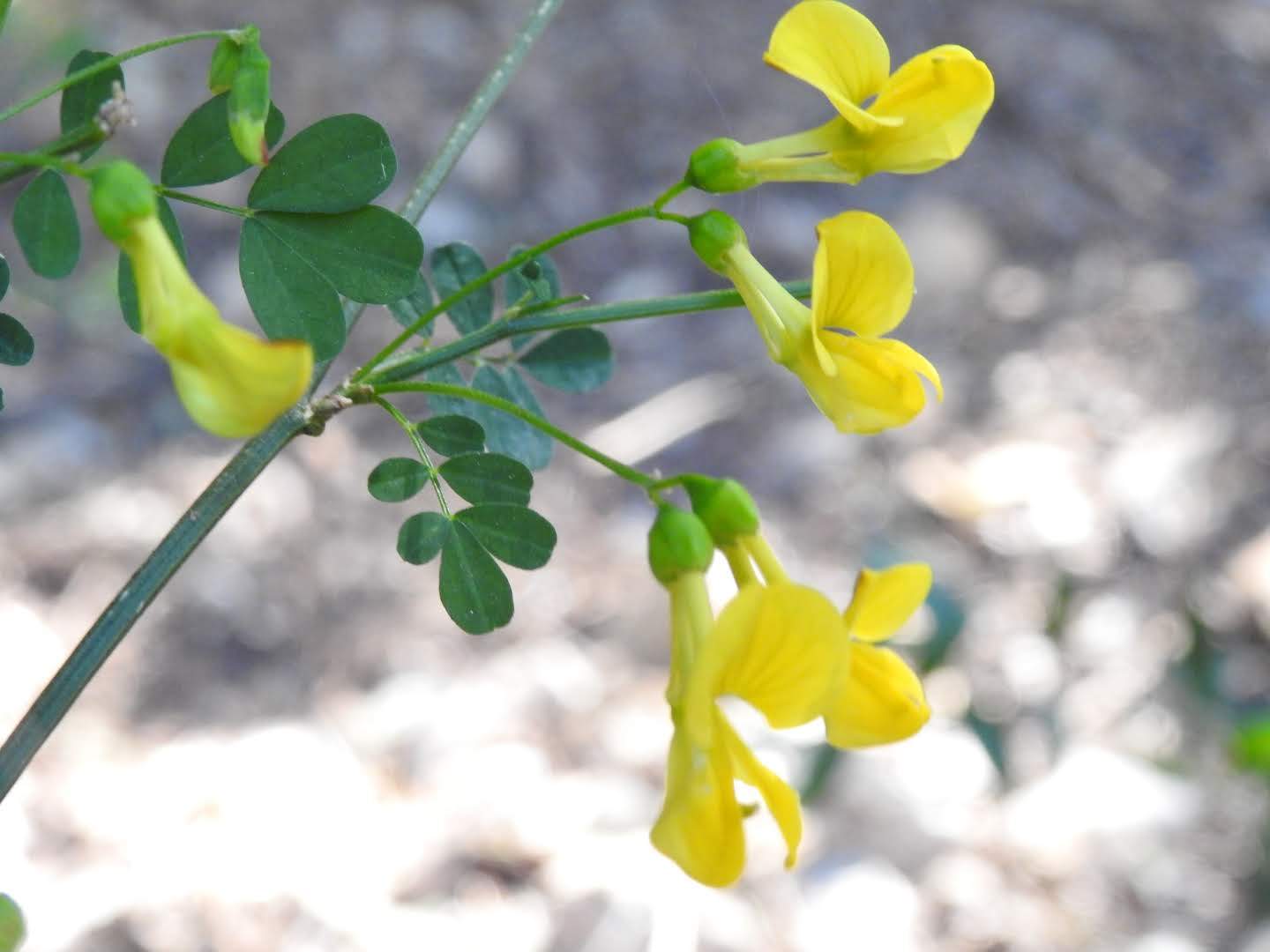
The plant is a deciduous shrub, suffrutescent, with an erect and very branched habit, reaching a height between 1 and 2 meters. The stems are woody, angular and striated, with a surface initially hairy that becomes glabrous with age; the stem coloration tends to be reddish. The texture is woody, while the stem cross-section is markedly angular.
The leaves are alternate and imparipinnate, formed by 4-9 obovate-cuneate leaflets, with the apex that can be obtuse or end with a short mucro. The lower surface of the leaflets is more or less pubescent, while the upper surface is generally glabrous. The apical leaves can be partially persistent. At the base of the leaves there are free stipules, triangular in shape and reddish in color.
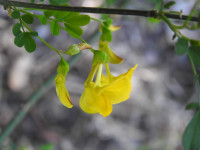
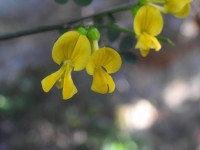
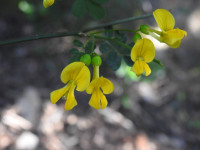
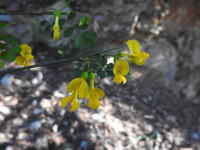
The flowers, odorless, are grouped in pendulous umbreliform inflorescences, usually composed of 1 to 4 flowers. These inflorescences are more or less pedunculate. The flower pedicel is hairy and shorter than the calyx, which has sparse hairs and sometimes a reddish tint. The calyx teeth are short and ciliate. The corolla is light yellow, with the standard ovate, sometimes veined with brown, truncate at the base and a claw that can exceed the calyx in width. The wings are elliptical and similar in size to the standard, while the keel is considerably shorter than the wings.
The fruit is a curved legume, equipped with an apical beak, internally divided into several monospermous locules. In the nominal subspecies, the legume presents a typical constriction between one locule and another. The seeds are red or black, with very hard and impermeable seed coats.
The root system is not described in detail in the consulted sources, but being a legume, it is likely to present root nodules in symbiosis with nitrogen-fixing bacteria.
Habitat and distribution
The species typically grows in woodland environments, preferably in oak woods and deciduous broadleaf forests with mesophilic characteristics, but it is also common in shrublands and uncultivated areas, representing a typical element of the Mediterranean maquis. It prefers calcareous soils and adapts to a wide altitudinal range, from sea level up to about 1700 meters altitude.
Its geographic distribution covers the Central European region and temperate Europe, extending from France to Ukraine. In Italy it is present throughout the territory in suitable conditions.
Flowering period
Flowering extends from January to November, with possible slight variations depending on latitude and local climatic conditions. This long flowering period favors prolonged reproductive activity.
Ecology and pollination
The plant is mainly pollinated by pollinating insects attracted by the yellow flowers, which, although odorless, offer an important source of nectar. The structure of the inflorescences and the morphology of the flowers are suitable for entomophilous pollination. Seed dispersal occurs through release from legumes that open spontaneously, while the presence of seeds with hard coats suggests a strategy of persistence in the soil and possible secondary dissemination by animals.
Being a legume, the species establishes a symbiosis with nitrogen-fixing bacteria of the genus Rhizobium leguminosarum, capable of converting atmospheric nitrogen into forms assimilable by plants, thus contributing to the improvement of soil fertility.
Curiosities and traditional uses
This species is also known for its medicinal properties. It contains proteins, amino acids, lipids, fatty acids, flavonoids and the glucoside coronillin. Traditionally it is considered a diuretic and cardiotonic plant, with alcoholic extracts of the leaves showing a slightly purgative effect.
The leaves, bitter in taste, were sometimes used to adulterate preparations based on Cassia acutifolia (Senna), a laxative among the few usable during pregnancy and breastfeeding. For this reason, one of the vernacular names of the plant is “Cassia mata”.
Besides medicinal use, the plant is important from an agricultural and environmental point of view: it is appreciated as forage, especially for rabbits, and is also cultivated as an ornamental. Its ability to fix nitrogen in the soil makes it useful for improving the fertility of the environments in which it grows.
Etymology
The genus name, Emerus, derives from the Greek "kérmeros", meaning “domesticated” or “cultivated”, recalling the traditional use of the plant or its congeners. The specific epithet major is a Latin comparative indicating “greater” or “larger”, referring to the larger size reached by this species compared to others of the genus.
The Italian common name “Cornetta dondolina” likely refers to the characteristic shape of the pendulous inflorescences (dondoline) and the horn-shaped flowers typical of Fabaceae.
Sources
- Acta Plantarum - Flora delle regioni italiane (actaplantarum.org)
- Acta Plantarum - Flora delle regioni italiane (scheda di Marinella Zepigi)
Characteristics
Scheda botanica
| Famiglia | Fabaceae |
|---|---|
| Fioritura | gennaio – novembre |
| Forma biologica | Nano-Phanerophytes |
| Habitat | with yellow flowers |
| Uso officinale | Pianta officinale |
Domande frequenti
- Quando fiorisce Cornetta dondolina?
- Cornetta dondolina fiorisce gennaio – novembre.
- Che tipo di pianta è Cornetta dondolina?
- Cornetta dondolina è una Phanerophytes (Nano-Phanerophytes) secondo la classificazione di Raunkiaer.
- A quale famiglia appartiene Cornetta dondolina?
- Cornetta dondolina appartiene alla famiglia botanica Fabaceae.
Where I found it (8 sightings)
Classification
- Kingdom
- Plantae
- Family
- Fabaceae
- Full name
- Emerus major Mill.
- Life form
- Phanerophytes nano-phanerophytes
Similar species
Search for species with similar characteristicsNoticed an error in the identification? Write to me
Other species of the same family
Fabaceae
Explore
Other species of Fabaceae