Botanical species
Trifolium ochroleucon
Huds.
Sulphur Clover
Description
Morphological description
Perennial herbaceous plant belonging to the Fabaceae family, characterized by a tufted habit with erect or slightly ascending stems, with a variable height between 15 and 60 cm, sometimes up to 40 cm. The stem is woody at the base and covered with more or less appressed or patent pubescence, giving the entire plant a villous and silvery appearance.
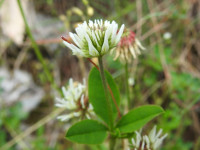
The leaves are composed of three leaflets (ternate), ovate or elliptical in shape, with margins generally entire but sometimes slightly denticulate. The leaflets have a herbaceous texture and are covered with hairs on both surfaces, giving a somewhat silky pubescence. The lower leaves are broader and with patent hairs, while the upper ones, subopposite and petiolate, are narrower and with appressed hairs. The stipules are linear, acute, membranous, ciliate-pubescent especially at the apex, and progressively taper into a long and thin point.
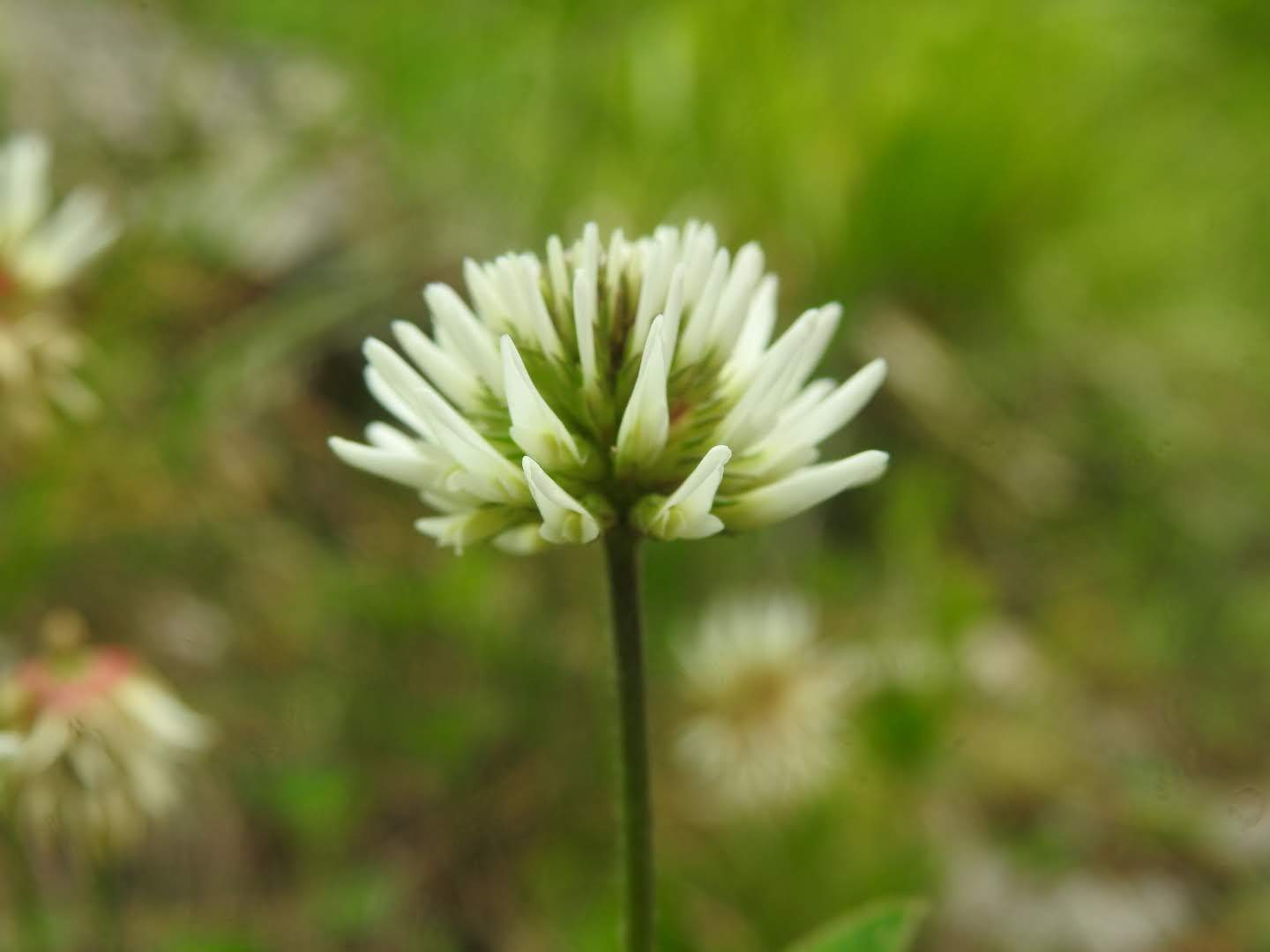
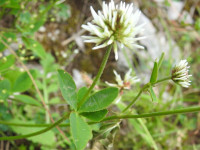
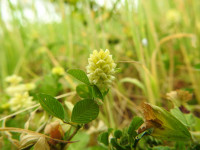
The inflorescence appears as an ovoid or subglobose head, generally pedunculate or almost sessile, with a diameter between 1.5 and 2.5 cm. The calyx has a tube 3-4 mm long, externally glabrescent or hairy, with 10 well-visible nerves. The calyx teeth are unequal, from 4 to 7 mm in length; the lower one is longer and triangular-acute in shape, while the other four upper ones are shorter, lanceolate-subulate, all ciliate and with evident veins.
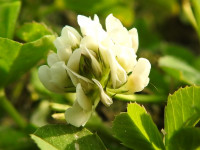
The flowers, 13-20 mm long, are white-yellowish in color, sometimes with slight reddish shades, and are arranged more or less densely inside the head. The corolla is about twice as long as the calyx and falls off early after flowering.
The fruit is an ovoid legume with a thin and membranous pericarp, containing smooth yellowish seeds.
The root system, as common in clovers, is taprooted with branched lateral roots, often in association with rhizobia for atmospheric nitrogen fixation, but there are no specific data on the root peculiarities of this species.
Habitat and distribution
This species is widely distributed throughout the Italian territory and extends along the coasts and inland of the Mediterranean basin, with a range that also reaches more northern and eastern regions of Europe. It is also present in areas with steppe continental climate around the Black Sea.
It prefers mountainous and submontane habitats, growing at altitudes between 400 and 1500-2000 meters above sea level. It is commonly found in dry meadows, forest clearings, and shaded rocks. It favors well-drained soils, often calcareous or rocky, with exposures that vary but generally prefers semi-shaded or bright environments not excessively exposed to full sunlight.
Flowering period
Flowering mainly occurs between April and June. The flowering phase may show slight variations depending on altitude and region, occurring earlier in lower and temperate environments and later in higher and colder ones.
Ecology and pollination
Trifolium ochroleucon is mainly pollinated by pollinating insects, particularly bees and bumblebees, attracted by the light color and shape of the flowers. The corolla, with its typical bilabiate shape of Fabaceae, favors entomophilous pollination, facilitating pollen transfer between flowers of the same plant or nearby plants.
Seed dispersal naturally occurs through the fall of mature legumes, which can also be transported by small animals or water in rather dry areas. No particularly specialized dispersal strategies are known.
Curiosities and traditional uses
There are no specific records regarding medicinal or traditional food uses of Trifolium ochroleucon. Like other clovers, it may have an ecological role in nitrogen fixation in the soil, improving its fertility, but there are no testimonies of direct use in folk medicine or nutrition.
The common name "yellowish clover" refers to the general appearance of the plant, with flowers showing a yellowish coloration tending towards ochre white.
Etymology
The genus name, Trifolium, derives from the Latin "tri" (three) and "folium" (leaf), referring to the typical leaf composed of three leaflets. The specific name "ochroleucon" derives from two Greek terms: "okhrós" meaning yellow or yellowish, and "leukós" meaning white, recalling the characteristic color of the corolla, which is white-ochre or white-yellowish.
The Italian name "trifoglio giallognolo" also refers to the yellowish color of the flowers, which distinguishes this species from other clovers with white or red flowers.
Sources
- Acta Plantarum - Flora delle regioni italiane (scheda di Marinella Zepigi)
- World Flora Online (WFO)
Characteristics
Where I found it (5 sightings)
Classification
- Kingdom
- Plantae
- Family
- Fabaceae
- Full name
- Trifolium ochroleucon Huds.
- Life form
- Emicriptofite cespitose
Similar species
Search for species with similar characteristicsFurther reading
Noticed an error in the identification? Write to me
Other species of the same family
Fabaceae
Explore
Other species of Fabaceae