Botanical family
Caryophyllaceae
Description
Botanical characteristics
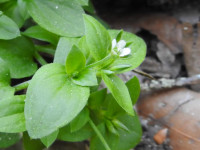
The plants belonging to this family are predominantly annual or perennial herbs, rarely shrubby, characterized by stems with well-defined nodes and often branches with limited growth (cymose). The leaves are simple, entire, generally arranged oppositely along the stem, sometimes whorled, and lack stipules.
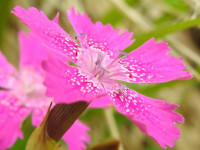
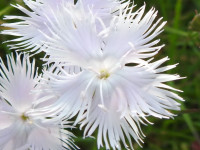
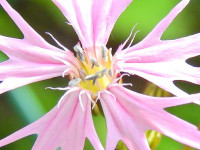
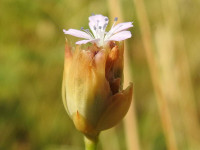
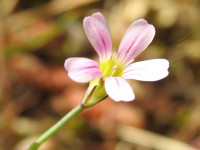
The flowers are usually hermaphroditic, rarely unisexual, generally actinomorphic (radially symmetrical), and have a pentamerous or tetramerous composition. The calyx is persistent and can be gamosepalous (with fused sepals) or dialisepalous (with distinct sepals), with 4-5 divisions. The petals, free to the base, number 4-5 and often have fringed or divided margins. The androecium has a number of stamens ranging from 3 to 10, generally twice the number of petals.
The ovary is superior or semi-inferior, composed of 2-5 carpels with 1-5 free styles; the ovules are inserted on a central column. The fruit is typically a unilocular capsule, which opens (dehiscence) along 4-6 valves to release the seeds, which are often numerous and kidney-shaped. In some genera, such as Cucubalus, the fruit can be a berry.
Reproduction is predominantly entomogamous, mediated by insects such as dipterans and lepidopterans.
Distribution and diversity
The family is widely distributed especially in the temperate and cold zones of the northern hemisphere, but is present practically worldwide, with few species in Australia. Globally it includes about 102 genera and numerous species, many of which are native to Italy (about 180 species).
Main genera and representative species
Among the most important genera are:
- Silene: one of the most numerous and widespread genera, with many species present in Italy, known for their showy and often fragrant flowers.
- Dianthus: including species highly valued in ornamental horticulture, such as the carnation.
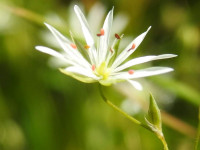
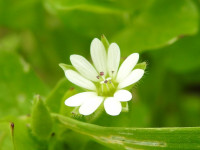
- Stellaria: characterized by small and delicate flowers, often with deeply notched petals.
- Caryophyllus: a genus including plants with generally pink or white flowers.
- Corrigiola and Telephium: representatives of the tribe Corrigioleae.
- Eremogone and Thylacospermum: belonging to the tribe Eremogoneae.
In Italy, many species belonging to these tribes are common in various habitats, from pastures to rocky areas and grasslands.
Etymology
The name of the family derives from the type genus Caryophyllus, from the Greek karyon (nut) and phyllon (leaf), which may refer to the shape or texture of the leaves or the shape of the flowers, although the precise etymology is not completely known.
Sources
- Wikipedia
Species of the family
23 species catalogued

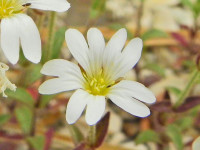
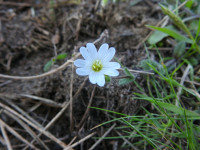

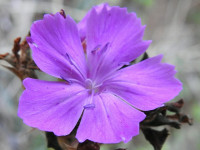
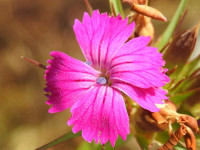


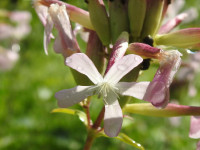

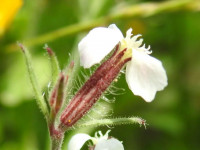
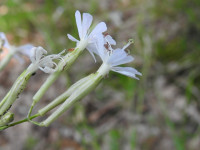
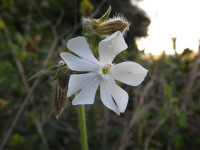
Explore
Other botanical families