Botanical family
Chenopodiaceae
Description
Botanical characteristics
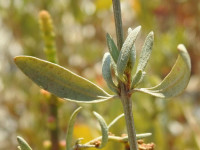
Plants belonging to the Chenopodiaceae family are mostly annual or perennial herbs, but also include shrubby and bushy forms. The stem can often be fleshy and lignified at the base, sometimes jointed. The leaves, which can be alternate, opposite, or scattered, show marked polymorphism depending on their position on the plant. Some species have fleshy leaves, others reduce them to scales; in cultivated cases, they may develop with a fleshy petiole and central vein.
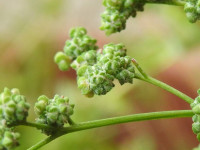
The flowers are small, inconspicuous, hermaphroditic or unisexual (both monoecious and dioecious), with a pentamerous perigonium of greenish color and 2-3 bracts. They are arranged in abundant terminal inflorescences at the apex of stems or branches. The perianth usually has 5 sepal-like segments, but can vary from 3 to 1 or be absent. The stamens, from 1 to 5, are opposite the perianth segments. The ovary is superior and formed by 2 (rarely 3-5) carpels. The fruit is an achene or a nutlet, sometimes enclosed by the remains of the perigonium.
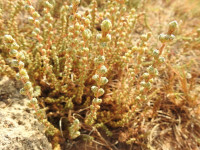
A fundamental characteristic of Chenopodiaceae is their ability to live in environments with high osmotic values, such as saline or nitrate-rich soils. They are typically nitrophilous (preferring nitrogen-rich soils), halophilous (linked to saline habitats), or halophilous-nitrophilous. From a physiological point of view, they accumulate sodium and potassium salts in the leaves to increase the internal osmotic potential, thus allowing water absorption even under severe water stress. Many species also present xerophytic adaptations such as fleshy tissues, waxes or hairs on the leaf surface, and aquiferous parenchymatic tissues to limit water loss.
Distribution and diversity
The family probably originated in the salty deserts of Central Asia, from which it spread to various arid and brackish zones worldwide, including the Sahara, Mediterranean coasts, and finally globally. Chenopodiaceae are present in all temperate and subtropical regions of the planet, occupying challenging habitats such as deserts, dry steppes, beaches, salt ponds, and soils with periodic or permanent salt accumulations.
Although the exact number of genera and species may vary depending on taxonomic classifications, the group includes several dozen genera and hundreds of species worldwide, many of which have adapted to extreme environmental conditions.
Main genera and representative species
Among the best-known and most important genera are:
- Chenopodium: includes nitrophilous herbaceous species. Some are considered common spontaneous plants in Italy.
- Atriplex: genus with halophilous-nitrophilous species, widespread in Mediterranean brackish environments.
- Salicornia, Arthrocnemum, Salsola, Suaeda: typical genera of halophilous zones, often found on coasts and salty soils.
- Beta: includes species of great agrarian importance such as Beta vulgaris, which comprises varieties cultivated for sugar beet, fodder beet, chard, and roots production.
- Spinacia: represented by spinach (Spinacia oleracea), cultivated throughout Italy for food use.
- Chenopodium quinoa: known as quinoa, an Andean pseudocereal highly valued for its nutritional properties.
In Italy, both spontaneous species of Chenopodium and Atriplex and cultivated species such as chard and spinach can be found.
Etymology
The family name derives from the type genus Chenopodium, a term coming from the Greek "chen" (goose) and "podion" (little foot), probably referring to the shape of the leaves which resemble a goose's feet.
Curiosities and uses
Chenopodiaceae play a fundamental ecological role in saline and arid ecosystems, as they are among the few plants capable of colonizing and thriving in environments characterized by high salinity and water stress.
From an economic point of view, some species are cultivated for human and animal consumption. Sugar beet, chard, and spinach are widely consumed vegetables. Quinoa has also gained global importance as a nutritionally rich food.
However, it is important to consider that some Chenopodiaceae can accumulate nitrates and nitrites in the leaves in high quantities, especially if subjected to intense nitrogen fertilization or grown under shading conditions. These compounds can pose a risk to human health as precursors of potentially carcinogenic nitrosamines. To minimize such risks, proper cooking of vegetables, removal of the more fibrous parts, and dietary supplementation with vitamins C and E are recommended.
Sources
- Wikipedia
Species of the family
5 species catalogued
Explore
Other botanical families