Leaf
Consistency: semi-succulent
20
Species
Species with this characteristic
20 species catalogued
sorted alphabetically
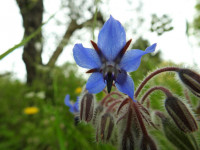
Borago officinalis
Borage
Boraginaceae
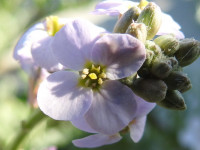
Cakile maritima
Sea Rocket
Brassicaceae
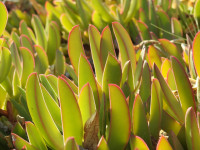
Carpobrotus edulis
Hottentot-Fig
Aizoaceae

Ecballium elaterium
Squirting Cucumber
Cucurbitaceae
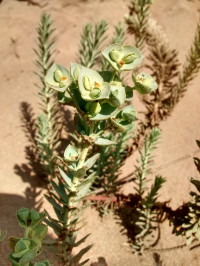
Euphorbia paralias
Sea Spurge
Euphorbiaceae
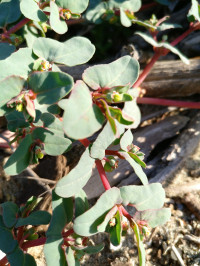
Euphorbia peplis
Purple Spurge
Euphorbiaceae
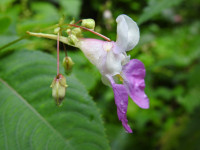
Impatiens balfourii
Balfour's Touch-Me-Not
Balsaminaceae
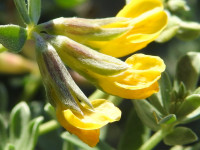
Lotus cytisoides
Ginestrino delle scogliere
Fabaceae
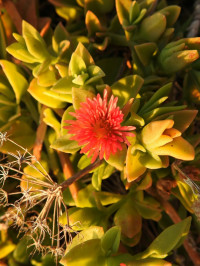
Mesembryanthemum cordifolium
Brack Mesemb
Aizoaceae
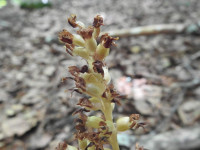
Monotropa hypopitys
Yellow Bird's-nest
Ericaceae
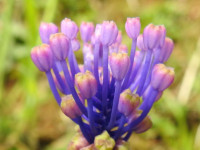
Muscari comosum
Tassel Hyacinth
Asparagaceae
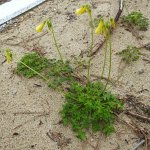
Oxalis pes-caprae
Bermuda-Buttercup
Oxalidaceae
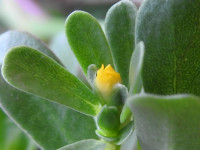
Portulaca oleracea
Common Purslane
Portulacaceae
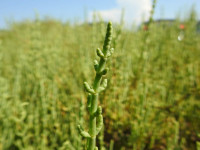
Salicornia fruticosa
Shrubby Swampfire
Chenopodiaceae
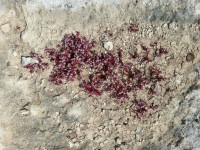
Sedum caeruleum
Baby-blue Stone-crop
Crassulaceae
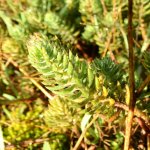
Sedum sexangulare
Tasteless Stonecrop
Crassulaceae
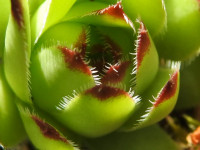
Sempervivum tectorum
House-Leek
Crassulaceae
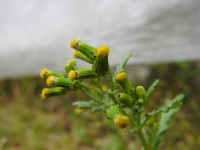
Senecio vulgaris
Groundsel
Asteraceae
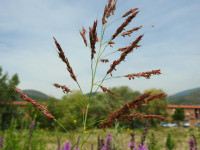
Sorghum halepense
Johnson-Grass
Poaceae
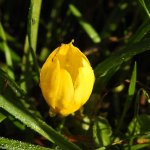
Sternbergia lutea
Winter Daffodil
Amaryllidaceae
Frequently asked questions
- How many species with the characteristic «Consistency: semi-succulent» are catalogued?
- The catalogue contains 20 Italian wild plant species with the characteristic «Consistency: semi-succulent».
- How to recognise species with the characteristic «Consistency: semi-succulent»?
- Species with characteristic «Consistency: semi-succulent» are identified by observing this feature. Each species sheet includes field photographs to facilitate recognition.
- Where in Italy do species with «Consistency: semi-succulent» grow?
- They grow in various Italian natural habitats: meadows, woods, coastal areas, rocky environments and wastelands. Distribution varies by species.
- How to use leaves to identify these plants?
- Leaf shape, margin and venation are key identification features. Species sheets include detailed photographs of leaves.
Explore
Other botanical characteristics