Botanical family
Plantaginaceae
Description
Botanical characteristics
Plants belonging to the family Plantaginaceae are mainly herbaceous, annual, biennial or perennial, but also include small shrubs and, in rare cases, trees. The habit can vary from rosulate to scapose, with erect, ascending or prostrate stems, sometimes quadrangular due to the presence of collenchymatic bundles. Some species are aquatic or submersed, with submerged buds and floating stems. The indumentum varies from glabrous to villous or glandular-pubescent. No parasitic species are found.
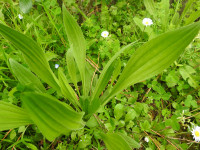
The leaves can be arranged in basal rosettes or along the stem with opposite, alternate or spiral arrangement, without stipules. Leaf shapes are very varied: from linear, lanceolate, ovate, orbicular to reniform, with margins generally entire but sometimes dentate or crenate. The venation is often longitudinal and parallel, as in the genus Plantago.
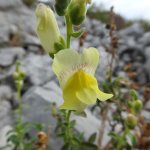
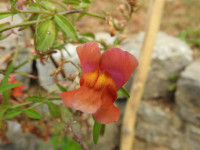
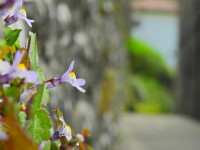
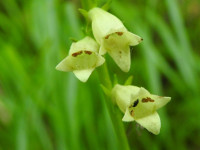
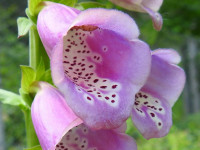
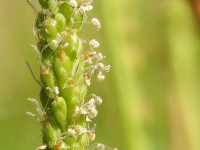
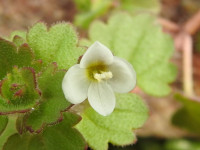
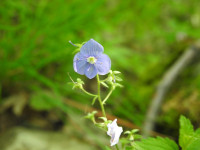
The inflorescences are typically spicate, capitulate or racemose, often supported by a naked scape and with small and inconspicuous flowers. The flowers are tetracyclic and tetramerous or pentamerous, sessile or pedicellate, hermaphrodite or unisexual depending on the genus. The calyx is gamosepalous with 4 or 5 sepals, almost always connate, tubular, campanulate or funnel-shaped, sometimes bilabiate. The corolla is gamopetalous, often bilabiate, with 4 or 5 petals in tubular or campanulate forms, sometimes with spurs or basal gibbosities. Colors range from white to blue, pink, red or cream.
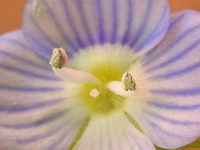
The androecium consists of 4 didynamous stamens (two long and two short) with filaments adnate to the corolla. The anthers, bilocular with distinct thecae, open longitudinally. The gynoecium is bicarpellate with a superior bilocular ovary, with axile placentation and numerous ovules. The style is single with a often bilobed and sometimes plumose stigma.
The fruit is a dehiscent capsule, of the septicidal, loculicidal, poricidal or circumscissile type, containing small and numerous seeds. Some fruits may be indehiscent.
The distinctive characters of the family include the presence of didynamous stamens, the bilabiate or actinomorphic corolla, the carpels connate in a superior ovary, axile placentation and the capsular fruit.
Distribution and diversity
The family Plantaginaceae has a cosmopolitan distribution, with species widespread in almost all regions of the world, from the Mediterranean environment to tropical and temperate ones. Species adapt to a wide range of habitats, from dry soils to wet and aquatic areas.
The family includes dozens of genera and hundreds of species, with remarkable morphological and ecological diversity. In Italy, numerous genera and spontaneous species belonging to this family are present.
Main genera and representative species
Among the most important and widespread genera of the family are:
- Plantago: type genus of the family, includes herbaceous species with basal rosettes and leaves with parallel veins, such as Plantago major and Plantago lanceolata, common in temperate and Mediterranean areas.
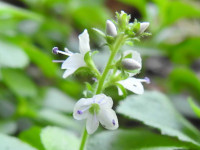
- Veronica: includes herbaceous and shrubby species, often with spicate inflorescences and bilabiate corollas, widespread in Europe and Asia.
- Callitriche: aquatic genus with vegetative forms adapted to life in water, characterized by unisexual flowers and absent corolla.
- Hippuris: aquatic, with branched stem and leaves arranged in whorls.
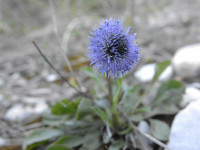
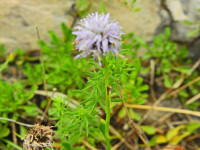
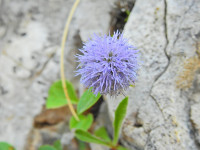
- Globularia: with very small capitulum inflorescences inserted in a scaly receptacle.
The best-known Italian species include various Plantago, Veronica and Callitriche, representing an important part of the spontaneous Mediterranean flora.
Etymology
The family name derives from the type genus Plantago, whose Latin name "planta" means "sole of the foot" and refers to the flat shape of the basal leaves resembling the sole of a foot. The scientific name Plantaginaceae was defined by the French botanist Antoine-Laurent de Jussieu in 1789.
Sources
- Wikipedia
Species of the family
18 species catalogued
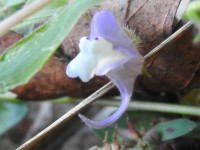
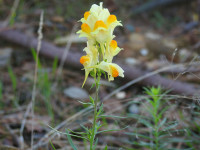
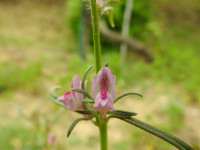
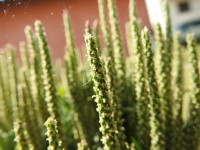
Explore
Other botanical families