Botanical family
Brassicaceae
Description
Botanical characteristics
Brassicaceae are predominantly herbaceous plants, sometimes suffruticose or small shrubs, characterized by generally alternate leaves often gathered in a basal rosette. The leaf blade is frequently incised or pinnate and lacks stipules.
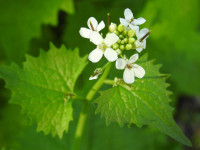
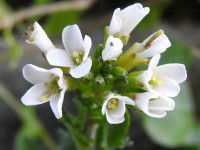
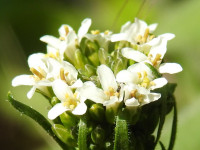
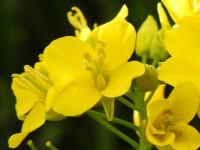
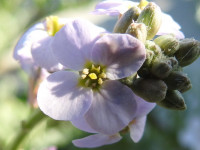
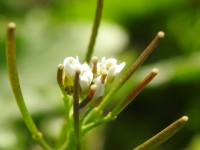
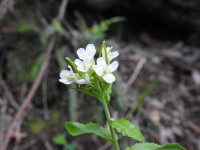
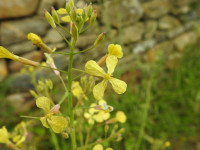
The flowers, hermaphroditic and actinomorphic (radially symmetrical), have a typical structure that gave rise to the alternative name "Cruciferae," due to the arrangement of the four petals resembling a cross. The corolla is dialypetalous, with four sepals arranged in two pairs (2+2). The androecium is tetradynamous, composed of six stamens, four long and two shorter, arranged in a cross. The ovary is superior, bicarpellate, and gives rise to dry dehiscent fruits, classified as siliques if elongated or silicles if shorter and almost isodiametric. These fruits open by two valves leaving a central septum (replum) exposed to which the seeds are attached. Some species, such as Cardamine, possess a snap dehiscence mechanism that favors seed dispersal.
The family is distinguished by these morphological and reproductive characteristics, as well as by predominantly entomophilous pollination (carried out by insects).
Distribution and diversity
Brassicaceae is one of the most numerous and widespread families among Angiosperms, with a global presence covering all continents, including polar climates. The main center of biodiversity is located in the Mediterranean basin, a particularly species- and genus-rich area.
In Europe, 107 genera are recognized, of which 72 are present in Italy. Globally, the family includes over 300 genera and about 4,000 species. Their distribution mainly concerns the temperate and cold zones of the planet.
Main genera and representative species
Among the most important and well-known genera of the Brassicaceae family, many have significant economic and food value:
- Brassica: includes numerous cultivars used as vegetables, such as cabbages, turnips, cauliflowers, and rapeseed, as well as some mustard species;
- Sinapis: includes mustard species, whose seeds are used for the production of the famous Dijon mustard sauce;
- Raphanus: known for the radish;
- Eruca: includes arugula, widely used in Mediterranean cuisine;
- Armoracia: horseradish, used both in cooking and phytotherapy;
- Eutrema: represented by wasabi, a highly appreciated Japanese spice.
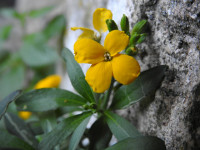
Some species are cultivated or collected for ornamental purposes, such as those belonging to the genera Matthiola and Cheiranthus (wallflowers), Alyssum, Lunaria (known as "honesty" for its translucent siliques used in dried floral arrangements), and Iberis, with sometimes weakly zygomorphic flowers.
Formerly, the species Isatis tinctoria was used to extract indigo, a natural dye.
Finally, Arabidopsis thaliana is a fundamental model species in genetic and botanical studies, thanks to its simplicity and rapid growth.
Etymology
The family name derives from the type genus Brassica, a term introduced by the Italian botanist Teodoro Caruel from the Celtic word bresic, meaning "cabbage." The ancient alternative name "Cruciferae" refers to the cross shape of the flowers, a distinctive characteristic of the family.
Curiosities and uses
Brassicaceae have significant ecological importance for temperate ecosystems, thanks to their wide distribution and key role in the diet of numerous pollinating insects.
From an economic and food perspective, the family is one of the most relevant: many species are cultivated worldwide for vegetables, spices, and oils (e.g., rapeseed). Mustard sauce, famous as "Moutarde de Dijon," is produced using seeds of Brassica juncea and Sinapis alba.
Besides food uses, some species are employed in ornamental gardening and others are important for scientific research.
Sources
- Wikipedia
Species of the family
16 species catalogued
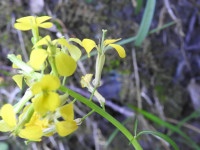
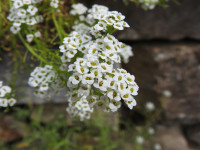
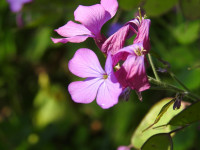
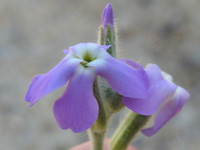

Explore
Other botanical families