Botanical species
Raphanus raphanistrum
L.
Wild Radish
Description
Morphological description
Annual or biennial herbaceous plant, with an erect or ascending habit, which can reach a height ranging from 20 to 80 cm. The stem is robust, generally branched and has a rough or hairy surface especially in the lower part. Sometimes it can also be slightly bent at the base. The root system is taproot type, with a thin, hard, and pivoting root.
The basal leaves are large, about 8-15 cm long, lyrate-pinnatifid in shape with 2-5 lateral ovate-lanceolate and toothed segments and a larger lanceolate terminal segment (2-3 x 4-6 cm), also with serrated margins. The upper cauline leaves are smaller, oblong or lanceolate, often simple or slightly divided, with still toothed margins and herbaceous texture, and are generally subsessile. The leaf surface is predominantly hairy or rough, with more evident hairs along the central vein.
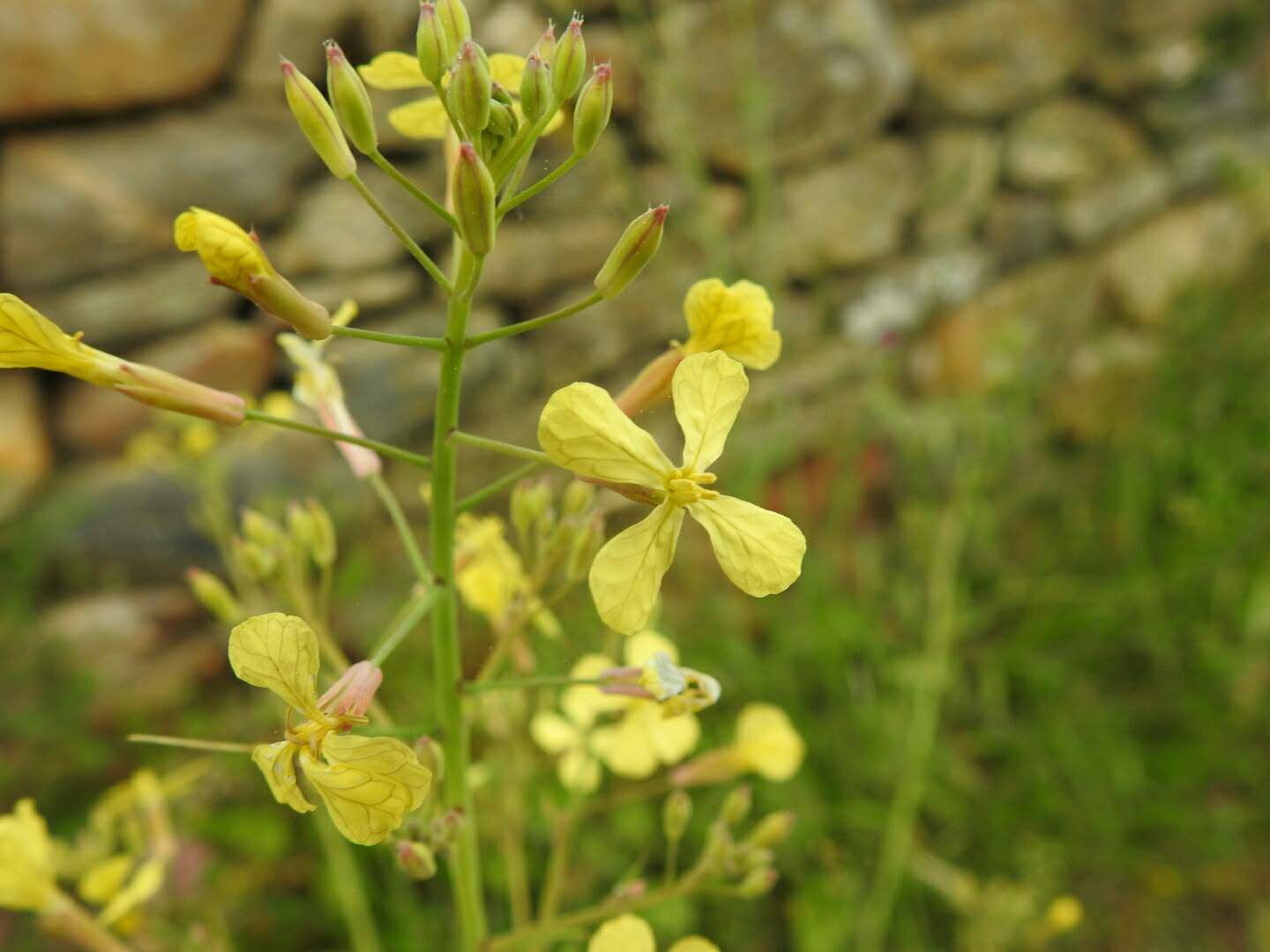
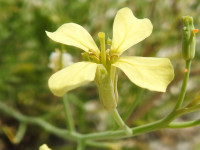
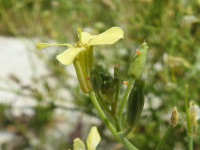
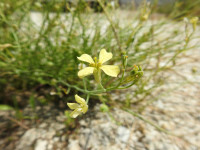
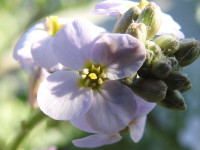
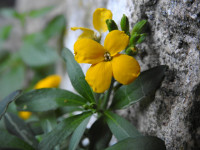
The flowers, arranged in terminal scapose racemes, are bright yellow, sometimes with violet or whitish shades, and have four obovate or spatulate petals 14-25 mm long, with a claw elongated up to 15 mm. The sepals are lanceolate, violet or light green in color, sometimes glabrous or with few hairs at the apex. The flower is typical of the Brassicaceae family, with four petals arranged in a cross.
The fruit is an erect or curved silique 3-6 cm long and 3-6 mm wide, characterized by a hard surface marked by longitudinal ribs. This fruit is segmented into transverse portions that separate at maturity, each containing a single seed, and ends with a thin and elongated beak, 4-5 times the length of the final portion of the fruit itself. The seeds are subglobose, brown in color and of variable size, with a reticulated surface.
Habitat and distribution
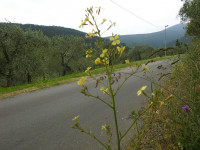
Wild Radish is a species native to Europe and Western Asia, also widespread in North Africa and naturalized in many other regions of the world. In Italy it is common throughout the territory, from the plains up to several hundred meters in altitude, often along coasts, in cultivated lands, along road margins, in disturbed areas and on dry or sandy soils. It prefers sunny exposures and well-drained soils, but also adapts to more difficult conditions, showing a particular affinity for marine and coastal environments.
Flowering period
Flowering mainly occurs between March and June, with flowering peaks typical of late spring. In some areas it can extend until July, especially in more temperate regions or in the presence of mild climates, while in colder areas flowering is more concentrated in the spring months.
Ecology and pollination
The species is mainly pollinated by pollinating insects, such as bees and other pollinators, attracted by the yellow flowers and their arrangement in easily accessible terminal racemes. The reproductive strategy is typical of Brassicaceae, with hermaphroditic flowers that favor both cross-pollination and self-fertilization. Seed dispersal occurs through the breaking of mature siliques which divide into segments containing a single seed, facilitating their distribution in the surrounding soil. The species is considered a weed in many crops, as it spreads rapidly in fields and can compete with agricultural crops.
Curiosities and traditional uses
Wild Radish is mainly known as a weed in crops, but in the past it was used for food and medicinal purposes. Young shoots and leaves can be consumed raw or cooked, similar to those of cultivated radish, although with a more pungent and bitter taste. In traditional herbal medicine, the plant has been used for its digestive and purifying properties, although it is not very common in modern phytotherapeutic remedies. In rural folklore, the presence of this plant in fields was often associated with soil fertility or particular climatic conditions favorable to sowing.
Etymology
The scientific name derives from Latin Raphanus, which indicates radish, and from ancient Greek raphanos, an ancient term for plants with an edible root similar to radish. The specific epithet raphanistrum means “small radish,” emphasizing the resemblance to the cultivated species but in wild form. The Italian common name “ravanello selvatico” clearly reflects this relationship with the garden radish, distinguishing it by its spontaneous and weedy nature.
Sources
- Prof. S. Pignatti, "Flora d'Italia"
- Acta Plantarum - Flora delle regioni italiane (scheda di Anja Michelucci)
- Tela Botanica / H. Coste, "Flore descriptive et illustrée de la France"
- World Flora Online (WFO)
Characteristics
Scheda botanica
| Famiglia | Brassicaceae |
|---|---|
| Fioritura | marzo – giugno |
| Forma biologica | Scapose |
| Habitat | with yellow flowers, annual plant |
Domande frequenti
- Quando fiorisce Wild Radish?
- Wild Radish fiorisce marzo – giugno.
- Che tipo di pianta è Wild Radish?
- Wild Radish è una Therophytes (Scapose) secondo la classificazione di Raunkiaer.
- A quale famiglia appartiene Wild Radish?
- Wild Radish appartiene alla famiglia botanica Brassicaceae.
Where I found it (14 sightings)
Classification
- Kingdom
- Plantae
- Family
- Brassicaceae
- Full name
- Raphanus raphanistrum L.
- Life form
- Therophytes scapose
Similar species
Search for species with similar characteristicsFurther reading
Noticed an error in the identification? Write to me
Other species of the same family
Brassicaceae
Explore
Other species of Brassicaceae