Botanical family
Ranunculaceae
Description
Botanical characteristics
Ranunculaceae are a family of herbaceous plants, predominantly perennial, but also including annual species and some lianas. The leaves show great variability: they can be simple or divided, arranged alternately or oppositely, often without stipules. Their shape ranges from entire to strongly segmented.
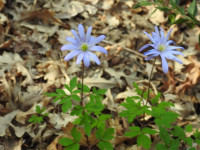
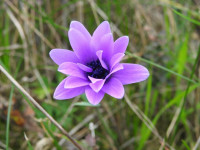
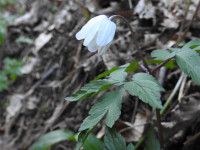
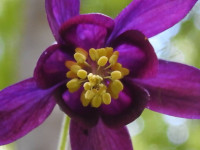
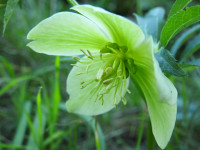
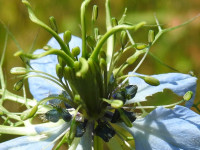
The flowers are generally showy and serve to attract pollinators. They can be solitary or grouped in racemose or cymose inflorescences. Their symmetry is mainly actinomorphic, but in some genera such as Aconitum and Consolida it becomes zygomorphic. The flower structure is considered primitive, with a perianth formed by one or two whorls not always clearly distinguished into calyx and corolla; sometimes the sepals take on a banner function, while the petals may be absent or transformed into nectariferous structures.
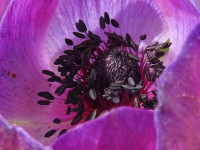
The androecium consists of numerous stamens arranged spirally with free filaments, often with some stamens modified to produce nectar. The gynoecium is apocarpous with numerous free carpels and a superior ovary. The fruit is generally a polyachene derived from separate carpels, but can also appear as a follicle, capsule, or, rarely, a berry. The variety of fruit represents an important character for the internal classification of the family.
Distribution and diversity
Ranunculaceae are mainly distributed in the temperate and cold regions of the northern hemisphere, where in some areas, such as Siberia, they can constitute up to 20% of the local angiosperm flora. They are less frequent in tropical and southern zones.
The family includes over 2000 species distributed in about 52 genera. Among the most numerous genera are Ranunculus, with about 600 species, Delphinium with 365, Thalictrum with 330, Clematis with 325, and Aconitum with 300 species. This wide diversity reflects a remarkable morphological and ecological variety.
Main genera and representative species
Among the most important and well-represented genera in Ranunculaceae are:
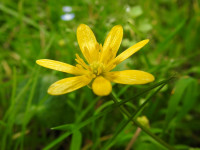
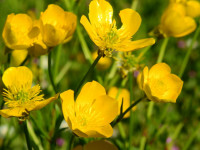
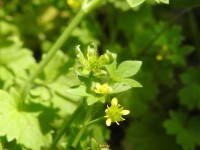
- Ranunculus: one of the largest genera, with species also widespread in Italy, often herbaceous with yellow or white flowers.
- Delphinium: characterized by large and showy flowers, often blue or purple, also cultivated for ornamental purposes.
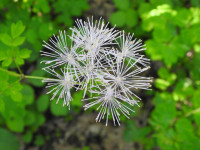
- Thalictrum: known for its finely divided leaves and small delicate flowers.
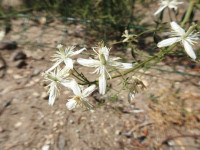
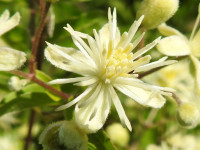
- Clematis: includes lianous species with very conspicuous flowers, widely used in gardening.
- Aconitum: also known as “monk’s hood,” includes poisonous species with helmet-shaped flowers.
In the Italian territory, several species belonging to these and other genera of the family are present, many of which characterize different natural environments, from mountain meadows to wetlands.
Etymology
The family name derives from the type genus Ranunculus, a Latin term meaning “little frog,” probably referring to the marshy or wet habitat preferred by many species of this genus.
Curiosities and uses
Many Ranunculaceae possess toxic compounds, such as alkaloids and glycosides, which give them poisonous or irritating properties, which is why some species have been used cautiously in traditional herbal medicine for their medicinal properties.
Numerous genera, including Anemone, Aconitum, Consolida, Delphinium, Helleborus, and Trollius, are appreciated and cultivated for the beauty of their flowers, very decorative in gardens and floral arrangements.
From an ecological point of view, these plants play an important role in the ecosystem as a source of nectar and pollen for numerous pollinating insects.
Sources
- Wikipedia
Species of the family
15 species catalogued

Explore
Other botanical families