Botanical species
Ranunculus repens
L.
Creeping Buttercup
Description
Morphological description
Perennial herbaceous plant belonging to the family Ranunculaceae, characterized by a creeping habit at the base with stems that rise in an ascending or erect position, reaching a maximum height of about 50-80 cm. The stems are glabrous or sometimes weakly pubescent, with a slightly hairy surface especially in varietal forms, and frequently root at the nodes, thus favoring rapid spread by stolons.
The basal leaves are 9-25 cm long, petiolate and trifoliate, with the blade divided into five deeply lobed or pinnatifid segments: the central segment is rhombic in shape, acutely lobed and borne on a long petiole; the two lower segments are opposite, petiolate; the two upper ones are opposite and sessile. The leaf texture is herbaceous, with serrated and sometimes slightly dentate margins. The cauline leaves are similar but progressively smaller and alternately arranged, with petioles gradually shorter until becoming sessile in the apical parts.
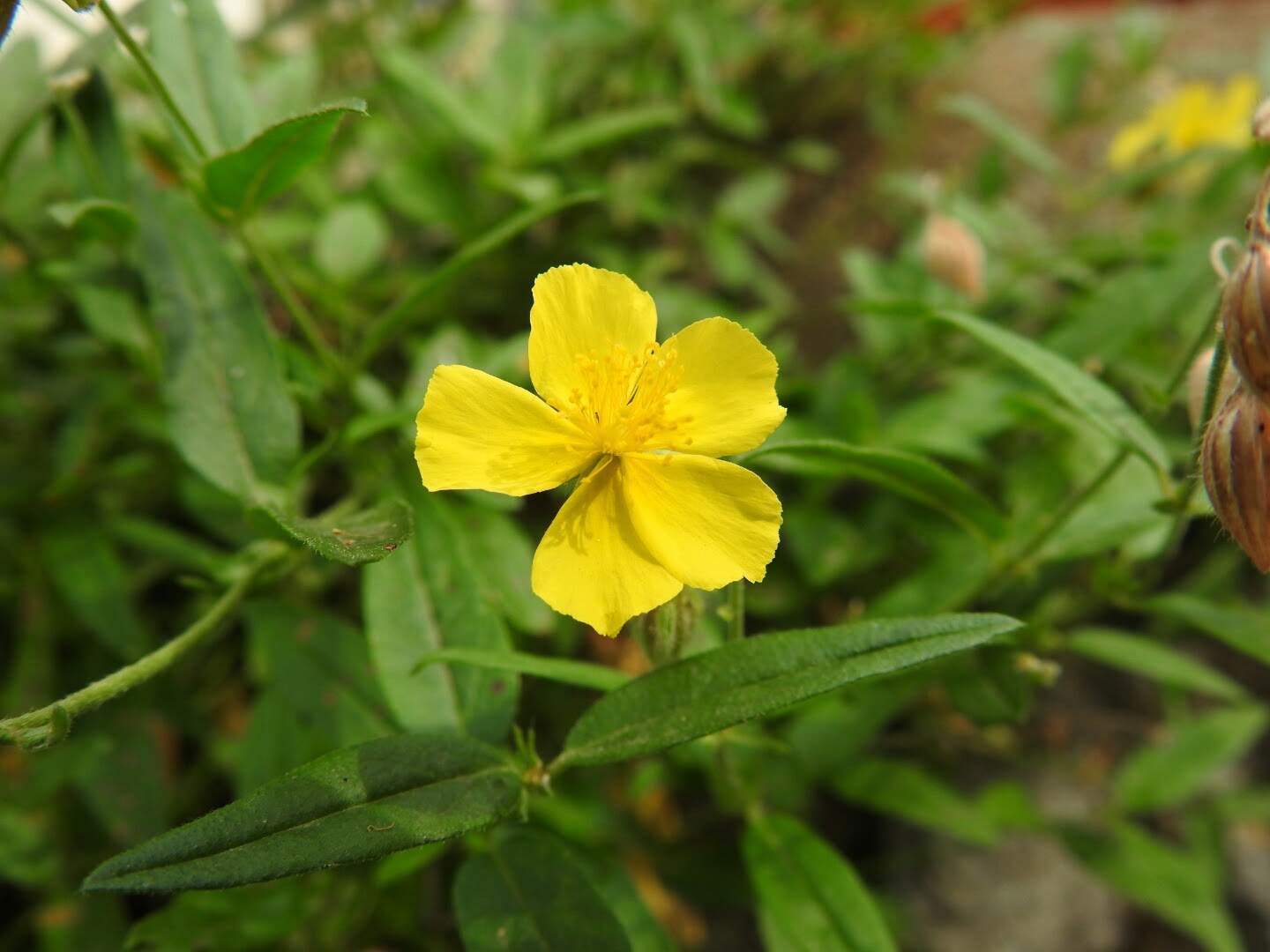
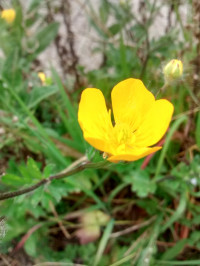
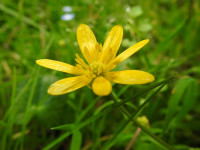
The flowers are solitary or grouped in multiflorous but not compact inflorescences, borne on striated peduncles 2 to 10 cm long. The flower diameter varies between 20 and 30 mm. The perianth consists of five green, pubescent and veined sepals, which fall at flowering. The corolla is formed by five obovate petals, bright golden yellow in color, about 7-13 mm long and 3.5-10 mm wide. In the center there is a densely pubescent receptacle, on which numerous stamens with yellow bilocular anthers are inserted, arranged in a spiral, and free carpels with successive achenes.
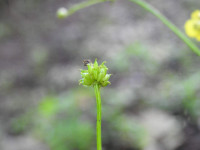
The fruit is an aggregate of smooth, compressed and slightly curved achenes, 3-4 mm long, each equipped with a thin and recurved beak about one third of its length. The achenes are distinguished by a dotted surface and are collected in subglobose fruiting heads about 6-7 mm in diameter.
The root system is fasciculate, without tuberous roots, and the plant also propagates effectively through creeping stolons that root at the nodes.
Habitat and distribution
The Creeping Buttercup is widely distributed throughout Italy and the Mediterranean basin, as well as in many other temperate regions of Europe, North Africa, Asia and North America. It grows mainly in wet environments such as meadows often subject to seasonal flooding, shores of lakes, ponds, ditches and clayey or silty soils. It prefers exposures in cool or partially shaded areas, from the plains up to high mountain altitudes, reaching up to 2,000 meters above sea level.
The preferred soil type is moist, often clayey and rich in organic matter, but the plant shows some adaptability to different substrates as long as they are not too dry. It is often found also in anthropized environments such as roadsides, cultivated fields and disturbed areas, where it can behave as a weed species.
Flowering period
Flowering extends from spring to summer, typically from March to August, with a peak in the spring months and early summer. In more northern or mountainous areas flowering may shift slightly towards the summer months, while in Mediterranean regions it is earlier.
Ecology and pollination
The Creeping Buttercup is mainly pollinated by pollinating insects such as bees, bumblebees and other hymenopterans attracted by the bright yellow color of the petals and the presence of nectar. The flower structure, with stamens and carpels inserted spirally on the hairy receptacle, facilitates contact with insects and effective pollen transfer.
The plant also reproduces vegetatively thanks to its creeping stolons that root easily, allowing rapid local expansion. The small achenes produced are also dispersible through mechanical attack or animal transport, although the main dissemination remains vegetative.
Curiosities and traditional uses
The Creeping Buttercup is known for its toxicity due to the presence of anemonin, a substance irritating to the skin and poisonous to humans and animals if ingested fresh. Herbivores avoid grazing the live plant, while they may consume it after drying, when the toxic principles are reduced.
In the past, the plant was used in phytotherapy as an analgesic and rubefacient, but such uses are now abandoned due to its toxicity. No food or medicinal use is recommended without specialist supervision.
From an ethnobotanical point of view, it has had little use but remains an interesting species for its rapid growth and colonization ability, often considered a weed in agricultural lands.
Etymology
The genus name “Ranunculus” derives from the Latin diminutive of “rana” (frog = ranunculus = “little frog”), probably because of its frequent wet and marshy habitat reminiscent of environments frequented by frogs. The specific name “repens” means “creeping”, referring to the characteristic habit of its stolons spreading on the ground.
The Italian common name “ranuncolo strisciante” highlights precisely this growth mode, distinguishing it from other more erect or bushy buttercup species.
Sources
- Prof. S. Pignatti, "Flora d'Italia"
- Acta Plantarum - Flora delle regioni italiane (scheda di Marinella Zepigi)
- Tela Botanica / H. Coste, "Flore descriptive et illustrée de la France"
- World Flora Online (WFO)
Characteristics
Scheda botanica
| Famiglia | Ranunculaceae |
|---|---|
| Fioritura | marzo – agosto |
| Forma biologica | Creeping plants |
| Habitat | with yellow flowers, creeping plant, Perennial plant |
Domande frequenti
- Quando fiorisce Creeping Buttercup?
- Creeping Buttercup fiorisce marzo – agosto.
- Che tipo di pianta è Creeping Buttercup?
- Creeping Buttercup è una Hemicryptophytes (Creeping plants) secondo la classificazione di Raunkiaer.
- A quale famiglia appartiene Creeping Buttercup?
- Creeping Buttercup appartiene alla famiglia botanica Ranunculaceae.
Where I found it (16 sightings)
Classification
- Kingdom
- Plantae
- Family
- Ranunculaceae
- Full name
- Ranunculus repens L.
- Life form
- Hemicryptophytes creeping plants
Similar species
Search for species with similar characteristicsFurther reading
Noticed an error in the identification? Write to me
Other species of the same family
Ranunculaceae
Explore
Other species of Ranunculaceae