Botanical species
Ranunculus bulbosus
L.
Bulbous Buttercup
Description
Morphological description
Perennial herbaceous plant characterized by a bulbous root system, with a deep tuberous root of whitish color, which gives the base of the stem a typical and easily recognizable swelling. The stem is erect, often branched, with a height varying between 15 and 80 cm, with a grooved surface and covered with patent hairs, giving the plant a visibly hairy appearance.
The leaves are mostly basal, alternate and petiolate, with a lamina of subpentagonal or reniform outline. Each leaf is divided into three palmately lobed segments, with the central segment pedunculate and two to four times longer than the lamina. The cauline leaves, on the other hand, are sessile and progressively smaller, often reduced to thin linear-lanceolate lacinias. The leaf surface is also hairy, giving a velvety texture.
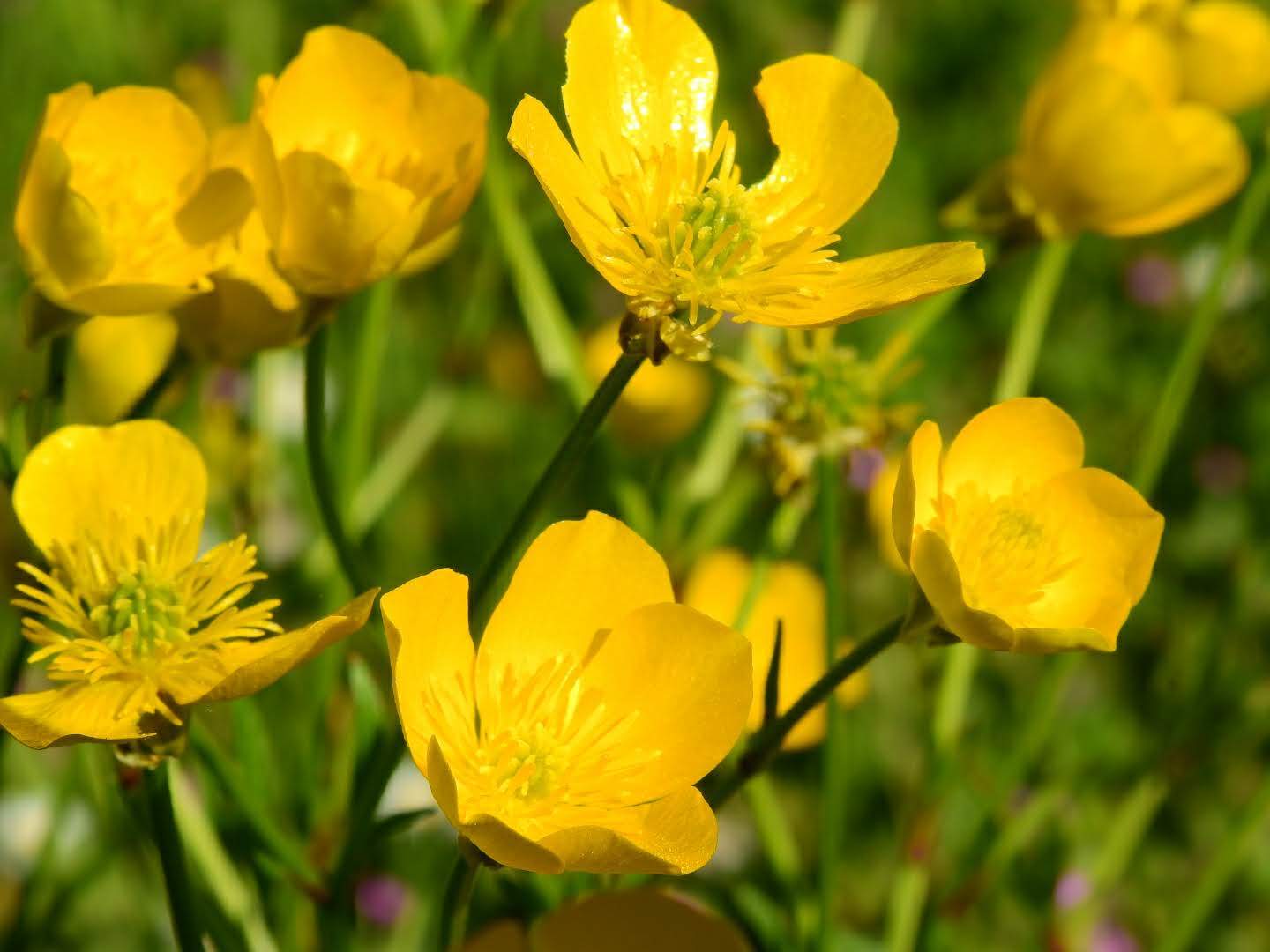
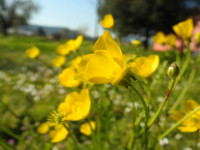
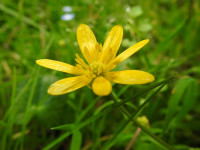
The flowers, solitary and borne on long grooved peduncles, are bright golden yellow, with a diameter of about 2-3 cm. The calyx is formed by five ovate-lanceolate sepals, deflexed and membranous, covered with long (villous) hairs on the outer surface, yellow-greenish in color, a distinctive characteristic of the species. The corolla has five ovate petals, each equipped at the base with a small nectariferous cavity, which favors the attraction of pollinating insects.
The fruits consist of polyachenes, each 2-4 mm long, compressed and glabrous in shape, with a robust, often curved beak (style), about 0.6-1 mm long. This type of fruit facilitates dispersal by attachment to small animals or mechanical transport.
Habitat and distribution
The species is typical of Eurasian regions, with a distribution extending from Europe to Japan. In Italy it is common and widespread in a wide variety of environments, especially in dry meadows, uncultivated places and along the edges of cultivated fields, where it can become invasive, particularly in herbaceous crops such as beet.
It grows on a wide range of soils, preferring well-drained soils and sunny or semi-shaded situations, with an altitudinal range from 0 up to about 2100 meters above sea level, from the plains to the hilly and subalpine zones. Its adaptability to dry environments and dry meadows makes it a frequent component of the spontaneous Mediterranean and temperate flora.
Flowering period
The flowering of the plant extends from March to October, with possible variations related to climate and latitude. In milder climates and Mediterranean areas, flowering can start early in spring and continue until autumn, while in colder or mountainous areas the period is shorter.
Ecology and pollination
The Bulbous Buttercup produces bright flowers rich in nectar, a characteristic that attracts a variety of pollinating insects, especially bees and other hymenopterans, which play a fundamental role in pollination. The presence of nectar cavities at the base of the petals represents an adaptation to encourage insect visits.
The plant reproduces mainly sexually through seed, which is dispersed thanks to the achenes equipped with a curved beak, facilitating transport by animals or mechanical spread. Being perennial and equipped with a bulbous root system, it can also regenerate from the base vegetatively, ensuring good survival and spread capacity in favorable habitats.
Curiosities and traditional uses
Like many species belonging to the Ranunculaceae family, the Bulbous Buttercup is a toxic plant due to the presence of acrid and irritating compounds. The toxicity decreases only after drying, therefore self-medication use is not recommended.
Nevertheless, the species has a long history of use in popular phytotherapy. It is known for its antispasmodic and analgesic properties, traditionally used as an aid in the treatment of sciatica and muscle pain. Since the 16th century it was also recommended in the prevention and treatment of cold sores, thanks to its soothing effect and ability to promote lesion healing, especially in homeopathic medicine.
A historical curiosity concerns the popular use by beggars: by rubbing the plant on the skin, they exploited its blistering properties to cause apparent wounds, in order to arouse pity and generosity from passersby.
Etymology
The genus name "Ranunculus" derives from the Latin "rana," meaning frog, referring to the buttercup species that often grow in wet and marshy environments, the preferred habitat of many species of the genus. The specific name "bulbosus" clearly refers to the bulbous swelling at the base of the plant, a distinctive characteristic that also inspired the Italian common name, "ranuncolo bulboso".
Sources
- Acta Plantarum - Flora delle regioni italiane (actaplantarum.org)
- Acta Plantarum - Flora delle regioni italiane (scheda di Marinella Zepigi)
- World Flora Online (WFO)
Characteristics
Scheda botanica
| Famiglia | Ranunculaceae |
|---|---|
| Fioritura | aprile – giugno |
| Forma biologica | Scapose |
| Habitat | with yellow flowers, toxic plant |
| Tossicità | Tossica — non consumare |
Domande frequenti
- Quando fiorisce Bulbous Buttercup?
- Bulbous Buttercup fiorisce aprile – giugno.
- È tossica Bulbous Buttercup?
- Bulbous Buttercup è una pianta tossica o velenosa. Non consumare nessuna sua parte senza aver consultato un esperto.
- Che tipo di pianta è Bulbous Buttercup?
- Bulbous Buttercup è una Hemicryptophytes (Scapose) secondo la classificazione di Raunkiaer.
- A quale famiglia appartiene Bulbous Buttercup?
- Bulbous Buttercup appartiene alla famiglia botanica Ranunculaceae.
Where I found it (14 sightings)
Classification
- Kingdom
- Plantae
- Family
- Ranunculaceae
- Full name
- Ranunculus bulbosus L.
- Synonyms
- Ranunculus bulbifer Jord.; Ranunculus bulbosus L. subsp. adscendens (Brot.) Neves; Ranunculus bulbosus L. subsp. aleae (Willk.) Rouy & Foucaud
- Life form
- Hemicryptophytes scapose
Similar species
Search for species with similar characteristicsFurther reading
Noticed an error in the identification? Write to me
Other species of the same family
Ranunculaceae
Explore
Other species of Ranunculaceae