Botanical family
Poaceae
Description
Botanical characteristics
Poaceae are herbaceous plants, annual or perennial, characterized by a stem articulated into nodes and internodes, called culm. In the internodes the culm is generally hollow, while at the nodes it is solid; rarely, as in maize, it is solid also in the internodes. The leaf sheath wraps around the culm and is clearly distinguished from the leaf blade, which ends with a membranous ligule or a tuft of hairs, important for identification. The leaves are distichous, arranged in two opposite rows along the culm.
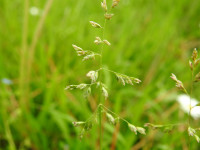
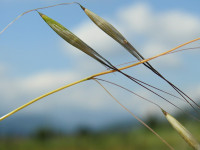
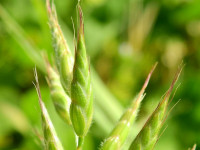
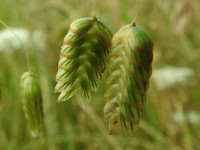
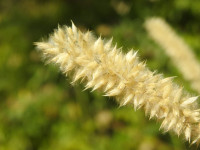
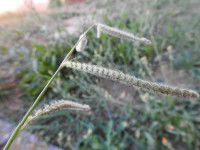
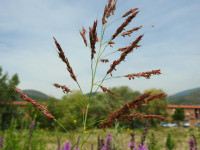
The flowers are hermaphroditic or unisexual, with a highly specialized and typical structure. They are gathered in small units called spikelets, which in turn group into inflorescences called spikes, panicles or racemes depending on the arrangement and branching. Each spikelet consists of an axis (rachilla) bearing two sterile bracts, the glumes, which enclose the actual flowers. The flowers are protected by two fertile bracts: the lemma (lower) and the palea (upper). The lemma may bear an awn (arista), which can be basal, dorsal or apical, and may present different shapes (twisted, geniculate, awnless).
The perianth is reduced to 1-2 scales called lodicules, remnants of sepals, which participate in the opening of the flower. The androecium usually consists of three stamens with pendulous anthers, while the gynoecium is composed of a carpel with a unilocular ovary containing a single ovule, and two or three feathery stigmas, adapted to anemophilous pollination (wind-borne). The typical fruit is the caryopsis, a dry indehiscent fruit with a seed endowed with starchy endosperm and a proteinaceous aleurone layer.
Distribution and diversity
Poaceae are a cosmopolitan family, present in almost all terrestrial environments, from forests to wetlands, from sandy dunes to agricultural habitats. They are particularly abundant and diversified in Mediterranean regions and in grasslands, savannas and steppes worldwide. The family includes about 799 genera and thousands of species, making it one of the richest families of the world flora.
In Italy, Poaceae are widely represented and occupy a fundamental ecological role in many natural and semi-natural ecosystems, as well as being the basis of many crops.
Main genera and representative species
Among the best known and widespread genera of Poaceae in Italy and the Mediterranean are:
- Poa: a large and complex genus, with herbaceous species present in meadows and pastures.
- Festuca: including perennial species often used for meadows and pastures.
- Lolium: important for forage crops, such as ryegrass.
- Hordeum: barley, with cultivated and wild species.
- Triticum: wheat, of great agricultural importance.
- Avena: oats, another fundamental cereal.
- Arundo: common reed, present in wetlands.
- Phleum: timothy, used as forage.
Moreover, species belonging to bamboos (Bambusoideae) are mainly present as introduced plants in Italy, while in nature they are typical of other regions.
Etymology
The family name derives from the type genus Poa, which in Greek means “grass” and refers to the herbaceous nature of the plants of this family.
Curiosities and uses
Poaceae have a fundamental ecological importance: they form dense grasslands and savannas that constitute essential habitats for numerous animal species, profoundly influencing terrestrial ecosystems. From an economic point of view, they are the basis of human and animal nutrition, thanks to the cultivation of cereals such as wheat, maize, barley, oats, rice and rye. Many species are also used as forage and ornamental plants.
Anemophilous pollination and the specialized structure of the flowers are key adaptations that have allowed Poaceae to colonize and dominate a wide range of environments, from temperate to arid climates.
Sources
- Wikipedia
Species of the family
14 species catalogued
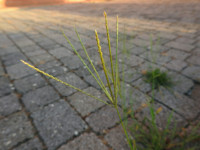
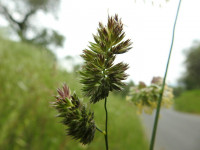
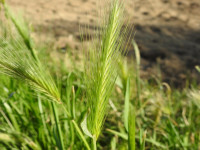
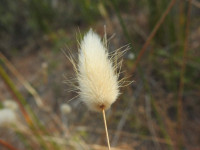
Explore
Other botanical families