Botanical species
Sporobolus indicus
(L.) R.Br.
Smut Grass
Description
Morphological description
Smut Grass is a perennial herbaceous plant belonging to the Poaceae family, characterized by a tufted habit with stems that generally develop in a prostrate-ascending manner, reaching a height ranging from 40 to 100 cm. The stem is erect, simple, glabrous and sparsely leafy in the upper part, with solid internodes 1-2 mm long. The plant has a short and fibrous rhizomatous root system that gives it excellent tenacity and the ability to colonize sandy and unstable soils.
The leaves are alternately arranged along the stem and have a linear shape, with entire margins and herbaceous texture. The leaf blade is up to 30 cm long and 3 to 5 mm wide, green tending to gray-green, often flat or slightly rolled inward, with rough margins and veins to the touch. The ligule is very short, replaced by a tuft of hairs about 0.5 mm long.
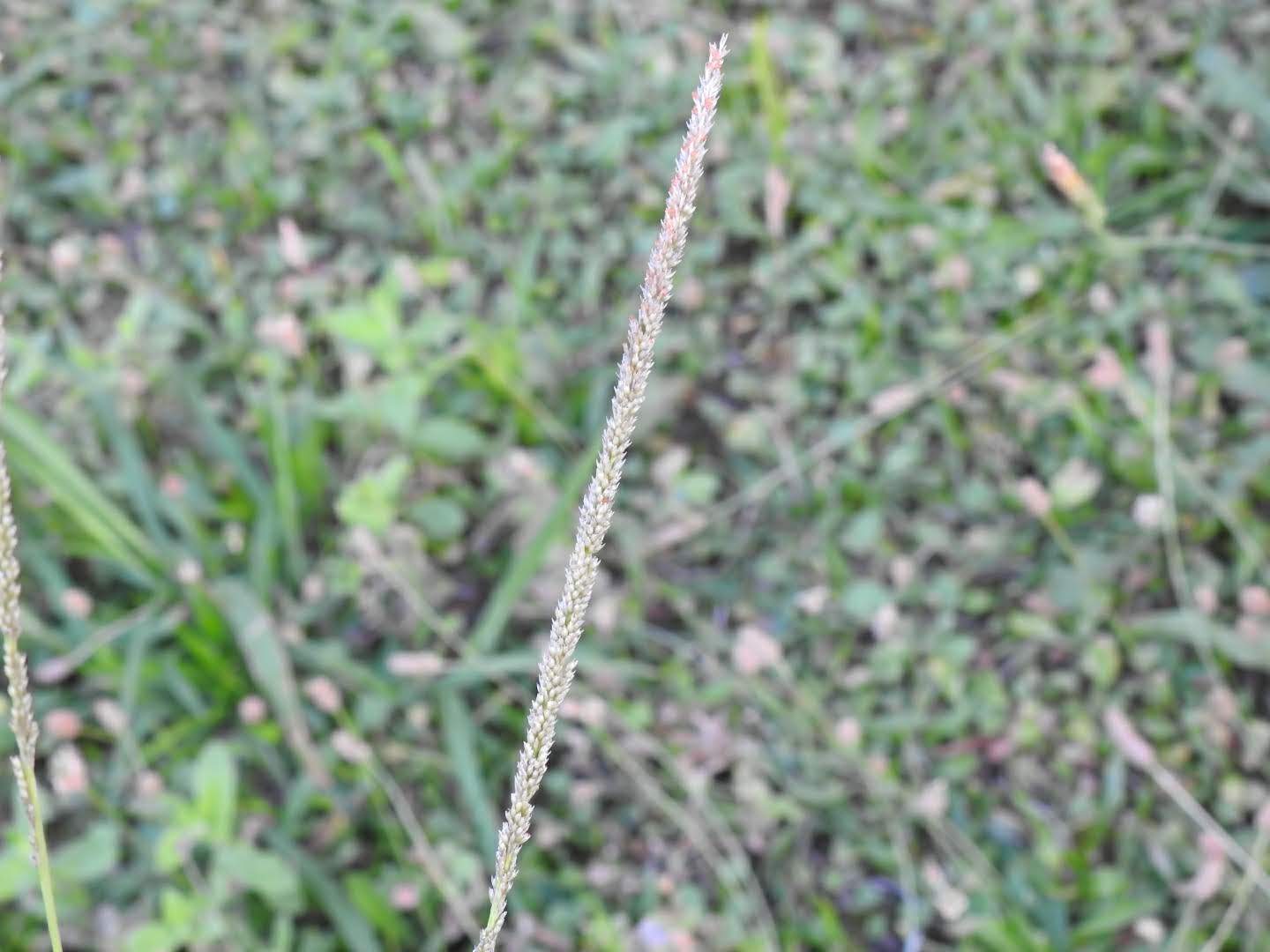
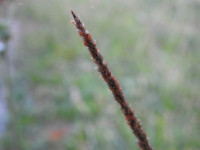
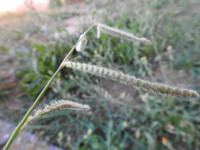
The inflorescence is a very narrow and elongated panicle, spike-like, measuring from 10 to 30 cm in length and 3-5 mm in width, with erect and almost hairless branches, often interrupted and lobed. The flowers are small, petal-less, white-greenish or violet, inserted in spikelets about 2 mm long. The glumes are unequal: the lower glume is smaller, obtuse and denticulate, while the upper one is acute and reaches half the length of the lemmas. The flowers have three stamens with anthers varying in size from 0.5 to 1 mm. The fruit is a quadrangular or flattened caryopsis.
Habitat and distribution
Native to America, Smut Grass has naturalized in several regions of southern Europe, including Italy, where it prefers sandy and coastal environments, particularly areas near rivers, beaches, and coastal dunes. It typically grows on sandy soils, slightly acidic or neutral, well-drained, often in disturbed or open areas such as road edges, paths, and ruderal surfaces.
In Italy, its presence is mainly reported in the coastal regions of the South and Center, but it can also extend to other Mediterranean climate zones. It is found at altitudes ranging from 0 up to about 3000 meters, demonstrating good altitudinal adaptability, although it prefers low-altitude environments with sunny or partially shaded exposure.
Flowering period
The flowering of Smut Grass mainly extends from June to September, with slight variations depending on the geographic area and local climatic conditions. In the Mediterranean, full flowering occurs in summer, when temperatures are higher and light conditions are more favorable for the development of inflorescences.
Ecology and pollination
This species is a weed that tends to rapidly colonize disturbed and open areas thanks to its robustness and resistance to the extreme conditions typical of sandy and coastal environments. Its reproduction occurs mainly by anemophily: the small petal-less flowers equipped with stamens produce pollen that is dispersed by the wind, facilitating cross-pollination.
The seeds, contained in the caryopses, are minute in size and are also dispersed mainly by wind or through secondary means such as water or mechanical equipment, contributing to the spread and expansion of the species in new habitats.
Curiosities and traditional uses
No particular ethnobotanical applications or traditional medicinal uses of Smut Grass are known in the Italian or Mediterranean flora. However, the species is sometimes considered a weed, especially in crops or managed environments, due to its ability to resist and spread rapidly in sandy and disturbed soils.
In some American regions, from which it originates, some species of the genus Sporobolus have been used for forage, although the toxicity of plants infected by pathogenic fungi such as Bipolaris ravenelii can pose a risk to livestock.
Etymology
The scientific name Sporobolus derives from the Greek "sporos" (seed) and "bolos" (throw, cast), referring to the seed dispersal method of these plants. The specific epithet indicus indicates a presumed geographic origin or an original description linked to India, although the species is native to the Americas.
The Italian common name “Smut Grass” recalls the main characteristic of the plant, namely its tenacity and ability to survive and spread in difficult conditions, with a resistant rhizomatous system and an expansive habit that makes it difficult to uproot.
Sources
- Tela Botanica / H. Coste, Flore descriptive et illustrée de la France
- World Flora Online (WFO)
Characteristics
Scheda botanica
| Famiglia | Poaceae |
|---|---|
| Fioritura | giugno – luglio |
| Forma biologica | Tufted |
| Habitat | with white flowers, psammophilous plant, flower without petals |
Domande frequenti
- Quando fiorisce Smut Grass?
- Smut Grass fiorisce giugno – luglio.
- Che tipo di pianta è Smut Grass?
- Smut Grass è una Hemicryptophytes (Tufted) secondo la classificazione di Raunkiaer.
- A quale famiglia appartiene Smut Grass?
- Smut Grass appartiene alla famiglia botanica Poaceae.
Classification
- Kingdom
- Plantae
- Family
- Poaceae
- Full name
- Sporobolus indicus (L.) R.Br.
- Synonyms
- Agrostis Tenacissima Jacq.
- Life form
- Hemicryptophytes tufted
Similar species
Search for species with similar characteristicsFurther reading
Noticed an error in the identification? Write to me
Other species of the same family
Poaceae
Explore
Other species of Poaceae