Botanical species
Avena sativa
Oat
Description
Morphological description
Annual herbaceous plant belonging to the Poaceae family, Oat presents an erect habit, reaching a height between 50 and 150 cm. The stem is simple, unbranched, with 5-6 well-defined internodes. The leaves are alternate, with an elongated, thin blade, generally glaucous in color and a glabrous or slightly pubescent surface; their length varies between 15 and 30 cm, while the width is around 8 to 15 mm, with entire margins and pointed apex. The ligule is short, membranous, 3-6 mm long, without fringes.
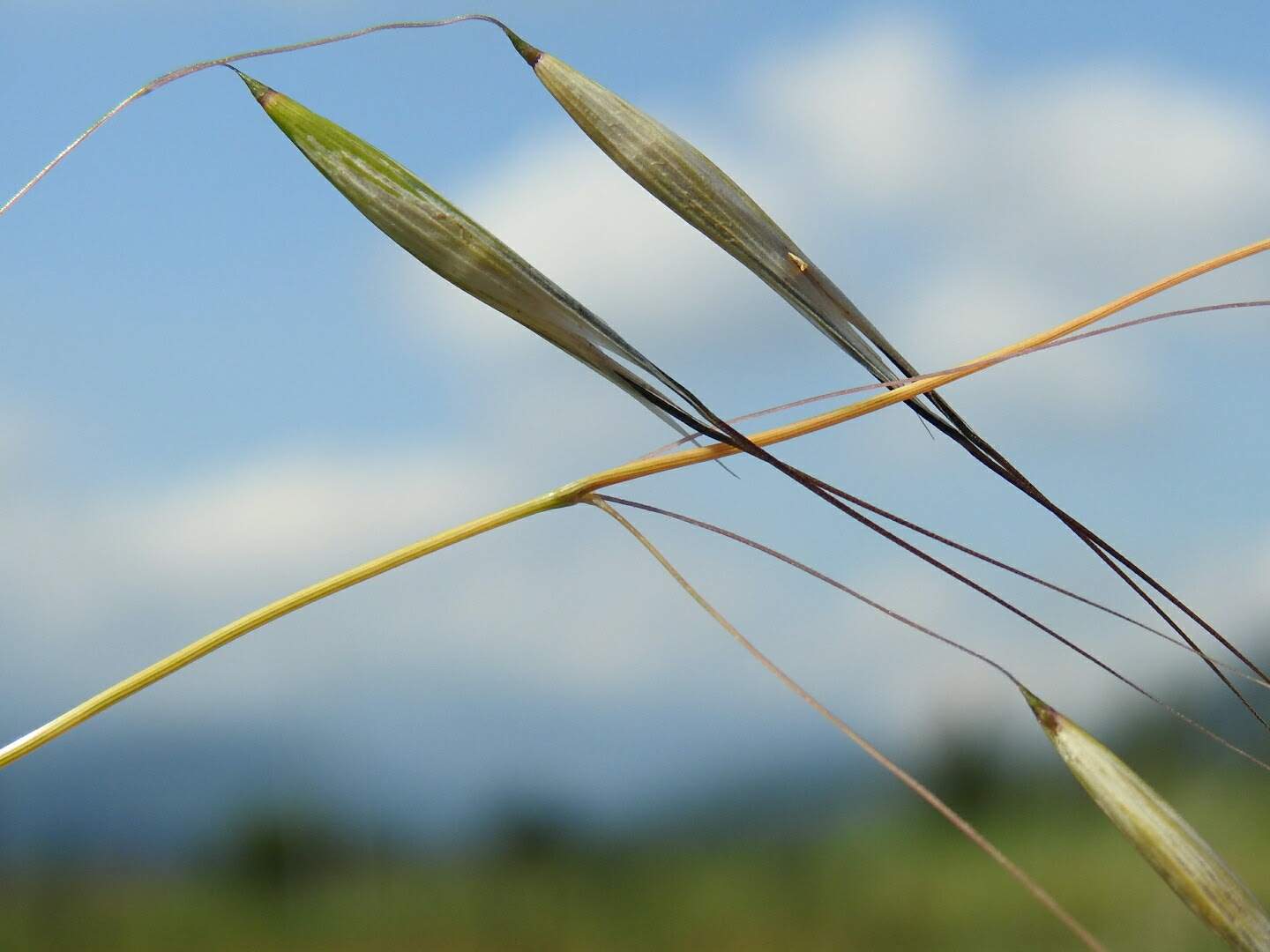
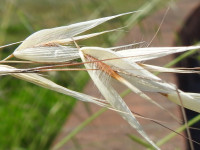
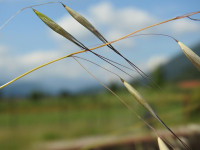
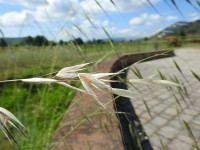
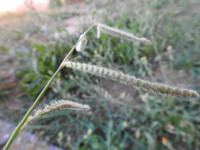
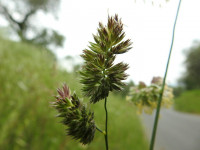
The inflorescence is a broad, rich, pyramidal panicle, with open and ascending branches, up to 25-40 cm long. The spikelets, 17 to 35 mm long, consist of 2-3 flowers, which do not disarticulate from the rachis but remain persistent inside the glumes until the latter breaks. The glumes are subequal, lanceolate and membranous at the margins, 20-32 mm long, and have 7-9 well-marked nerves. The lemma, 15-20 mm long, is glabrous or with few hairs at the base, with a notched or slightly toothed apex; the awn is generally absent or very short, never geniculate or tangled, and the rest (aristula) is 30-50 mm long, geniculate and inserted on the back of the glume.
The fruit is a caryopsis-containing caryopsis, ellipsoid, flat-convex, 7-9 mm long and 3-3.5 mm wide, yellowish or whitish in color; the caryopsis is wrapped by the testa and pericarp, has a densely hirsute surface and is furrowed on the ventral side.
The root system is fibrous, typical of annual grasses, with thin and numerous roots that favor absorption in well-drained soils.
Habitat and distribution
Oat is a species of unknown origin, probably derived from selections of related wild species such as Avena fatua or Avena sterilis, and is widely cultivated in Italy, especially in northern regions. It is also frequently found in a feral state, as many plants escape cultivation.
It grows mainly in sown fields, uncultivated land, and ruderal stations, preferring fertile and well-worked soils, but is also adaptable to soils of medium fertility. The altitude range varies from sea level up to about 2400 m, with better distribution in temperate hilly and mountainous areas. The species is very common in the Mediterranean basin and Europe, with extensive cultivation in temperate zones worldwide.
The ideal exposure is full sun or areas with good illumination, as the plant requires fairly favorable growth conditions to reach optimal maturation.
Flowering period
Flowering mainly occurs between May and July, with possible variations related to altitude and latitude. In some cooler or mountainous areas, flowering can extend until late early summer. This period coincides with seed maturation, essential for harvesting and subsequent use.
Ecology and pollination
Oat reproduces sexually through seed production inside the spikelets, which are borne on open and pendulous panicles. The species is anemophilous, i.e., mainly wind-pollinated, and does not present particular adaptations for pollination by pollinating insects.
Spikelet disarticulation is very late or absent: flowers remain attached to the rachis until its breakage, facilitating seed dispersal in groups rather than individually. The seed, wrapped by the pericarp and testa, is protected and can be transported by abiotic agents or animals, favoring colonization of new environments, especially near cultivations.
Curiosities and traditional uses
Oat is one of the oldest cereal crops, with cultivation documented since the Bronze Age. Traditionally it was considered a minor cereal, mainly used as high-quality forage for horses and other livestock. Its agricultural importance has decreased in recent centuries due to the reduction of equine breeding and the progressive replacement with other cereals more suitable for balanced feeds.
Recently, Oat has experienced a reevaluation in human nutrition thanks to its nutritional and therapeutic properties. The caryopses are rich in starch, proteins, fats, and fibers, with a higher content of essential amino acids compared to common wheat. It is used in the form of flakes, bran, grains, flour, and plant-based milk, employed in the preparation of soups, breads, and baked goods.
From a medical and cosmetic point of view, oat extract has emollient, moisturizing, soothing, and protective properties, used in products for delicate and sensitive skin, including those for infants. Moreover, it is known for antidepressant, sedative, diuretic, and restorative effects.
In the industrial field, the caryopsis testa is a source of furfural, a chemical compound used as a solvent and in the production of food-grade paper. From the fermentation of the caryopses, alcoholic beverages such as vodka and whisky are also obtained.
The name “avena” has been known since antiquity, used by Latin authors such as Varrone and Pliny, and seems to derive from ancient Indo-European roots connected to terms indicating nourishment or forage.
Etymology
The generic name Avena is already attested in classical Latin and probably derives from Indo-European roots, found in ancient languages such as Sanskrit (avasa), Old Slavic, and Lithuanian, all connected to the concept of nourishment or forage. The hypothesis that the name derives from Latin ovis (sheep) is considered unfounded.
The specific name sativa derives from Latin sativus, participle of serĕre (to sow), and indicates a cultivated plant, sown by humans.
The Italian common name “avena comune” highlights its wide distribution and traditional use as a cultivated cereal.
Sources
- Prof. S. Pignatti, Flora d’Italia
- Acta Plantarum - Flora delle regioni italiane (scheda di Roberta Alberti)
- Tela Botanica / H. Coste, Flore descriptive et illustrée de la France
- World Flora Online (WFO)
Characteristics
Scheda botanica
| Famiglia | Poaceae |
|---|---|
| Fioritura | maggio – luglio |
| Forma biologica | Scapose |
| Habitat | flower without petals, annual plant |
Domande frequenti
- Quando fiorisce Oat?
- Oat fiorisce maggio – luglio.
- Che tipo di pianta è Oat?
- Oat è una Therophytes (Scapose) secondo la classificazione di Raunkiaer.
- A quale famiglia appartiene Oat?
- Oat appartiene alla famiglia botanica Poaceae.
Where I found it (4 sightings)
Classification
- Kingdom
- Plantae
- Family
- Poaceae
- Synonyms
- Avena sterilis L. f. pseudosativa Thell.; Avena sterilis L. subsp. pseudosativa (Thell.) Malzev
- Life form
- Therophytes scapose
Similar species
Search for species with similar characteristicsFurther reading
Noticed an error in the identification? Write to me
Other species of the same family
Poaceae
Explore
Other species of Poaceae