Botanical species
Taraxacum F.H.Wigg. sect. Taraxacum
Composite
Description
Morphological description
The common dandelion is a perennial herbaceous plant belonging to the family Asteraceae, characterized by a bushy habit with a very short scapose stem, often almost absent or barely emerging from the ground. The root system consists of a robust main root (taproot), initially undivided and later often branched, without a tunic but wrapped at the collar by brown or black scales.
The leaves are all basal, arranged in a rosette, herbaceous in texture and green in color varying from light to darker shades. They are petiolate, generally toothed or coarsely lobed and sometimes deeply incised up to the central vein; more rarely they can be entire. The leaf veins are reticulate and well visible, and the petiole often has winged margins.
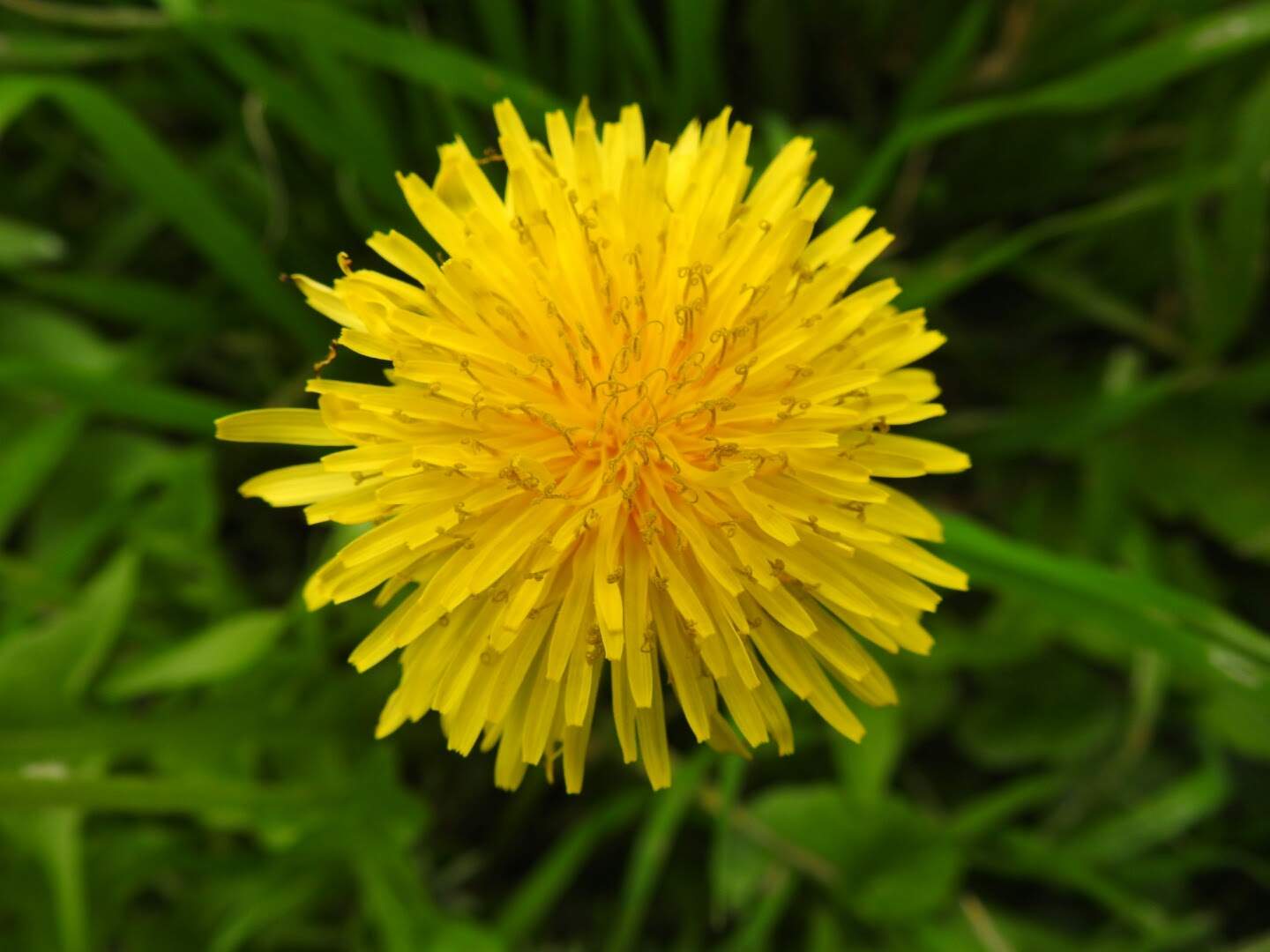
The flower heads, single on radical peduncles 6 to 30 cm long, are fairly large, with a diameter averaging between 2.5 and 4 cm. The involucre is composed of two series of scales: the outer ones, linear and generally bent downward (reflexed), and the inner ones, narrower and erect. The scales can be entire or denticulate, sometimes with callosities at the apex. The floral disc is composed exclusively of perfect ligulate flowers, bright yellow and often with a darker line on the dorsal side of the ligule. The receptacle is flat and lacks chaff.
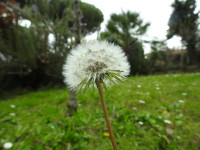
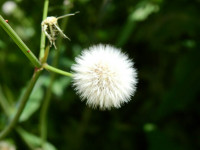
The fruits are fusiform or columnar achenes, color varying from grayish-white to brown-olive, with an upper surface equipped with spines or tubercles; the upper part is crowned by a thin beak, at least twice as long as the achene itself, ending with the pappus formed by numerous white, capillary and wrinkled bristles. This structure facilitates the anemochorous dispersal of the seeds.
The species exhibits a high degree of polymorphism and is configured as a complex of numerous apogamous agamospecies, making its taxonomy and distribution particularly complex and still partly unclear.
Habitat and distribution
The common dandelion is widely distributed throughout Italy and the Mediterranean regions, especially favoring anthropized environments such as regularly mowed and fertilized permanent meadows, roadside edges, uncultivated places and areas disturbed by humans. It also frequents pastures and mountain meadows at low and medium altitudes, while it tends to be replaced by other species or aggregates in high mountain areas and in drier Mediterranean zones.
It grows on a variety of soils, preferring well-drained and rich in organic matter, usually with sunny or partially shaded exposure. It is common in environments from plains up to medium mountain altitudes, where it can form dense and often weedy populations.
Flowering period
Flowering mainly extends from spring to early summer, generally from February to May, with some geographic and climatic variability that can prolong the period until October in some areas. Flowering occurs in waves, with several peaks of maximum flower production during the season.
Ecology and pollination
The dandelion is known for its complex reproductive strategy: it is a predominantly apomictic species, i.e. capable of producing seeds without fertilization, but it can also reproduce sexually. This mode ensures rapid expansion and adaptation to different environments.
The flowers attract numerous pollinating insects, including bees, bumblebees and butterflies, which contribute to pollination when sexual reproduction is present. Seed dispersal occurs mainly by wind thanks to the fluffy pappus that facilitates long-distance transport.
Curiosities and traditional uses
The dandelion is a plant widely used in food and medicinal fields. Young leaves, collected in spring, are edible and consumed both raw in salads and cooked, representing an important wild vegetable with nutritional properties. In traditional herbal medicine it is known as a cholagogue and diuretic, used to stimulate liver and kidney function.
In folklore and popular culture the dandelion is associated with symbols of lightness and hope, linked to the ease with which its seeds disperse in the wind and their ability to germinate in difficult environments.
Etymology
The scientific name “Taraxacum” derives from the Greek “taraxos” (disturbance, discomfort) and “akos” (remedy), alluding to the medicinal properties of the plant used against various ailments. The common Italian name “tarassaco” is a modern phonetic transposition of the scientific term and is sometimes replaced by the more popular “soffione” referring to the characteristic globose inflorescence of fluffy seeds.
Sources
- Acta Plantarum - Flora delle regioni italiane (actaplantarum.org)
- Tela Botanica / H. Coste, "Flore descriptive et illustrée de la France"
- World Flora Online (WFO)
Characteristics
Where I found it (5 sightings)
Classification
- Kingdom
- Plantae
- Family
- Asteraceae
- Synonyms
- Taraxacum officinale F. H. Wigg.; Leontodon taraxacum L.; Leontodon vulgare Lam., nom. illeg.; Taraxacum dens-leonis Desf., nom. illeg.; Taraxacum officinale (L.) W.W.Weber ex F.H.Wigg.; Taraxacum sect. Ruderalia Kirschner, H.Øllg. & Štěpánek; Taraxacum vulgare Schrank, nom. illeg.
- Life form
- Emicriptofite rosulate
Similar species
Search for species with similar characteristicsNoticed an error in the identification? Write to me
Other species of the same family
Asteraceae
Explore
Other species of Asteraceae