Botanical species
Sonchus arvensis
L.
Perennial Sow-thistle
Description
Morphological description
It is a perennial plant reaching a height between 40 and 150 cm, with an erect habit and a hollow, smooth, and glabrous stem at the base, sometimes provided with yellow glands in the upper part. The stem is often branched and has a striated surface. The root system consists of a cylindrical rhizome, about 1 cm in diameter, which can be vertical or more or less long creeping, allowing the plant to effectively expand in the soil.
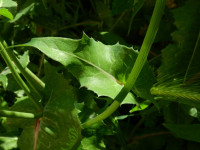
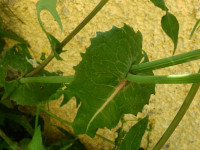
The leaves are sessile and cordate in shape with dentate and spinulose margins. The lower and middle leaves are generally larger (6–40 cm long and 2–15 cm wide), with a coriaceous and glaucous blade, often pinnatifid or pennatifid with 2-3 pairs of coarse lobes and an acute terminal lobe, sometimes with double dentition or almost entire. The upper cauline leaves tend to become smaller and more spaced, with semi-amplexicaul basal auricles, wide and rounded.
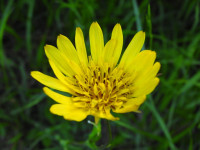
The flower heads, gathered in open inflorescences of corymbose or paniculate type, are relatively large, with a diameter ranging from 2 to 6 cm. The involucre is cylindrical, 7-25 mm long and 12-25 mm wide, composed of lanceolate outer scales, often provided with yellow glands. The flowers are ligulate, golden yellow in color, numerous (up to 150-235 flowers per head), with ligules 12-20 mm long.
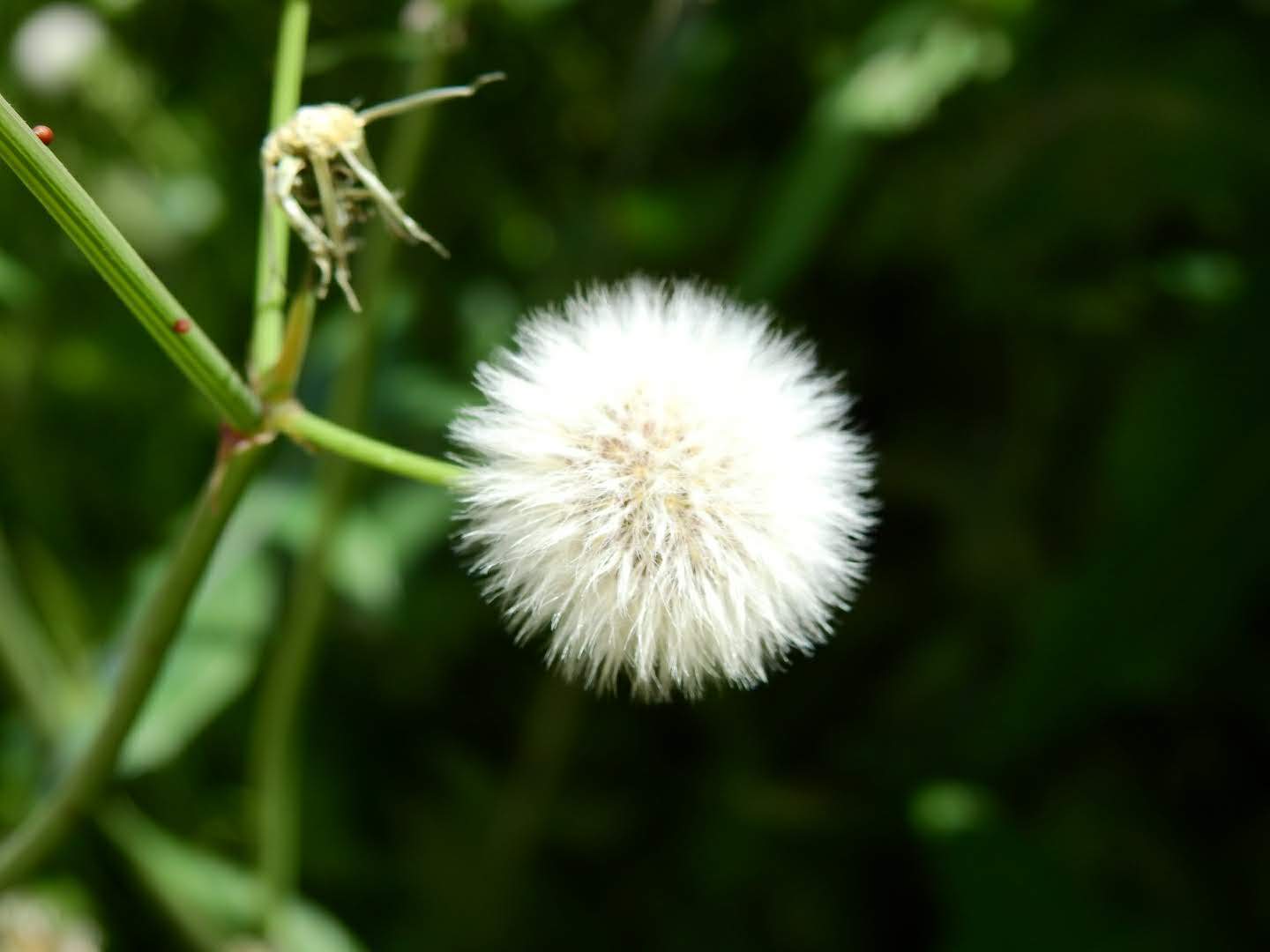
The fruit is a dark, brownish-black achene, 2.5-4 mm long, characterized by 5 or more prominent ribs on each face and a strongly wrinkled or transversely corrugated surface. The achene is equipped with a white, feathery pappus that facilitates anemochorous dispersal.
Habitat and distribution
It is a very common species in Europe and widely distributed in Italy and Mediterranean regions, where it grows both in plains and hills, up to medium-low altitudes. It prefers open and disturbed environments such as cultivated fields, road margins, wastelands, and uncultivated areas, demonstrating a marked adaptability and invasive behavior. It grows on soils of various types, preferably well-drained, and in sunny or partially shaded positions.
Flowering period
Flowering generally occurs from June to September, with possible local variations extending it until October, especially in milder climate regions. The yellow flowers, very conspicuous, attract numerous insects throughout the summer season.
Ecology and pollination
The species reproduces mainly through entomogamous pollination, favoring the attraction of numerous pollinating insects, including bees, hymenopterans, and other pollinators attracted by the bright yellow color and the ligulate arrangement of the flowers. Seed dispersal occurs thanks to the feathery pappus which allows anemochorous transport, facilitating spread over wide areas, thus contributing to the invasive character of the species.
Curiosities and traditional uses
Perennial Sow-thistle is also known for its edible properties: young leaves can be consumed cooked, while in the past the plant was used in folk medicine for its presumed diuretic and purifying properties. The rhizome and roots have been used in some local traditions as remedies for digestive or inflammatory disorders, although these applications are less documented compared to other species of the genus Sonchus. The plant, however, is mainly recognized for its ecological role and its spread in cultivated lands.
Etymology
The scientific name “Sonchus” derives from the Greek “sonchos,” which indicated a similar plant used in ancient times as a vegetable or medicinal. The specific epithet “arvensis” means “of the fields,” referring to its typical habitat. The Italian common name “grespino dei campi” precisely recalls its frequent presence in cultivated fields and disturbed soils, where it can behave as an invasive species.
Sources
- Prof. P.V. Arrigoni, "Flora analitica della Toscana", "Flora dell'Isola di Sardegna"
- World Flora Online (WFO)
Characteristics
Scheda botanica
| Famiglia | Asteraceae |
|---|---|
| Fioritura | giugno – settembre |
| Forma biologica | Rosulate |
| Habitat | edible plant, with yellow flowers, Perennial plant |
| Uso alimentare | Commestibile |
Domande frequenti
- Quando fiorisce Perennial Sow-thistle?
- Perennial Sow-thistle fiorisce giugno – settembre.
- È commestibile Perennial Sow-thistle?
- Perennial Sow-thistle è considerata commestibile. Verifica sempre le parti eduli e la preparazione corretta prima del consumo.
- Che tipo di pianta è Perennial Sow-thistle?
- Perennial Sow-thistle è una Hemicryptophytes (Rosulate) secondo la classificazione di Raunkiaer.
- A quale famiglia appartiene Perennial Sow-thistle?
- Perennial Sow-thistle appartiene alla famiglia botanica Asteraceae.
Where I found it (4 sightings)
Classification
- Kingdom
- Plantae
- Family
- Asteraceae
- Full name
- Sonchus arvensis L.
- Life form
- Hemicryptophytes rosulate
Similar species
Search for species with similar characteristicsFurther reading
Noticed an error in the identification? Write to me
Other species of the same family
Asteraceae
Explore
Other species of Asteraceae