Botanical species
Geranium lucidum
L.
Shining Crane's-bill
Description
Morphological description
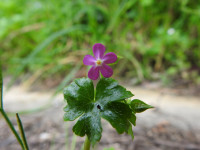
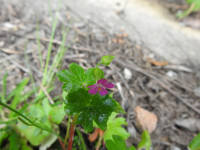
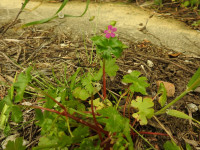
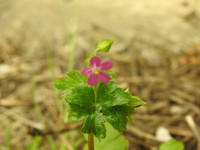
Annual herbaceous plant, the Shining Crane's-bill has a scapose habit and reaches a height between 10 and 40 cm. The stem is cylindrical, glabrous, shiny, and often reddish in color; it is also dichotomously branched, giving the plant a delicate but very branched appearance. The leaves are suborbicular or reniform, with a blade divided into 5-7 deep lobes extending for about three-fifths of the total leaf length. The margin is dentate-crenate, with obtuse or mucronate lobes, and the leaves are attached to the stem by a petiole 3-5 cm long. The leaf surface is characterized by a noticeable shine, from which the adjective “lucido” derives.
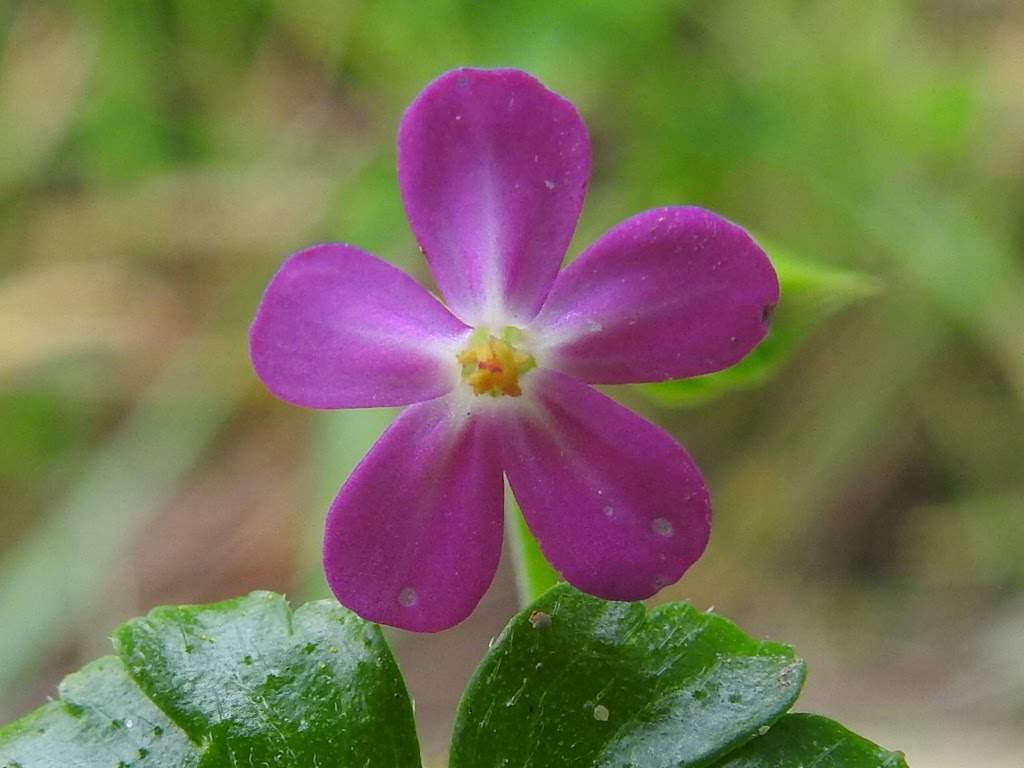
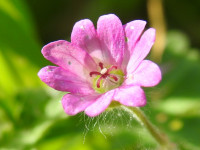
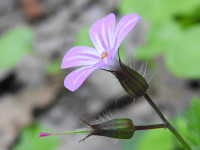
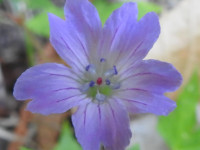
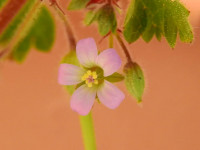
The flowers, relatively small in size, have five spatulate petals, bright pink-fuchsia in color, 8-10 mm long and longer than the sepals. The latter are acuminate, glabrous, and characterized by three prominent longitudinal veins and five transverse ribs that are particularly evident under dry conditions. The calyx is pyramidal, with erect sepals slightly aristate with a small “beak” about 1 mm long. The fruit is a mericarp with a beak (style) about 1-1.5 cm long, glabrous and longitudinally wrinkled-reticulate, with the basal part slightly thickened and transversely wrinkled.
The root system is not detailed in the sources, but being an annual plant typical of rocky environments and walls, it can be assumed to have fibrous roots suitable for anchoring in crevices and poor substrates.
Habitat and distribution
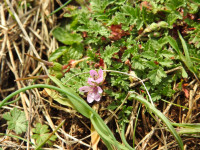
The Shining Crane's-bill is a species typical of Mediterranean regions, with a range extending along the Mediterranean coasts, but with extensions northwards and eastwards, reaching more continental areas. In Italy, it is found from sea level up to about 1400 meters altitude, mainly colonizing shady and humid environments such as walls, cliffs, rocky crevices, and shaded hedges.
It prefers calcareous or rocky substrates and is often found in anthropized habitats, such as dry stone walls and ruins, where it exploits crevices as microhabitats. Its presence is also reported in milder alpine regions and in the hilly and mountainous areas of Italy and other European countries. At the Mediterranean level, it is found from southern France to North Africa and western Asia.
Flowering period
Flowering mainly extends from April to September, with a peak in late spring and early summer (May-August). The duration and intensity of flowering may vary slightly depending on altitude and latitude, with specimens in more northern areas possibly starting to flower later and prolonging the period until September.
Ecology and pollination
The plant is adapted to live in shady and cool environments, often with north exposure or in areas sheltered from excessive drought. The flowers, thanks to their bright color and the structure with five well-visible petals, attract various pollinating insects, including bees and other generalist pollinators. The flower morphology, with long petals and a long spur (petal claw), suggests a specialized entomogamous pollination strategy.
Seed dispersal occurs through the characteristic “beaked” fruits typical of the genus Geranium, which use a launching mechanism to spread the seeds a short distance from the mother plant. This system favors colonization of rocky niches and crevices, where the species finds ideal conditions for germination and growth.
Curiosities and traditional uses
The Shining Crane's-bill is also known for its medicinal properties. Traditionally it has been used for its astringent and diuretic qualities in herbal preparations. These uses, dating back to Mediterranean folk medicine, make it a plant of interest for herbalists and enthusiasts of natural remedies, although no common modern documented applications exist.
No particular food uses or folkloric legends related to this species are known. Its presence in anthropized environments and the shininess of the leaves make it an easily recognizable plant, appreciated for its discreet elegance in natural and semi-natural contexts.
Etymology
The generic name Geranium derives from the Greek “géranos,” meaning “crane,” referring to the shape of the fruit which resembles the beak of this bird. The specific epithet lucidum highlights the most evident characteristic of the plant, namely the shininess of the leaves and stem.
The Italian common name “geranio lucido” precisely reflects this morphological peculiarity, which helps to easily distinguish it from other wild geranium species, often hairier or duller.
Sources
- Acta Plantarum - Flora delle regioni italiane (actaplantarum.org)
- Acta Plantarum - scheda di Gianluca Nicolella
- Tela Botanica / H. Coste, Flore descriptive et illustrée de la France
- World Flora Online (WFO)
Characteristics
Scheda botanica
| Famiglia | Geraniaceae |
|---|---|
| Fioritura | aprile – settembre |
| Forma biologica | Scapose |
| Habitat | with fuchsia flowers, annual plant, plant with a scapose habit |
| Uso officinale | Pianta officinale |
Domande frequenti
- Quando fiorisce Shining Crane's-bill?
- Shining Crane's-bill fiorisce aprile – settembre.
- Che tipo di pianta è Shining Crane's-bill?
- Shining Crane's-bill è una Therophytes (Scapose) secondo la classificazione di Raunkiaer.
- A quale famiglia appartiene Shining Crane's-bill?
- Shining Crane's-bill appartiene alla famiglia botanica Geraniaceae.
Where I found it (6 sightings)
Classification
- Kingdom
- Plantae
- Family
- Geraniaceae
- Full name
- Geranium lucidum L.
- Life form
- Therophytes scapose
Similar species
Search for species with similar characteristicsFurther reading
Noticed an error in the identification? Write to me
Other species of the same family
Geraniaceae
Explore
Other species of Geraniaceae