Botanical species
Erodium cicutarium
(L.) L'Hér.
Common Stork's-Bill
Description
Morphological description
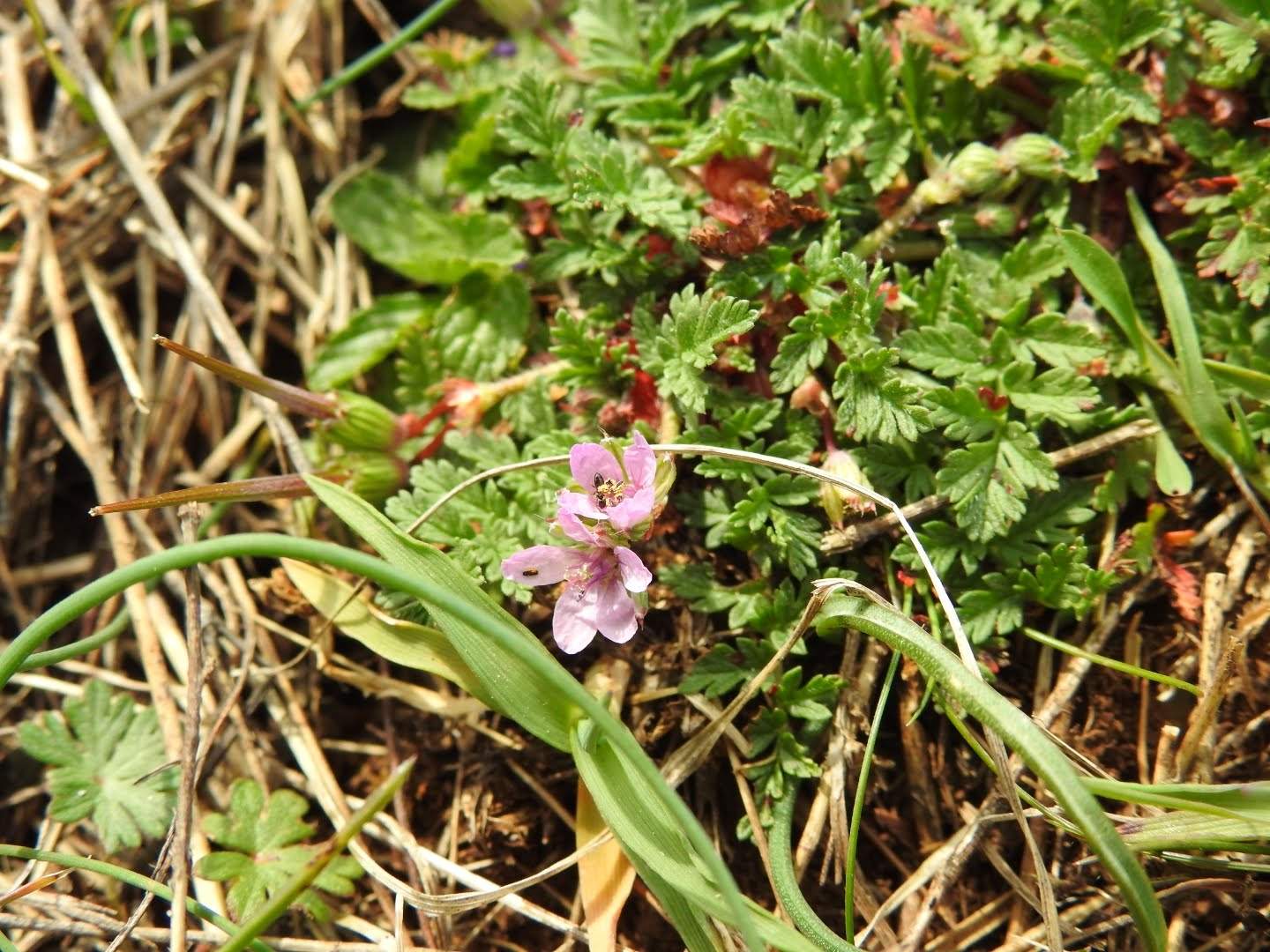
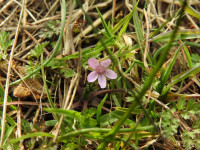
Annual or sometimes perennial herbaceous plant, with a bushy or scapose habit, generally 3 to 60 cm tall, but under favorable conditions it can also reach 60 cm. The stem is hairy with erect-patent hairs and often shows reddish shades; it can be reduced or almost absent, with a length of 1-5 cm, and has a prostrate habit. The root system is taprooted.
The basal leaves are fully pinnately divided, 3-5 cm long and 1-2 cm wide, composed of 9-11 ovate segments, deeply incised for more than half of the blade, with a herbaceous texture and pubescent or rough surface. The leaves can be both rosulate and cauline, alternate or opposite, with petioles up to 15 cm long. The stipules, located at the base of the petiole, are lanceolate-ovate, sometimes connate, with a ciliate margin and color ranging from pink to straw.
The flowers are hermaphroditic, actinomorphic, pentamerous and arranged in small umbels or cymes containing from 2 up to 10 flowers, supported by peduncles 1-2 cm long (from 1.5 to 6.5 cm according to the English source), which are erect during anthesis and folded during fruiting. The bracts at the base of the flower head are ovate, acute, with ciliate margins, straw or pink in color.
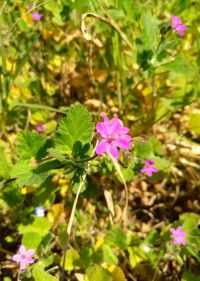
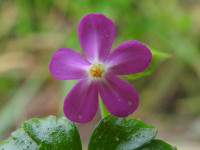
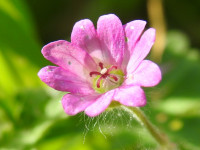
The calyx consists of five free sepals, 3-6 mm long, lanceolate-ovate, pubescent and with a short apical mucro. The petals are five, pink of varying intensity, sometimes with a dark spot at the base, 4 to 10 mm long and slightly longer than the sepals; their claw is ciliate and hairy. There are five fertile stamens alternating with five scale-like staminodes, all fused at the base.
The ovary is superior and bears styles fused into a characteristic elongated "beak" of 2.5-4 cm, which extends the fruit. The fruit is a schizocarp composed of five hirsute achenes, 4-7 mm long, with an apical pit and a more or less marked groove below it. At maturity, the achenes separate thanks to the hygroscopic movement of the style, which tears into spiral awns, facilitating seed dispersal.
The species shows high morphological variability depending on environmental conditions, with more vigorous plants and more abundant flowering on rich soils or in summer. The color and size of the petals can vary significantly.
Habitat and distribution
It is a subcosmopolitan species, present almost everywhere in the world, with some gaps at continental or climatic levels. In Italy and the Mediterranean it commonly grows in anthropized and semi-natural habitats: uncultivated areas, road edges, dry meadows, vineyards and sandy soils. It prefers sunny exposures and well-drained soils, from sea level up to about 1800 meters altitude.
Its presence is frequent in thermophilous and hilly environments, also submontane, and it adapts to variable moisture conditions, from dry to moderately moist. In general, it is found in disturbed or open places, with loose and poor substrates, often in association with other pioneer species.
Flowering period
Flowering extends from February to November, with peaks in September-October, and can occur practically throughout the year in mild climate areas. The duration and maximum intensity of flowering vary depending on local climatic conditions and altitude.
Ecology and pollination
The flowers of this species, pink in color and pentamerous in structure, are visited by pollinating insects that favor pollination, although detailed data on the main pollinators are not available. The arrangement of the flowers in scapose inflorescences facilitates insect access.
Seed dispersal occurs through a self-launching mechanism: the spiral beak of the fruit acts as a hygroscopic spring that, reacting to humidity changes, coils and uncoils, throwing the achenes far from the mother plant. Furthermore, the spiral awns can adhere to animal fur, favoring epizoochorous dissemination.
Curiosities and traditional uses
This species is known for its medicinal properties and is used in traditional medicine. The whole plant, deprived of roots, collected in flowering, and the seeds contain tannins, ellagic acid, gallic acid and potassium salts. It is used as a diuretic, antihemorrhagic and uterine tonic stimulant.
From a food perspective, the plant is edible and can be used in cooking as a wild vegetable. However, use for therapeutic or food purposes must always be carefully evaluated and under specialist supervision.
The family Geraniaceae, to which it belongs, is characterized by names recalling the shape of fruits similar to the beak of wading birds: the genus Erodium derives from the Greek "erodios" (heron), Geranium from "geranòs" (crane) and Pelargonium from "pelargòs" (stork), emphasizing the zoological inspiration in botanical nomenclature.
Etymology
The genus name Erodium derives from the Greek “erodios”, meaning "heron", referring to the elongated and pointed shape of the fruit similar to the beak of a heron. The specific name cicutarium refers to the similarity of the leaves to those of hemlock (genus Cicuta), due to their pinnately divided form.
The Italian common name "Becco di gru" also recalls the characteristic shape of the fruit, very elongated and pointed, similar to the beak of a crane.
Sources
- Acta Plantarum - Flora delle regioni italiane (actaplantarum.org)
- Acta Plantarum - Flora delle regioni italiane (scheda di Daniela Longo)
- World Flora Online (WFO)
Characteristics
Scheda botanica
| Famiglia | Geraniaceae |
|---|---|
| Fioritura | febbraio – novembre |
| Forma biologica | Scapose |
| Habitat | with pink flowers, Perennial plant, annual plant |
| Uso officinale | Pianta officinale |
Domande frequenti
- Quando fiorisce Common Stork's-Bill?
- Common Stork's-Bill fiorisce febbraio – novembre.
- Che tipo di pianta è Common Stork's-Bill?
- Common Stork's-Bill è una Therophytes (Scapose) secondo la classificazione di Raunkiaer.
- A quale famiglia appartiene Common Stork's-Bill?
- Common Stork's-Bill appartiene alla famiglia botanica Geraniaceae.
Where I found it (8 sightings)
Classification
- Kingdom
- Plantae
- Family
- Geraniaceae
- Full name
- Erodium cicutarium (L.) L'Hér.
- Synonyms
- Erodium bipinnatum Willd.; Erodium pilosum (Thuill.) Steud.
- Life form
- Therophytes scapose
Similar species
Search for species with similar characteristicsFurther reading
Noticed an error in the identification? Write to me
Other species of the same family
Geraniaceae
Explore
Other species of Geraniaceae