Botanical family
Geraniaceae
Description
Botanical characteristics
The plants belonging to this family are mainly annual or perennial herbs, but may also include shrubs. They have jointed stems and generally alternate, petiolate, and stipulate leaves, with very variable shapes: they can be simple, divided, or pinnate, often palmately compound. The inflorescences are axillary or terminal, sometimes umbelled or cymose, and occasionally the flowers are solitary.
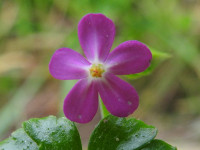
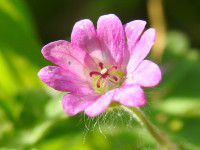
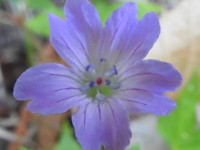
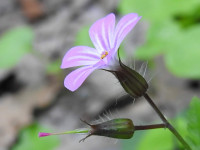
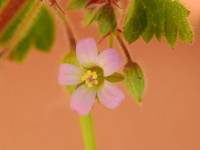
The flowers are hermaphroditic and pentamerous, that is composed of five elements per whorl. They are bracteolate, with five sepals and five petals, and generally show radial symmetry, except for some genera such as Pelargonium, which exhibits a weak zygomorphy. The stamens number 5, 10, or 15, while the ovary is superior and formed by five carpels.
One of the distinctive features of this group is the fruit, an elongated schizocarp composed of five single locules (pericarps), each containing one seed. This fruit has a particular shape that resembles the head of a crane, from which the family name also derives.
Distribution and diversity
The family has a cosmopolitan distribution, present in many regions of the world with different environments. It is composed of about eight genera and numerous species, some of which are widely known and widespread. In Italy, species mainly belonging to the genus Geranium are present, commonly known as wild geraniums.
Main genera and representative species
Among the most important genera of the family are:
- Geranium: includes spontaneous species in Europe and Italy, often known as wild geraniums.
- Pelargonium: native to Africa, it is well known for species cultivated for ornamental purposes, commonly called geraniums in gardens.
- Erodium: includes some species with Mediterranean distribution.
- California, Hypseocharis, Monsonia, Rhynchotheca, Sarcocaulon: lesser-known genera, but included in the family.
In Italy, especially the genus Geranium is well represented with several spontaneous species, appreciated for their flowers and ecological role in natural habitats.
Etymology
The family name derives from the most important genus, Geranium, which in turn takes its name from the Greek "géranos", meaning "crane". This appellation is due to the particular shape of the fruits, which resemble the head of this bird, a distinctive characteristic of the family.
Curiosities and uses
The characteristic fruit of this family, with its elongated and segmented shape, is an easily recognizable element that inspired the very name of the group. The genus Pelargonium is widely cultivated for ornamental purposes, appreciated in gardens and balconies for the beauty of its flowers. Furthermore, some species have traditional medicinal uses, although these applications are not detailed in the consulted sources.
Sources
- Wikipedia
Species of the family
9 species catalogued
Explore
Other botanical families