Botanical species
Anethum foeniculum
L.
Carrot Family
Description
Morphological description
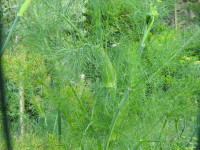
The Carrot Family is a perennial plant belonging to the Apiaceae family, characterized by a sweet and intense aroma that makes it easily recognizable. It has an erect habit, with dark green cylindrical stems, which can be branched. The rhizome is horizontal, nodose and ringed, whitish in color, and develops superficially in the soil.
The leaves are finely divided, imparipinnate, with 3-4 pinnules completely separated into very thin laciniae, with a capillary appearance and herbaceous texture. The leaves have a yellowish hue, contributing to the characteristic overall tone of the plant.
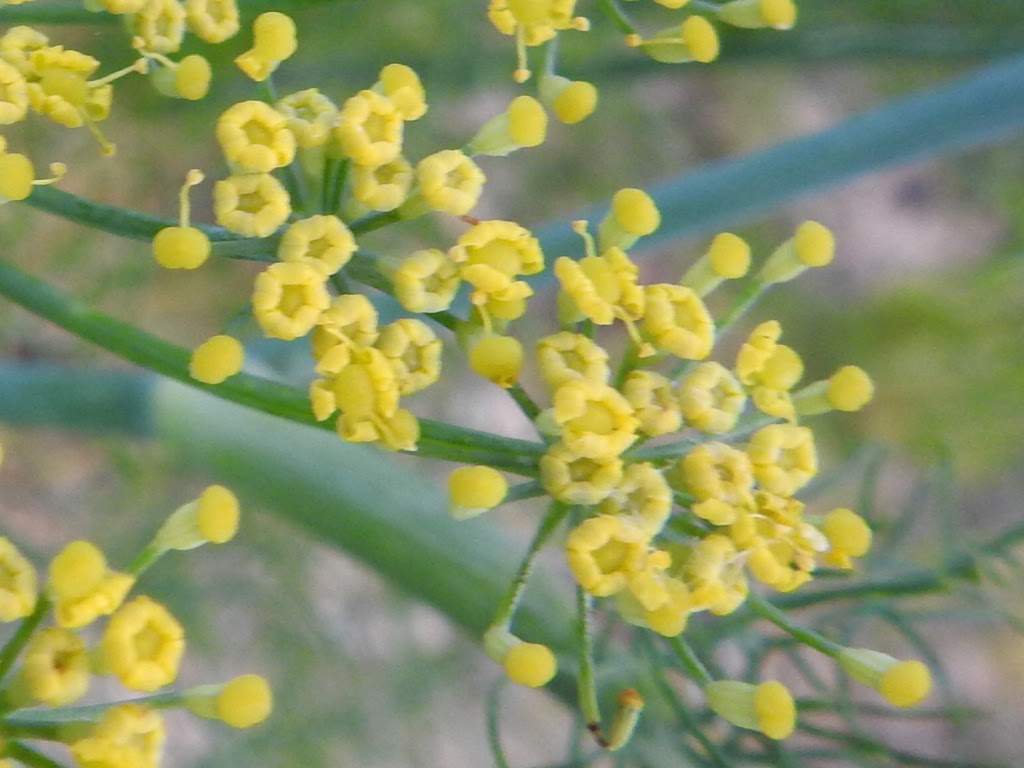
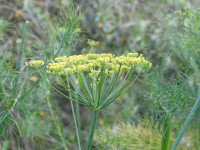
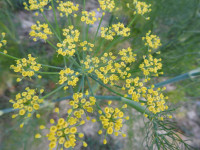
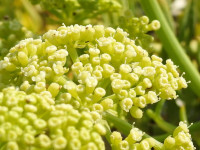
The flowers are arranged in umbels without an involucre, with bright yellow petals. Each umbel hosts numerous small flowers, typical of the Apiaceae family, giving the plant a delicate and fragrant appearance. The floral habit is scapose, meaning the flowers are borne on a leafless floral stem. The fruits, which develop following flowering, measure between 4 and 7 mm.
Habitat and distribution
The Carrot Family is widespread throughout the Mediterranean basin, including much of Italy, where it grows spontaneously in various habitats. It prefers well-drained and sunny soils, often in coastal areas, field margins, slopes, and disturbed areas. It can develop up to modest hill and mountain elevations, adapting to different soils as long as they are not too moist.
Its ability to colonize open and sunny environments makes it common in many Italian regions, especially along coasts and in dry plains. Its presence is an indicator of typical Mediterranean environments, often in association with other species of the maquis and secondary vegetation.
Flowering period
The flowering of the Carrot Family mainly extends from June to August, with some possible variation depending on altitude and latitude. In warmer and coastal areas, flowering can begin as early as June, while in cooler and higher environments it can last until late summer.
Ecology and pollination
The umbrella-shaped inflorescence structure, typical of the Apiaceae family, favors visits by numerous pollinating insects, particularly bees, wasps, butterflies, and other hymenopterans attracted by the scent and yellow color of the flowers. Nectar and pollen production is an important resource for these insects during the summer season.
Reproduction occurs sexually through seeds produced in the fruits, which are small and light, favoring anemochorous dispersal and potentially also secondary animal transport. The rhizome also allows vegetative reproduction, ensuring the persistence and local expansion of the plant.
Curiosities and traditional uses
The Carrot Family has been known since antiquity for its aromatic and medicinal properties. It is used in herbal medicine for its digestive, carminative, and diuretic properties. The leaves, seeds, and rhizome are employed to prepare infusions and decoctions that promote digestion and relieve gastrointestinal disorders.
In cooking, the Carrot Family is appreciated as an aromatic herb, used to flavor dishes based on fish, meats, and vegetables, as well as for the preparation of liqueurs and condiments. Its aroma resembles that of anise, a characteristic that makes it a versatile ingredient in Mediterranean culinary tradition.
In local folklore, the Carrot Family was considered a protective plant, used to ward off evil spirits and as a talisman against negative influences, probably due to its intense and penetrating scent.
Etymology
The scientific name "Foeniculum" derives from the Latin foenum, meaning "hay", referring to the sweet and aromatic smell reminiscent of freshly cut hay. The term "foeniculum" is a diminutive indicating a plant with a similar but more delicate fragrance.
The Italian common name "finocchio" derives from the same Latin root and is used to indicate both the wild plant and the cultivated variety, known for its large edible bulbs. The adjective "selvatico" distinguishes the spontaneous form, which is thinner and less fleshy compared to the cultivated cultivar.
Sources
- Prof. S. Pignatti, "Flora d'Italia"
- Tela Botanica / H. Coste, "Flore descriptive et illustrée de la France"
Characteristics
Scheda botanica
| Famiglia | Apiaceae |
|---|---|
| Fioritura | giugno – agosto |
| Forma biologica | Scapose |
| Habitat | edible plant, with yellow flowers, fragrant plant |
| Uso alimentare | Commestibile |
Domande frequenti
- Quando fiorisce Carrot Family?
- Carrot Family fiorisce giugno – agosto.
- È commestibile Carrot Family?
- Carrot Family è considerata commestibile. Verifica sempre le parti eduli e la preparazione corretta prima del consumo.
- Che tipo di pianta è Carrot Family?
- Carrot Family è una Hemicryptophytes (Scapose) secondo la classificazione di Raunkiaer.
- A quale famiglia appartiene Carrot Family?
- Carrot Family appartiene alla famiglia botanica Apiaceae.
Where I found it (8 sightings)
Classification
- Kingdom
- Plantae
- Family
- Apiaceae
- Full name
- Anethum foeniculum L.
- Synonyms
- Foeniculum vulgare Mill.
- Life form
- Hemicryptophytes scapose
Similar species
Search for species with similar characteristicsFurther reading
Noticed an error in the identification? Write to me
Other species of the same family
Apiaceae
Explore
Other species of Apiaceae