Botanical species
Carum appuanum
(Viv.) Grande
Kummel delle Apuane

Description
Morphological description
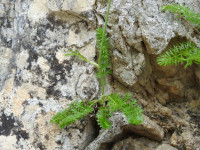
Perennial herbaceous plant belonging to the Apiaceae family, characterized by an erect, glabrous stem, 30 to 60 cm tall, simple or sparsely branched. The base of the stem progressively transforms into roots, without developing tubers. The leaves are imparipinnate, composed of three pinnules, with thin and capillary segments 0.5 to 2 mm wide, divided into up to 15 pairs of lobes. The plant is scapose, meaning it has an elongated floral axis often leafless.
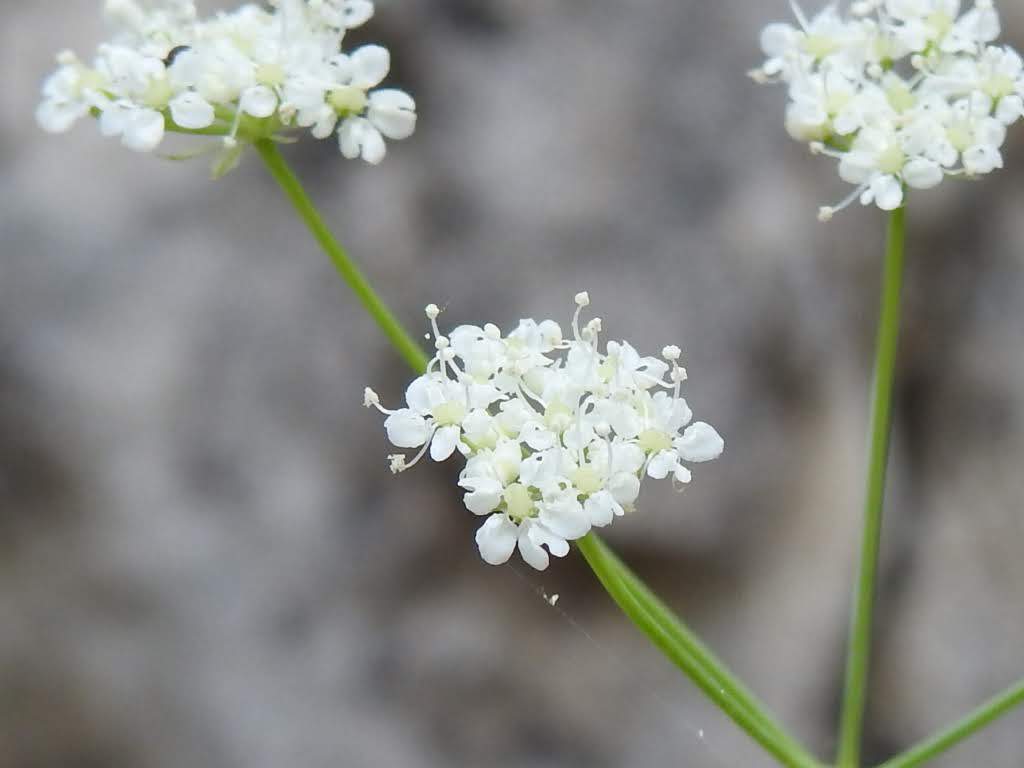
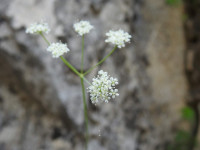
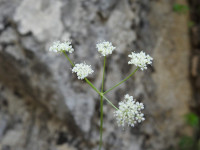
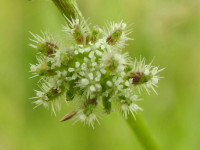
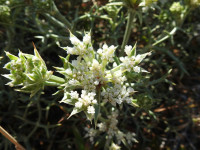
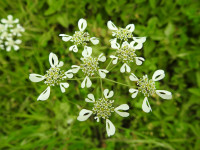
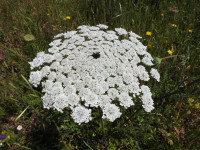
The inflorescence is an umbel composed of 5-8 rays and numerous white hermaphroditic flowers, with a dialipetalous corolla formed by 5 obovate petals, with a cuneate base and bilobed apex. The flowers have 5 stamens and an inferior bilocular ovary, topped by two free styles longer than the conical stylopodium. The involucre is absent, replaced by 1-3 small bracts.
The fruit is an elliptic-oblong schizocarp, formed by two laterally united mericarps, compressed on the sides, each containing a single seed.
Glabrous, aromatic plant, with an erect and scapose habit, lacking tubers, typical of the calcareous mountain areas of the Alpi Apuane.
Habitat and distribution
The species is endemic to the Alpi Apuane, present exclusively in Italy. It grows in mountainous environments, typically on calcareous cliffs and dry grassy meadows, at altitudes between 800 and 1,900 meters. It prefers sunny exposures typical of rocky and arid areas, adapting to well-drained calcareous substrates.
Being a species with a very limited distribution, it is considered threatened and included in regional and national laws for the protection of spontaneous flora.
Flowering period
Flowering mainly extends from June to October, during which the plant develops its umbels with numerous white flowers. No significant variations in the flowering period are known within its distribution area, which is however restricted to the Alpi Apuane.
Ecology and pollination
The white, hermaphroditic flowers arranged in umbels typical of Apiaceae are attractive to a variety of pollinating insects, particularly hymenopterans such as bees and bumblebees, as well as dipterans and beetles that visit the flowers for nectar and pollen. The plant relies on entomogamous pollination to ensure fertilization.
Seed dispersal occurs through the schizocarps, which fall to the ground and can be transported to a limited extent by abiotic agents such as wind or water, but no long-distance dispersal strategies are known.
Curiosities and traditional uses
Carum appuanum is an aromatic plant with stimulating and digestive properties. Traditionally also used in liquor production, it is linked to the preparation of "Kümmel," a carminative and digestive liqueur. Similar to caraway, from which the common name "Kümmel" derives, it is used for its aromatic and digestive properties.
The use as a medicinal and edible plant is documented, although caution and attention are recommended in its medicinal or food use, as the reported uses are for informational purposes only and do not replace medical advice.
Etymology
The genus name "Carum" derives from a toponym of Asia Minor, probably "Karium" in Greek or "Caria" in Latin, as indicated by Pliny. The specific epithet "appuanum" clearly refers to the Alpi Apuane, the endemic area of this species.
The Italian common name "Kümmel delle Apuane" recalls the similarity to caraway (Carum carvi), from which the "Kümmel" liqueur is derived, highlighting the geographic origin and aromatic use of the plant.
Sources
- Acta Plantarum - Flora delle regioni italiane (scheda di Giuliano Salvai)
Characteristics
Scheda botanica
| Famiglia | Apiaceae |
|---|---|
| Fioritura | giugno – ottobre |
| Forma biologica | Scapose |
| Habitat | with white flowers, endemic plant, Perennial plant |
Domande frequenti
- Quando fiorisce Kummel delle Apuane?
- Kummel delle Apuane fiorisce giugno – ottobre.
- Che tipo di pianta è Kummel delle Apuane?
- Kummel delle Apuane è una Hemicryptophytes (Scapose) secondo la classificazione di Raunkiaer.
- A quale famiglia appartiene Kummel delle Apuane?
- Kummel delle Apuane appartiene alla famiglia botanica Apiaceae.
Classification
- Kingdom
- Plantae
- Family
- Apiaceae
- Full name
- Carum appuanum (Viv.) Grande
- Synonyms
- Carum rigidulum (Viv.) DC., nom. illeg.; Selinum appuanum Viv.
- Life form
- Hemicryptophytes scapose
Similar species
Search for species with similar characteristicsNoticed an error in the identification? Write to me
Other species of the same family
Apiaceae
Explore
Other species of Apiaceae