Botanical family
Amaryllidaceae
Description
Botanical characteristics
The plants belonging to this family are mostly bulbous herbs, characterized by a biological cycle that includes a complete resting period during the unfavorable season, during which they completely lose the aerial part (stem and leaves). Typically, they are vigorous plants that prefer full sun exposure and can reach considerable sizes. The roots are large and robust, and the plant grows well even in poor soils.
The leaves are generally basal and variable in shape, often linear or strap-shaped, but they can vary depending on the genus and species.
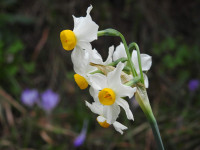
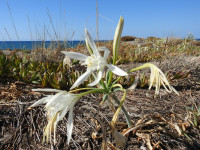
The flowers are typically composed of two whorls of three elements each, with well-evident petaloid tepals, for a total of six tepals (perianth). A distinctive feature of the family is the gynoecium formed by an inferior ovary, tricarpellary and trilocular (with three locules). The androecium consists of six stamens, a characteristic that helps distinguish this family from others like Iridaceae, which have a different number of stamens. In many genera there is a paracorolla, that is, an additional petaloid structure, which can be fused (as in the genera Narcissus, Pancratium, and Hymenocallis) or free, and which is often colored similarly or differently compared to the true tepals.
Pollination is zoophilous, mediated by pollinating animals. The fruits are predominantly loculicidal capsules containing numerous seeds, while berries are more rarely found (for example in the genus Clivia).
Distribution and diversity
This family has a primarily tropical and subtropical distribution, with a less significant presence in temperate regions, such as Europe. Worldwide it includes numerous genera and species, divided into three main subfamilies: Agapanthoideae, Allioideae, and Amaryllidoideae, each further subdivided into tribes and subtribes grouping various genera.
In Italy, the family is mainly represented by well-known genera such as Narcissus and Galanthus, which are common in temperate areas.
Main genera and representative species
Among the most important and well-known genera are:
- Narcissus: includes the daffodil, bulbous species with often fragrant flowers widely used in gardening.
- Galanthus: comprising the snowdrop, known for being one of the first spring blooms in temperate climates.
- Amaryllis: known for large decorative flowers.
- Hippeastrum: widely cultivated as an ornamental plant for its large showy flowers.
- Clivia: genus with berries and peculiar flowers, used in cultivation.
- Pancratium and Hymenocallis: characterized by the presence of a fused paracorolla, often with large and fragrant flowers.
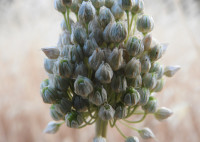
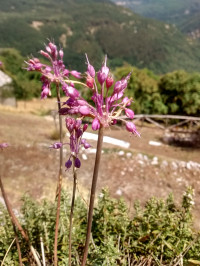
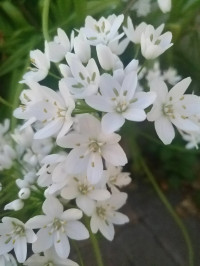
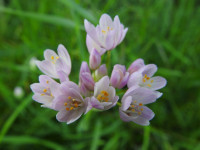
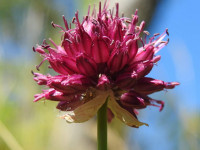
- Allium: although sometimes placed in a distinct family (Alliaceae), it is considered part of the subfamily Allioideae within Amaryllidaceae; it includes species of great food interest such as onions, garlic, and leeks.
In Italy, besides Narcissus and Galanthus, there are other minor species belonging to this family, mainly in temperate and Mediterranean climates.
Etymology
The family name derives from the type genus Amaryllis, a name rooted in Greek classical mythology and literature, which has been adopted to indicate this group of bulbous plants with showy flowers.
Curiosities and uses
This family has considerable ornamental interest due to the often showy and fragrant flowers of many of its genera, which are widely cultivated in gardens and for the production of indoor plants and cut flowers. Some genera such as Narcissus, Amaryllis, Hippeastrum, Clivia, and Hymenocallis are particularly appreciated for decorative use.
From an ecological point of view, Amaryllidaceae play an important role in tropical, subtropical, and temperate plant communities, often attracting specific pollinating insects thanks to their floral structure.
Some genera of the subfamily Allioideae, such as Allium, also have great food and medicinal value, being sources of spices and compounds with beneficial properties.
Sources
- Wikipedia
Species of the family
11 species catalogued

Explore
Other botanical families