Botanical species
Allium neapolitanum
Cirillo
Neapolitan Garlic
Description
Morphological description
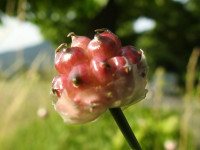
Perennial bulbous herbaceous plant belonging to the family Amaryllidaceae, Neapolitan Garlic has an erect habit with stems 20 to 60 cm tall, leafless and with a triangular cross-section, characterized by two acute angles and one obtuse. The stem is solid, sometimes slightly winged at the base, and reddish in color. The root system consists of a subglobose bulb, small and ovoid, about 1-2 cm in diameter, covered by leathery brown outer tunics; at the base there are numerous reddish bulbils that contribute to the vegetative multiplication of the plant.
The leaves, usually 2 or 3 per individual, are ribbon-shaped, flat and keeled on the lower surface, up to 35-50 cm long and 0.5-2 cm wide, with entire or slightly denticulate margins and a slightly rough texture. They persist during flowering and wrap around the stem for about a quarter of its length.
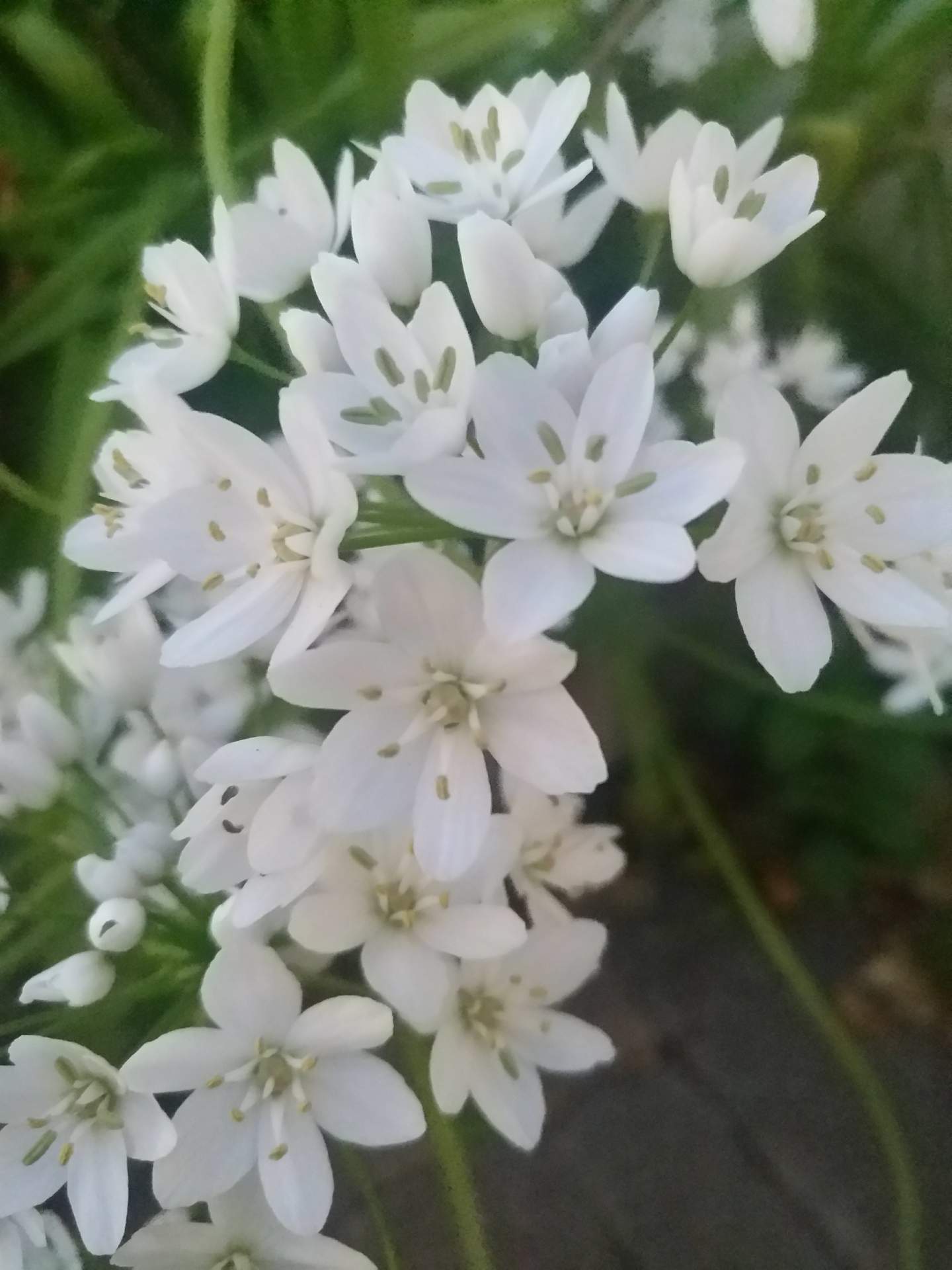
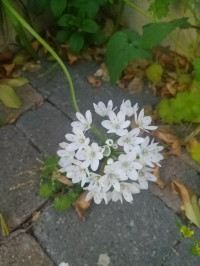
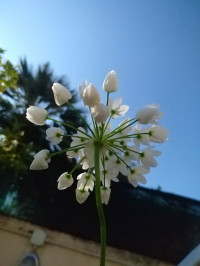
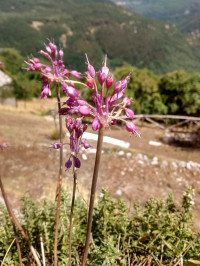
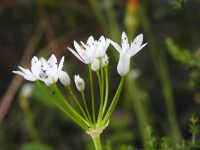
The inflorescence is a dense hemispherical or subhemispherical umbel, up to 9 cm wide, composed of 10-25 flowers. It is free of bulbils and is initially enclosed by a single, ovate and acuminate spathe, of membranous texture, which remains visible even after flowering. The flowers are hermaphroditic, star-shaped, with white, broad and obtuse tepals, about 7-12 mm long, arranged in an open cup. The anthers are yellow, included relative to the tepals, and the pollen is also yellow. The floral peduncles are all of similar length, about three times longer than the flower, and longer than the spathe. The fruit is a capsule that develops surrounded by the dried tepals. The flower emits a delicate aromatic scent, a typical characteristic of the species.
Habitat and distribution
Neapolitan Garlic is a typically Mediterranean species with a steno-Mediterranean distribution, widespread along the coasts of the Mediterranean basin, including southern Italy, Corsica, and neighboring regions such as the southern French departments (Pyrénées-Orientales, Ariège, Gard, Bouches-du-Rhône, Var, Alpes-Maritimes). In Italy it grows mainly in shady and humid environments such as meadows, roadside edges, gardens, vineyards and forest clearings, preferring fresh and sometimes shaded soils. The species is found from sea level up to about 800 meters altitude.
Flowering period
Flowering typically occurs between March and May, with possible variations related to altitude and latitude. During this period, the inflorescence reaches its maximum development and the flowers appear white and fragrant.
Ecology and pollination
The flowers are mainly pollinated by bees and other pollinating insects, attracted by the scent and star-shaped form of the flowers. The arrangement of floral peduncles of equal length favors uniform exposure of the flowers for pollination. The plant is a bulbous geophyte, with perennial organs represented by the bulb which allows it to survive unfavorable seasons. Seed dispersal occurs through capsules that open after flowering, while vegetative multiplication also occurs through bulbils formed at the base of the main bulb.
Curiosities and traditional uses
Neapolitan Garlic is known for its medicinal and food properties. Like other Allium, it contains allicin, a substance that confers hypotensive, antibiotic, disinfectant and hypoglycemic properties. Recent studies highlight beneficial effects on cardiovascular diseases. In cooking, the leaves and bulbs can be consumed both raw in salads and cooked to flavor soups and various dishes.
Traditionally it has also been used in the preparation of repellents against insects such as moths and, occasionally, cultivated as an ornamental plant in gardens for its decorative and fragrant flowering.
Historically, the medicinal use of garlic has been appreciated since the 17th century, with testimonies emphasizing its effectiveness against numerous diseases despite the characteristic unpleasant odor. The plant also has a strong connection with popular tradition and literature, as demonstrated by some poetic citations that emphasize both its virtues and characteristic aroma.
Etymology
The genus Allium derives from classical Latin "allium", with uncertain and debated etymology. Various hypotheses link the term to Indo-European roots related to bitter plants or to ancient Greek connected to garlic, up to possible linguistic borrowings from southern Italic or Akkadian languages. The specific name "neapolitanum" refers to the area of origin or greatest development of the species, namely the area of Naples and surrounding zones.
The Italian common name "Neapolitan Garlic" precisely recalls this geographical origin.
Sources
- Acta Plantarum - Flora delle regioni italiane (scheda di Giuliano Salvai)
- Tela Botanica / H. Coste, Flore descriptive et illustrée de la France
- World Flora Online (WFO)
Characteristics
Where I found it (3 sightings)
Classification
- Kingdom
- Plantae
- Family
- Amaryllidaceae
- Full name
- Allium neapolitanum Cirillo
- Synonyms
- Allium inodorum Aiton; Nectaroscordum neapolitanum (Cirillo) Galasso & Banfi
- Life form
- Geofite bulbose
Similar species
Search for species with similar characteristicsFurther reading
Noticed an error in the identification? Write to me
Other species of the same family
Amaryllidaceae

Explore
Other species of Amaryllidaceae