Botanical species
Allium roseum
L.
Rosy Garlic
Description
Morphological description
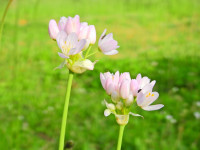
Perennial herbaceous plant belonging to the family Amaryllidaceae, Rosy Garlic is characterized by an erect habit that can reach a height of about 50 cm. The plant develops from an ovoid-pyriform bulb about 2 cm in diameter, covered by outer tunics of a brownish and crusty color. Numerous white bulbils originate from the bulb, contributing to its vegetative propagation.
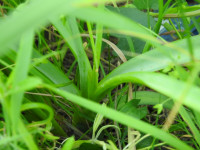
The floral scape is straight, cylindrical, and hairless (glabrous). At the base of the scape, 2 to 4 linear leaves are inserted, up to 35 cm long and about 1 cm wide. The leaves are often glossy, with a broad blade and a margin that may have a slight denticulation, giving a slightly rough texture to the touch.
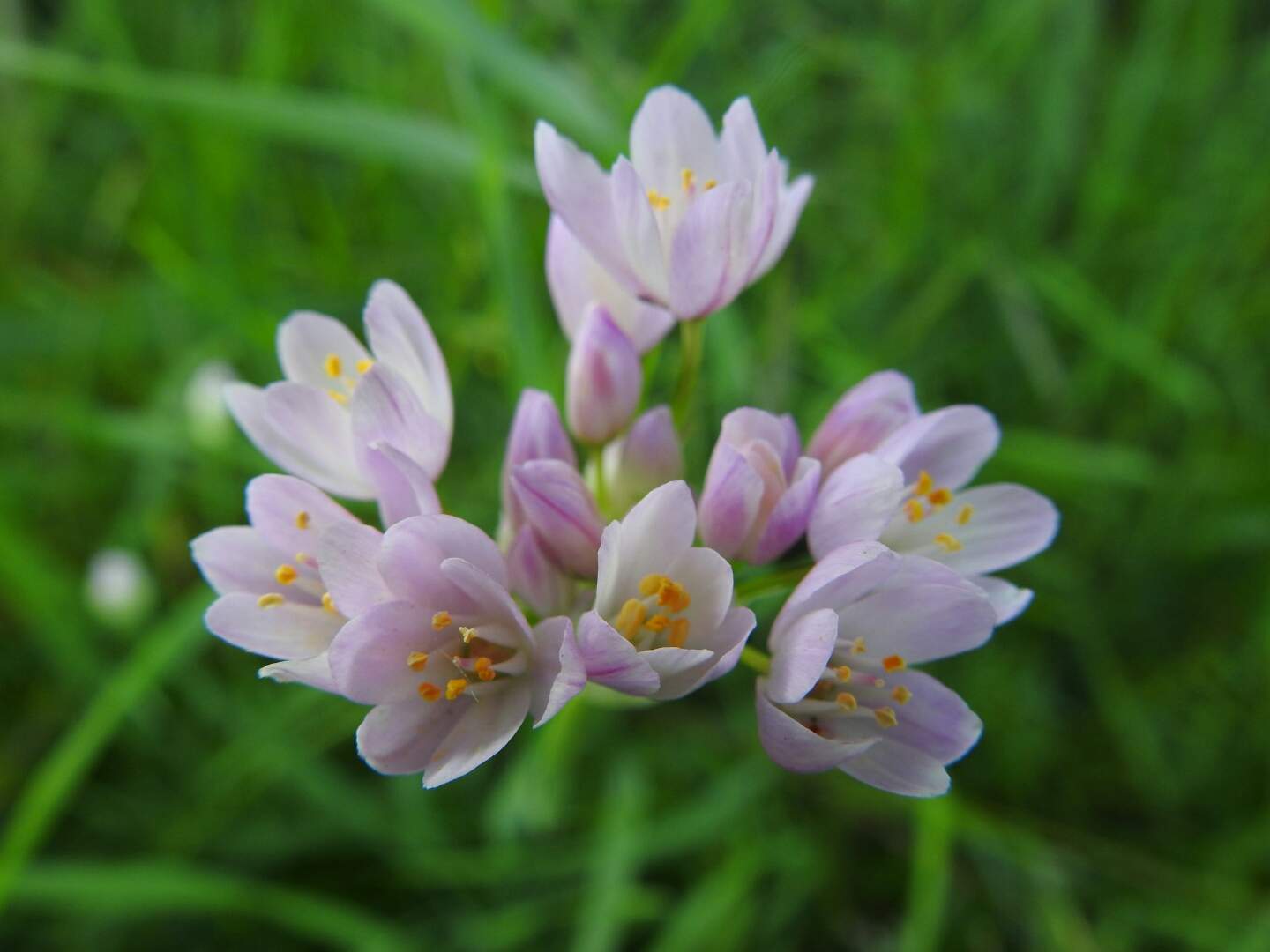
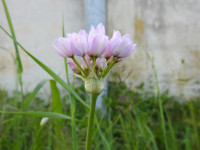
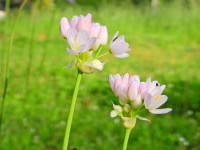
The inflorescence appears in the form of a hemispherical and rather loose umbel, up to 7 cm wide, composed of 5 to 30 flowers. This umbel is wrapped by a persistent spathe, which is fringed at the edges. The flowers, campanulate and up to 1.2 cm long, are borne on long and thin peduncles, and show six tepals of pale pink or white color, often with a delicate fragrance. Each flower has six stamens that do not protrude beyond the tepals, and the ovary is positioned superiorly.
The fruit is a small loculicidal capsule with three rounded valves, containing black seeds. The root system is bulbous and tuberous, with deep roots that allow the plant to anchor firmly to the substrate and withstand relatively dry soil conditions.
Habitat and distribution
Rosy Garlic is a typically Mediterranean species, with a range extending along the coasts of the Mediterranean basin, particularly in Italian regions. It preferably grows in mountainous and hilly environments, up to about 700 meters of altitude. It is commonly found in garrigues, dry uncultivated lands, and sunny slopes where the soil is well-drained and often calcareous or rocky.
It prefers sunny exposures, climatic conditions typical of the Mediterranean climate characterized by hot and dry summers and mild winters. The ideal soil type is therefore dry and nutrient-poor, where it can compete effectively thanks to its deep root system.
Flowering period
Flowering occurs in spring, mainly in the months of April and May. Depending on climatic conditions and latitude, the flowering period may undergo slight variations, advancing or delaying by a few weeks.
Ecology and pollination
The fragrant flowers of Rosy Garlic attract numerous pollinating insects, such as bees and bumblebees, which play a key role in pollination. The campanulate shape and pale pink color of the tepals, together with the release of a characteristic aroma, facilitate the attraction of pollinators. The plant, like many bulbous geophytes, reproduces both sexually through seeds and vegetatively by means of secondary bulbils.
The seeds, contained within three-valved capsules, are mainly dispersed locally, with natural falling mechanisms to the ground. No particular long-distance dispersal strategies are known, suggesting an adaptation to colonize stable and well-defined stations.
Curiosities and traditional uses
Rosy Garlic is edible and has recognized medicinal properties since antiquity. Like all species of the genus Allium, it contains thiosulfinates, volatile sulfur compounds responsible for the characteristic pungent odor and antibacterial, antifungal, antithrombotic, and anticancer properties.
The plant is rich in vitamins (A, B1, B2, C, PP), enzymes, pectins, and mineral salts, elements that contribute to a beneficial effect on the cardiovascular system, helping to keep blood pressure under control and to eliminate abdominal swelling and flatulence. Furthermore, it is considered an effective natural bactericide and antiparasitic.
In popular tradition, garlic was attributed aphrodisiac powers and protection against the evil eye, envy, and bad luck. Its symbolic role as a remedy to ward off vampires is also well known, a folkloric figure linked to Mediterranean and European culture.
It should be emphasized, however, that medicinal and food uses are to be considered for informational purposes, and any use must be evaluated with caution.
Etymology
The genus name Allium derives from classical Latin and has a complex and debated etymology. Various hypotheses link the term to Indo-European roots related to bitter plants or to ancient Greek, but there is no definitive consensus. One possible origin is linked to the image of the bulb divided into cloves, similar to “wings,” from which the root ala.
The specific name roseum refers to the pink color of the flowers, while the common Italian name “Rosy Garlic” clearly indicates the floral aspect and the relationship with other garlic species.
Sources
- Acta Plantarum - Flora delle regioni italiane (scheda di Giuliano Salvai)
Characteristics
Where I found it (8 sightings)
Classification
- Kingdom
- Plantae
- Family
- Amaryllidaceae
- Full name
- Allium roseum L.
- Synonyms
- Nectaroscordum roseum (L.) Galasso & Banfi
- Life form
- Geofite bulbose
Similar species
Search for species with similar characteristicsNoticed an error in the identification? Write to me
Other species of the same family
Amaryllidaceae
Explore
Other species of Amaryllidaceae