Botanical species
Echium sabulicola
Pomel
Sand Viper's Gloss
Description
Morphological description
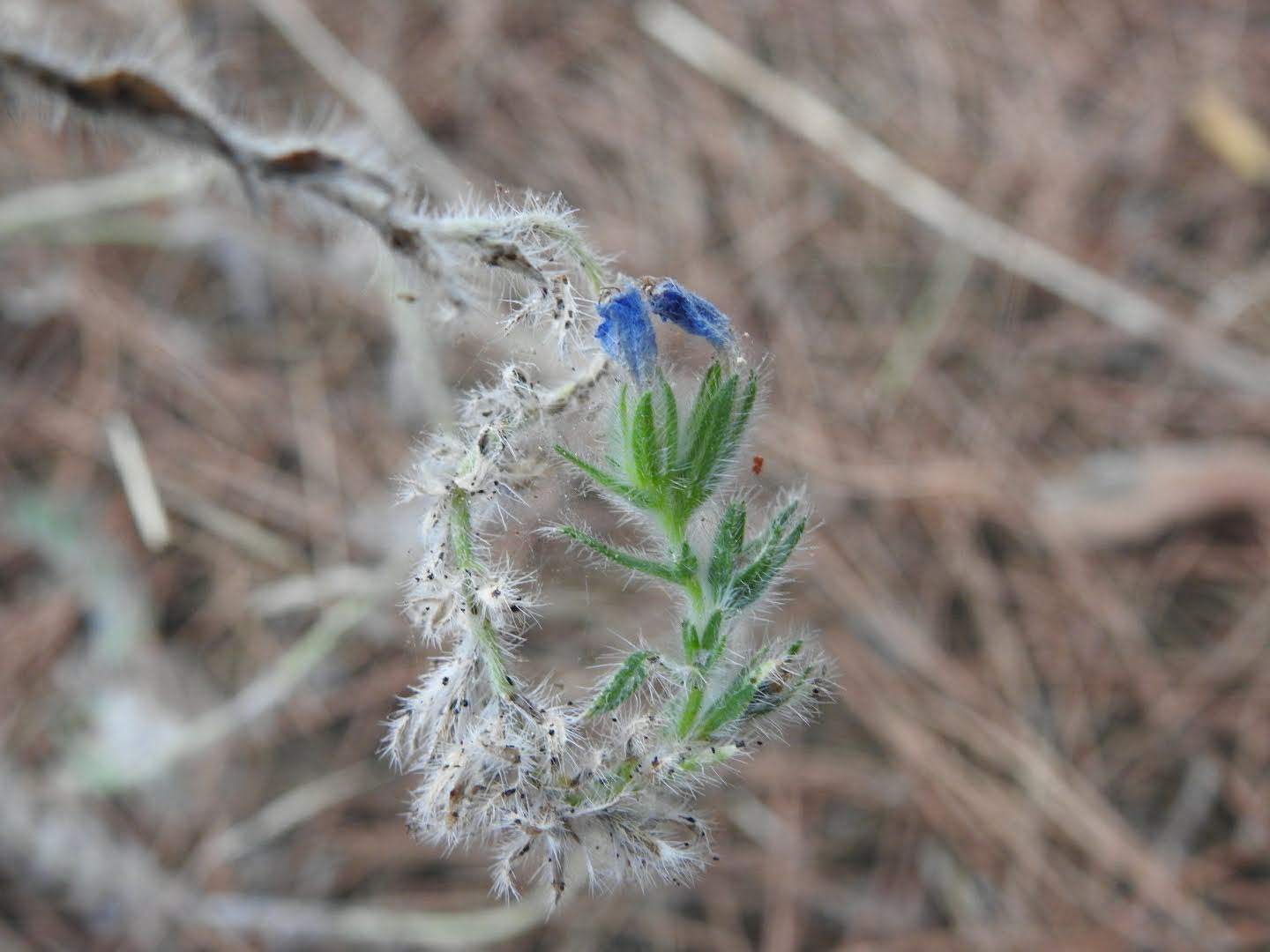
The Beach Viper's Bugloss is a perennial plant belonging to the family Boraginaceae, typical of sandy coastal environments. It has an erect habit, with stems covered by fine hairs that give them a velvety and slightly rough surface to the touch. The height of the plant can vary, but it generally remains modest, adapting to the often windy and salty conditions of the beaches.
The leaves are lanceolate or ovate-lanceolate in shape, with a similarly hairy surface, a characteristic that helps reduce water loss and protect the plant from sun and sea wind. The leaves are arranged alternately along the stem or also basally, forming a rosette at the base.
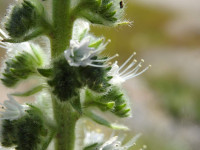
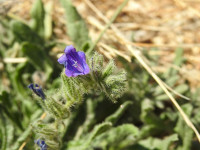
The inflorescence is an elongated raceme, with numerous flowers of intense violet color, characteristic and easily recognizable. The sepals surrounding the flower are hairy, helping to protect the delicate tissues of the flower itself. The flowers, typical of the family Boraginaceae, have a tubular corolla with five lobes and are hermaphroditic. The flowering subsequently produces achene fruits, small and dry, which contain the seeds for the reproduction of the species.
The root system is well developed and suitable for stabilizing the plant in the sandy substrate, often poor in nutrients and subject to erosion. The roots, deep and robust, allow the Beach Viper's Bugloss to anchor firmly and access deeper moisture, favoring survival in extreme environments such as coastal dunes.
Habitat and distribution
This species is a psammophilous plant, specialized in growing on sandy substrates, typically along marine coasts. It is mainly widespread in the coastal regions of the Mediterranean, with a confirmed presence also in Italy, especially on sandy beaches and coastal dunes.
It prefers marine environments, with direct exposure to sun and wind, and is found at low altitude, generally at sea level or slightly above. The soils are sandy, well drained, and of low fertility, conditions in which the Beach Viper's Bugloss competes effectively thanks to its morphological and physiological adaptations.
Its presence is an important ecological indicator of intact and little disturbed dune habitats, contributing to the stabilization of the sandy substrate and to the biodiversity of coastal plant communities.
Flowering period
The flowering of the Beach Viper's Bugloss mainly extends between March and May, with possible variations linked to local climatic conditions. In some warmer Mediterranean areas, flowering can begin as early as late winter or extend until early summer.
During this period, the plant produces numerous violet flowers that attract pollinating insects and contribute to the sexual reproduction of the species.
Ecology and pollination
The Beach Viper's Bugloss relies mainly on pollinating insects for pollination. The violet flowers, rich in nectar, attract bees, bumblebees, and other pollinating insects that facilitate cross-fertilization, increasing the genetic variability of the population.
The plant is biennial or perennial, and the reproductive strategy involves the production of seeds that are dispersed mainly by falling and, partly, by wind or water, given the coastal location. This mode of dispersal favors the maintenance and expansion of the species in dune areas, often characterized by shifting sandy substrate dynamics.
Curiosities and traditional uses
No specific ethnobotanical traditions or established medicinal uses are known for this species. However, as with many other plants of the genus Echium, it is possible that local uses were explored in the past, although not scientifically documented. Its presence on beaches ecologically contributes to dune stabilization, a fundamental role for the protection of coasts from erosion.
Etymology
The generic name Echium derives from the Greek "echis," meaning viper, probably referring to the shape of the roots resembling a viper's tail or the shape of the flower which resembles the head of this snake. The specific name sabulicola derives from the Latin "sabulum," meaning sand, and "cola," meaning "inhabitant of," thus emphasizing the characteristic habitat of the plant: sandy beaches.
The Italian common name "Sand Viper's Gloss" also recalls this link both with the appearance of the flower and with the coastal habitat in which it grows.
Sources
- Tela Botanica / H. Coste, "Flore descriptive et illustrée de la France"
Characteristics
Where I found it (4 sightings)
Classification
- Kingdom
- Plantae
- Family
- Boraginaceae
- Full name
- Echium sabulicola Pomel
- Synonyms
- Echium sabulicola Pomel
- Life form
- Emicriptofite bienni
Similar species
Search for species with similar characteristicsFurther reading
Noticed an error in the identification? Write to me
Other species of the same family
Boraginaceae
Explore
Other species of Boraginaceae