Botanical species
Echium italicum
L.
Pale Bugloss
Description
Morphological description
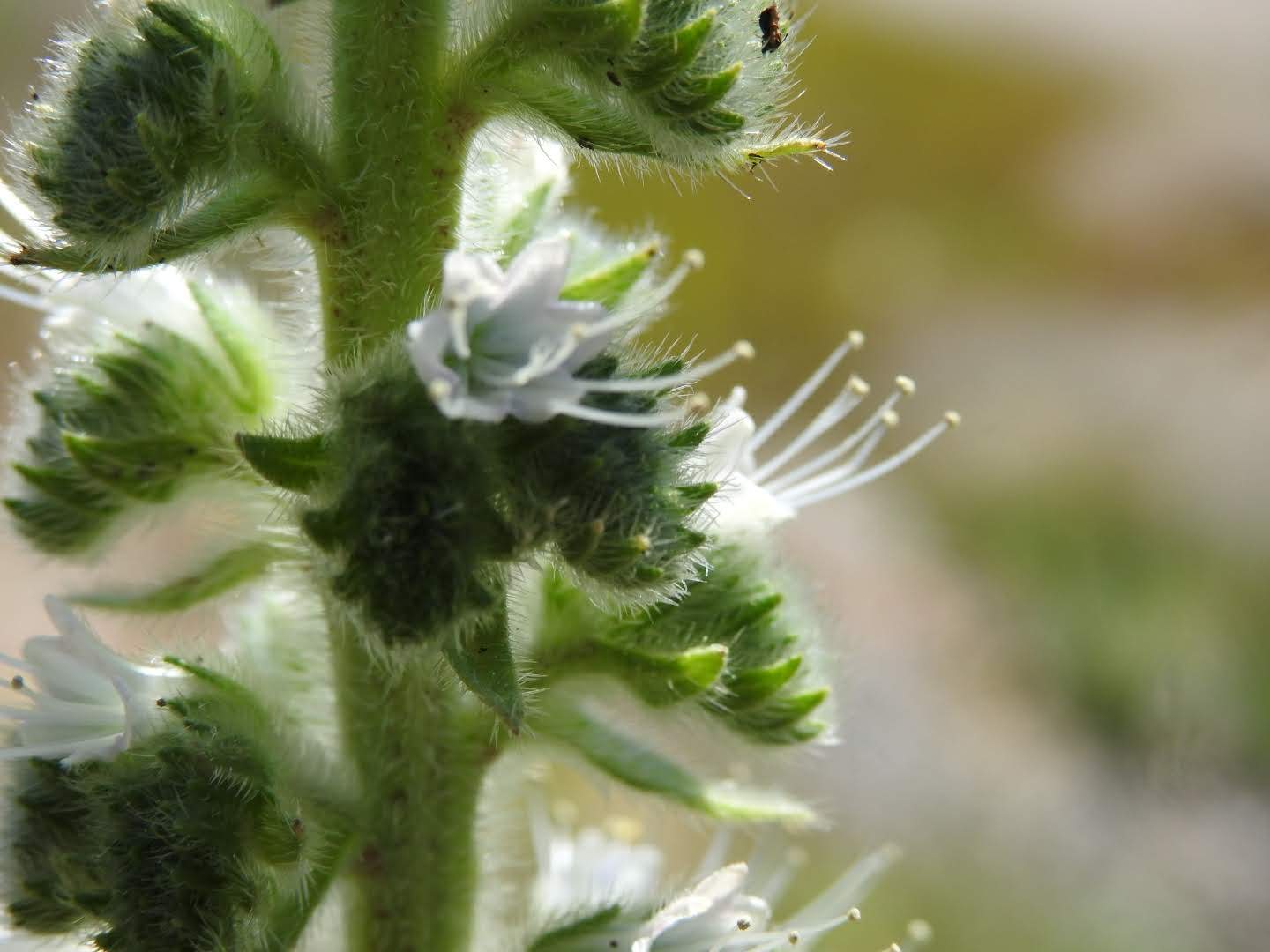
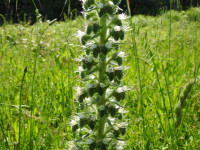
Biennial herbaceous plant belonging to the Boraginaceae family, it has an erect habit that can reach variable heights from 30 cm up to 150 cm. The stem is branched from the base, with a hairy and bristly surface, characterized by stiff and prickly bristles, particularly evident at the tips, giving the entire plant a bristly and spiny appearance. The branching tends to be more developed towards the top, with lower branches generally shorter or simple.
The basal leaves are arranged in a rosette and are lanceolate, ovate-lanceolate in shape, with entire margins and a surface covered by soft appressed hairs that make them slightly velvety. These basal leaves are quite large, measuring between 3 and 4.8 cm in width and from 12 to 26 cm in length, while the cauline leaves are narrower, lanceolate or elliptical, smaller in size and equally bristly with setose hairs. The leaf texture is relatively leathery, suitable for a dry and sunny environment.
The inflorescence consists of a pyramidal or panicle-like structure, sometimes spike-like, with flowers densely arranged laterally along the inflorescence branches. The calyx is about 6 mm (during fruiting it can reach 8.5 mm), with narrow and papillose lobes. The corolla is narrowly funnel-shaped, 10 to 12 mm long, and varies in color from white, pale blue to a faint pink, with long and protruding stamen filaments, whitish or carmine red in color, resembling small snake tongues. The pollen is grayish-blue in color.
The fruits consist of mericarps with a triangular outline, about 3x4 mm in size, covered by the calyx and bristles, rough and gray-brown in color at maturity. These separate easily facilitating dispersal. The root system is typical of biennial plants, with well-developed anchoring roots, suitable for dry and rocky soils.
Habitat and distribution
The species is widespread throughout the Euro-Mediterranean area, with a particular concentration along the coasts and in Mediterranean regions. In Italy it is present throughout the territory, more frequently in the central, southern regions and the major islands, while in northern Italy it is found with a more localized and sporadic distribution. In natural environments it mainly grows in uncultivated lands, dry pastures, sunny areas and mountainous environments up to about 1300 meters altitude.
It prefers well-drained soils, often stony or calcareous, and environments exposed to full sun. It is a typical species of poor and dry soils, where competition with more vigorous species is limited.
Flowering period
Flowering generally extends from April to August, with some geographical variations related to altitude and latitude. In the more southern and coastal areas flowering can begin already in spring and continue until late summer, while in cooler mountainous environments a higher concentration of flowers is observed between May and July. Flowering is characterized by a succession of flowers along the pyramidal inflorescence, which can take more or less elongated and branched forms depending on the population.
Ecology and pollination
Pale Bugloss is pollinated by pollinating insects, particularly bees and bumblebees, attracted by the nectar and the light colors of the flowers which range from white to pale pink. The protruding stamens facilitate contact with pollinating insects, which carry pollen from one flower to another favoring fertilization.
Seed dispersal occurs through the mericarps which detach easily, spreading in the surrounding soil. The bristles on the fruits and stem can also contribute to dispersal by contact with animals or by wind, although to a lesser extent.
Curiosities and traditional uses
The genus name refers to the shape of the seeds or stamens, which resemble the forked tongue of snakes, from which also derives the Italian common name “viperina”. The plant has traditionally been associated with medicinal uses in some areas, although it is not among the most widely used species. In the past, some local populations exploited its properties to prepare herbal remedies, while in folklore the shape of the corolla and the presence of elements reminiscent of the snake have fueled beliefs related to protection against viper bites.
No widespread food uses are documented, but the species contributes to the ecosystem by providing resources for pollinating insects in Mediterranean areas.
Etymology
The scientific name derives from the Greek “echion” or “eckis”, meaning “viper”, referring both to the shape of the triangular seeds which resemble the snake's head, and to the shape of the protruding stamens, similar to the forked tongue of the reptile. The epithet “italicum” indicates the relative distribution and Italian or Mediterranean origin of the species.
The common name “Pale Bugloss” recalls the resemblance to the snake’s tongue and its distinctive presence in the Italian territory, distinguishing it from other related species of the same genus.
Sources
- Prof. S. Pignatti, "Flora d'Italia"
- Acta Plantarum - Flora delle regioni italiane (scheda di Mirna Medri)
Characteristics
Scheda botanica
| Famiglia | Boraginaceae |
|---|---|
| Fioritura | aprile – agosto |
| Forma biologica | Biennials |
| Habitat | with white flowers |
Domande frequenti
- Quando fiorisce Pale Bugloss?
- Pale Bugloss fiorisce aprile – agosto.
- Che tipo di pianta è Pale Bugloss?
- Pale Bugloss è una Hemicryptophytes (Biennials) secondo la classificazione di Raunkiaer.
- A quale famiglia appartiene Pale Bugloss?
- Pale Bugloss appartiene alla famiglia botanica Boraginaceae.
Where I found it (10 sightings)
Classification
- Kingdom
- Plantae
- Family
- Boraginaceae
- Full name
- Echium italicum L.
- Life form
- Hemicryptophytes biennials
Similar species
Search for species with similar characteristicsFurther reading
Noticed an error in the identification? Write to me
Other species of the same family
Boraginaceae
Explore
Other species of Boraginaceae