Botanical species
Asparagus acutifolius
L.
Wild Asparagus
Description
Morphological description
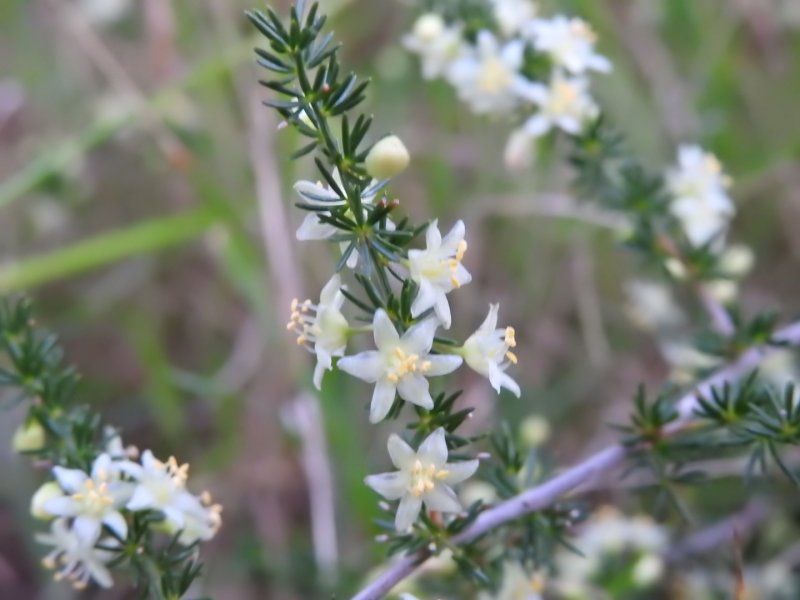
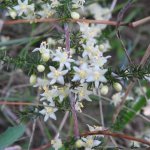
The Wild Asparagus is a suffruticose, generally dioecious, evergreen and rhizomatous plant, which can reach a height of up to 1.5 meters. It is characterized by woody, rigid, arcuate-ascending stems, cylindrical in shape and finely pubescent, with well-visible longitudinal grooves. These stems branch abundantly, giving the plant a bushy and dense habit.
The leaves are reduced to small membranous scales, often spiny at the base of the stems. These true leaves are replaced by cladodes, i.e. modified shoots that perform the chlorophyll function. The cladodes are needle-shaped, rigid, channelled, generally 7 to 9 mm long and about 0.6 mm wide, with a horny and sharp spinule at the apex. They are arranged in verticillate fascicles counting from 4 to 12 cladodes each.
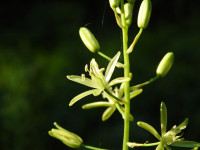
The flowers, small in size (4-5 mm perianth), are solitary or paired and develop on short articulated pedicels (3-8 mm) located in the axil of the cladodes. The perianth is formed by six green-yellowish tepals, fused at the base. Although they simultaneously present male and female reproductive organs, the flowers behave as unisexual: female flowers have reduced stamens with sterile anthers (staminodes), while in male flowers the gynoecium is abortive, smaller than the tepals and incapable of fruiting. Each flower has six stamens and a superior tricarpellary ovary with three stigmas.
The fruit is a spherical berry 5-6 mm in diameter, which matures from green to almost black, containing one to three seeds. The plant has a rhizomatous root system, which allows it to survive and regenerate every year, producing new spring shoots called turions, initially lacking cladodes.
Habitat and distribution
The Wild Asparagus is a typically Mediterranean species, with a range extending along the coasts of the Mediterranean basin, particularly in the “olive area”. In Italy it is widespread almost everywhere, being more common in the central-southern regions and rarer or sporadic in the northern areas.
It prefers xerophilous habitats and is commonly found in Mediterranean scrub, holm oak woods, deciduous forests and hedges. It grows on calcareous substrates, from sea level up to about 1300 meters altitude. The plant adapts well to sunny exposures typical of Mediterranean environments, resisting drought conditions thanks to its structure and needle-shaped cladodes.
Flowering period
Flowering generally occurs from August to November, with an anthesis phase extending until late autumn. This period may undergo slight variations depending on latitude and local climatic conditions, but in general the plant flowers in the height of summer and early autumn.
Ecology and pollination
Pollination is entomogamous, i.e. mediated by pollinating insects. Despite the presence of flowers with male and female reproductive organs, the plant behaves as dioecious or polygamous, with unisexual male and female flowers, sometimes also hermaphroditic. This reproductive strategy reduces self-fertilization and promotes genetic diversity.
Seed dispersal occurs through mature berries, which can be consumed by animals, contributing to the spread of the species. The plant, thanks to its rhizomatous structure, is also able to regenerate and propagate vegetatively.
Curiosities and traditional uses
The Wild Asparagus is known for its edible and medicinal properties. The spring turions, as well as the rhizomes, are used in cooking and phytotherapy. From a nutritional point of view, they contain amino acids such as asparagine and numerous mineral salts. The main effects attributed to this plant are diuretic, purifying, laxative and slimming.
However, medicinal use is not recommended in case of kidney inflammations. After consumption, a volatile compound, methyl mercaptan, is formed in the body, which is eliminated with the urine, giving it a characteristic, pungent and unpleasant odor.
From a gastronomic point of view, fresh turions have a slightly bitter taste and are highly appreciated in some regional cuisines, where they are harvested and prepared in various ways.
Etymology
The genus name Asparagus derives from the Greek “aspháragos”, itself probably originating from the ancient Persian “asparag”, meaning “shoot”, indicating the ancient tradition of using the plant’s shoots as food.
The specific epithet acutifolius derives from Latin and means “with pointed leaves”, referring to the spiny characteristic and needle-shaped form of the leaves reduced to sharp cladodes.
The Italian common name “Asparago pungente” emphasizes precisely the spiny nature of the cladodes, much more rigid and acuminate than cultivated asparagus.
Sources
- Acta Plantarum - Flora delle regioni italiane (actaplantarum.org)
- Acta Plantarum - Flora delle regioni italiane (scheda di Anja Michelucci)
Characteristics
Scheda botanica
| Famiglia | Asparagaceae |
|---|---|
| Fioritura | luglio – settembre |
| Forma biologica | Nano-Phanerophytes |
| Habitat | with white flowers, edible plant, spiny plant |
| Uso alimentare | Commestibile |
| Uso officinale | Pianta officinale |
Domande frequenti
- Quando fiorisce Wild Asparagus?
- Wild Asparagus fiorisce luglio – settembre.
- È commestibile Wild Asparagus?
- Wild Asparagus è considerata commestibile. Verifica sempre le parti eduli e la preparazione corretta prima del consumo.
- Che tipo di pianta è Wild Asparagus?
- Wild Asparagus è una Phanerophytes (Nano-Phanerophytes) secondo la classificazione di Raunkiaer.
- A quale famiglia appartiene Wild Asparagus?
- Wild Asparagus appartiene alla famiglia botanica Asparagaceae.
Where I found it (3 sightings)
Classification
- Kingdom
- Plantae
- Family
- Asparagaceae
- Full name
- Asparagus acutifolius L.
- Synonyms
- Asparagus aetnensis Tornab.
- Life form
- Phanerophytes nano-phanerophytes
Similar species
Search for species with similar characteristicsFurther reading
Noticed an error in the identification? Write to me
Other species of the same family
Asparagaceae
Explore
Other species of Asparagaceae