Botanical species
Primula veris
L.
Cowslip
Description
Morphological description
Perennial herbaceous plant generally 8 to 30 cm tall, with a bushy habit and an oblique or subhorizontal rhizome often curved, about 2-3 cm long. The flowering scape is erect, cylindrical, undivided and leafless, with a height ranging from 12 to 22 cm, rising singly from the basal leaf rosette.
The leaves are all basal, gathered in a rosette, and have a petiole clearly distinct from the blade. The petiole is 3 to 8 cm long, often winged and pubescent, while the blade is ovate, with dimensions varying from 3-5 cm in width and 5-8 cm in length. The leaf surface is wrinkled, reticulate and pubescent with simple hairs, dark green on the upper side and lighter on the underside, with an irregularly toothed margin and an apex ranging from acute to obtuse.
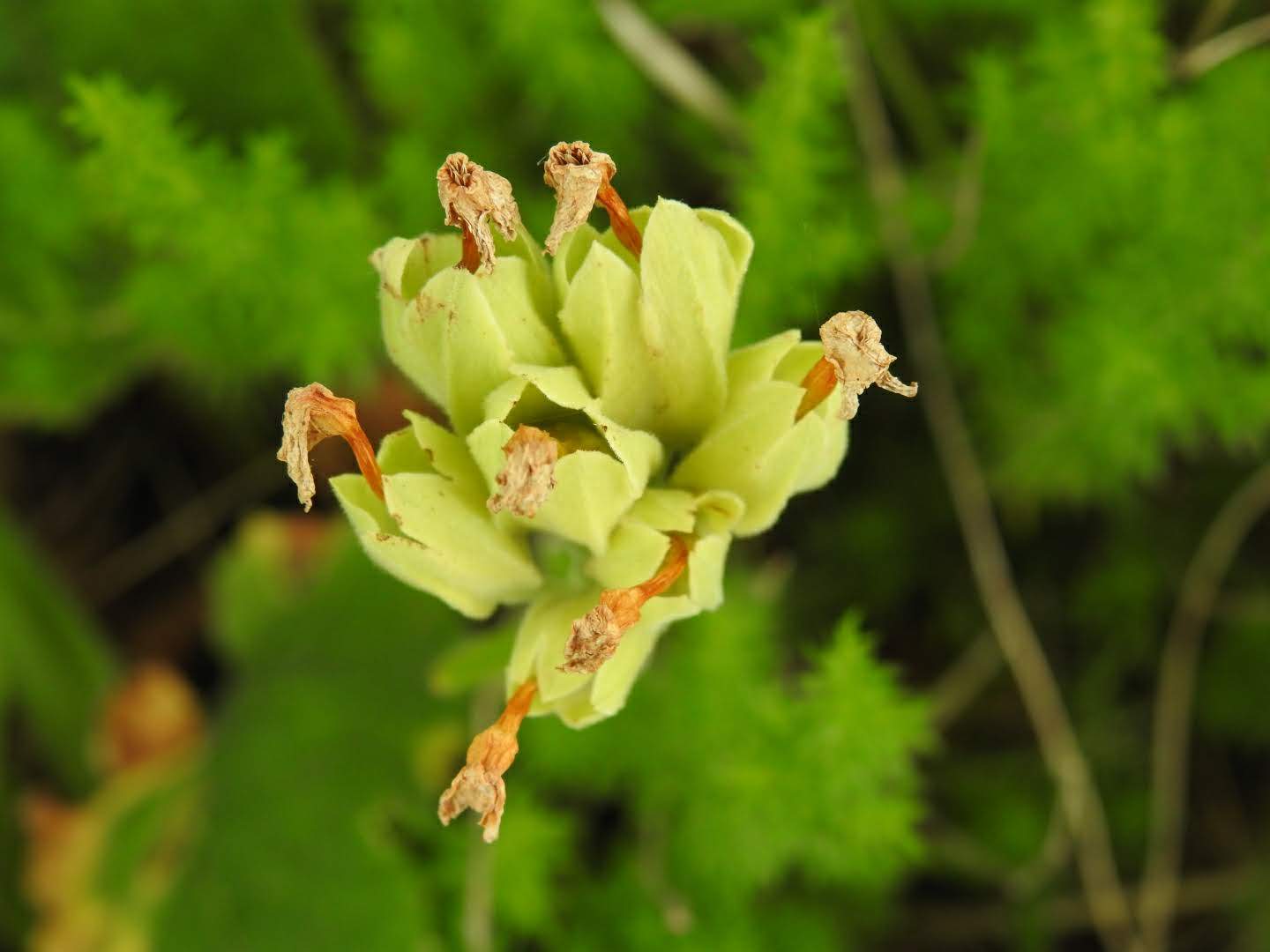
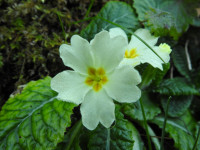
The inflorescence appears as a dense umbel, typically formed by 5 to 15 flowers, each borne on a flexuous peduncle 5 to 20 mm long, which often reclines the flowers laterally. The flowers are hermaphroditic, actinomorphic, pentamerous and fragrant, golden yellow in color with 5 orange or darker spots at the base of the petals. The corolla is gamopetalous, with a tube 8-20 mm long and a limb diameter between 8 and 28 mm, with lobes (petals) 8-14 mm long and an apex slightly emarginate or distinctly notched.
The calyx is gamosepalous, pale green, campanulate and swollen, with triangular, acute teeth about 2.5-3.5 mm long, often as long as wide or slightly wider than long. The calyx tube measures between 8 and 15 mm, generally wider than the corolla tube.
The stem bears 5 stamens, while the ovary is superior, unilocular with central placentation, formed by 5 fused carpels and containing numerous ovules. The species shows a reproductive dimorphism called heterostyly, with long-styled and short-styled individuals differing in style length and anther position, a characteristic that favors cross-pollination.
The fruit is an oblong capsule, unilocular, 5 to 10 mm long, dehiscent with 5-10 apical teeth, enclosed in the persistent calyx, containing numerous flattened dark seeds.
Habitat and distribution
The species is widely distributed in Italy, present from the North to the Center, from Val d’Aosta to Abruzzo and Campania. It is also common in Europe and Asia, with a range mainly extending in the eurymediterranean regions and parts of Central and Eastern Europe.
It prefers mountainous and hilly environments, growing in dry meadows, scrublands, open woods of downy oak and conifers, on predominantly calcareous and basic substrates, with a preference for moderately moist soils. The species is found at altitudes ranging from sea level up to 2300 meters.
In Italy, two main subspecies are recognized: subsp. veris, typically alpine and present in the Alps from Val d’Aosta to Friuli Venezia Giulia, and subsp. suaveolens, with a wider distribution but absent in some northeastern regions, typical of downy oak and conifer woods.
Flowering period
Flowering mainly occurs between April and June, with possible variations depending on altitude and latitude. In colder mountain environments, flowering may start later, while in milder climate zones it may begin earlier.
Ecology and pollination
The species is entomogamous, with pollination mainly carried out by butterflies and bees. The heterostyly mechanism, which generates two distinct floral forms (long-styled and short-styled), promotes cross-pollination between different plants, reducing self-pollination and increasing genetic variability. This system is associated with a sporophytic self-incompatibility mechanism, which prevents fertilization between individuals with the same type of heterostyly.
Seed dispersal occurs through capsule dehiscence, which releases flattened dark seeds, probably favored by passive movement via wind or small animals.
Curiosities and traditional uses
Cowslip has long been known for its pleasant fragrance and golden-yellow flowers, appreciated also in ornamental and herbal medicine contexts. Historically, it has been used in folk medicine for its sedative and anti-inflammatory properties, especially for respiratory disorders such as cough and cold.
In cooking, young shoots and tender leaves are sometimes gathered and consumed in salads or as wild vegetables, although in moderation. From an ethnobotanical perspective, the species is linked to spring traditions and symbols of rebirth, typical of Mediterranean peasant culture.
Etymology
The scientific genus name, Primula, derives from the Latin primus, meaning "first", referring to the early spring flowering of many species belonging to this genus. The specific epithet veris means "of spring", highlighting the plant's flowering period.
The Italian common name "Cowslip" refers to the characteristic scent of the flowers, which is particularly intense and sweet, distinguishing it from other less aromatic primulas.
Sources
- Prof. S. Pignatti, "Flora d’Italia"
- Acta Plantarum - Flora delle regioni italiane (scheda di Daniela Longo)
- World Flora Online (WFO)
Characteristics
Scheda botanica
| Famiglia | Primulaceae |
|---|---|
| Fioritura | aprile – giugno |
| Forma biologica | Rosulate |
| Habitat | with white flowers, with yellow flowers, fragrant plant |
Domande frequenti
- Quando fiorisce Cowslip?
- Cowslip fiorisce aprile – giugno.
- Che tipo di pianta è Cowslip?
- Cowslip è una Hemicryptophytes (Rosulate) secondo la classificazione di Raunkiaer.
- A quale famiglia appartiene Cowslip?
- Cowslip appartiene alla famiglia botanica Primulaceae.
Classification
- Kingdom
- Plantae
- Family
- Primulaceae
- Full name
- Primula veris L.
- Synonyms
- Primula veris L. subsp. canescens (Opiz) Hayek
- Life form
- Hemicryptophytes rosulate
Similar species
Search for species with similar characteristicsNoticed an error in the identification? Write to me
Other species of the same family
Primulaceae
Explore
Other species of Primulaceae