Botanical species
Filipendula vulgaris
Moench
Dropwort
Description
Morphological description
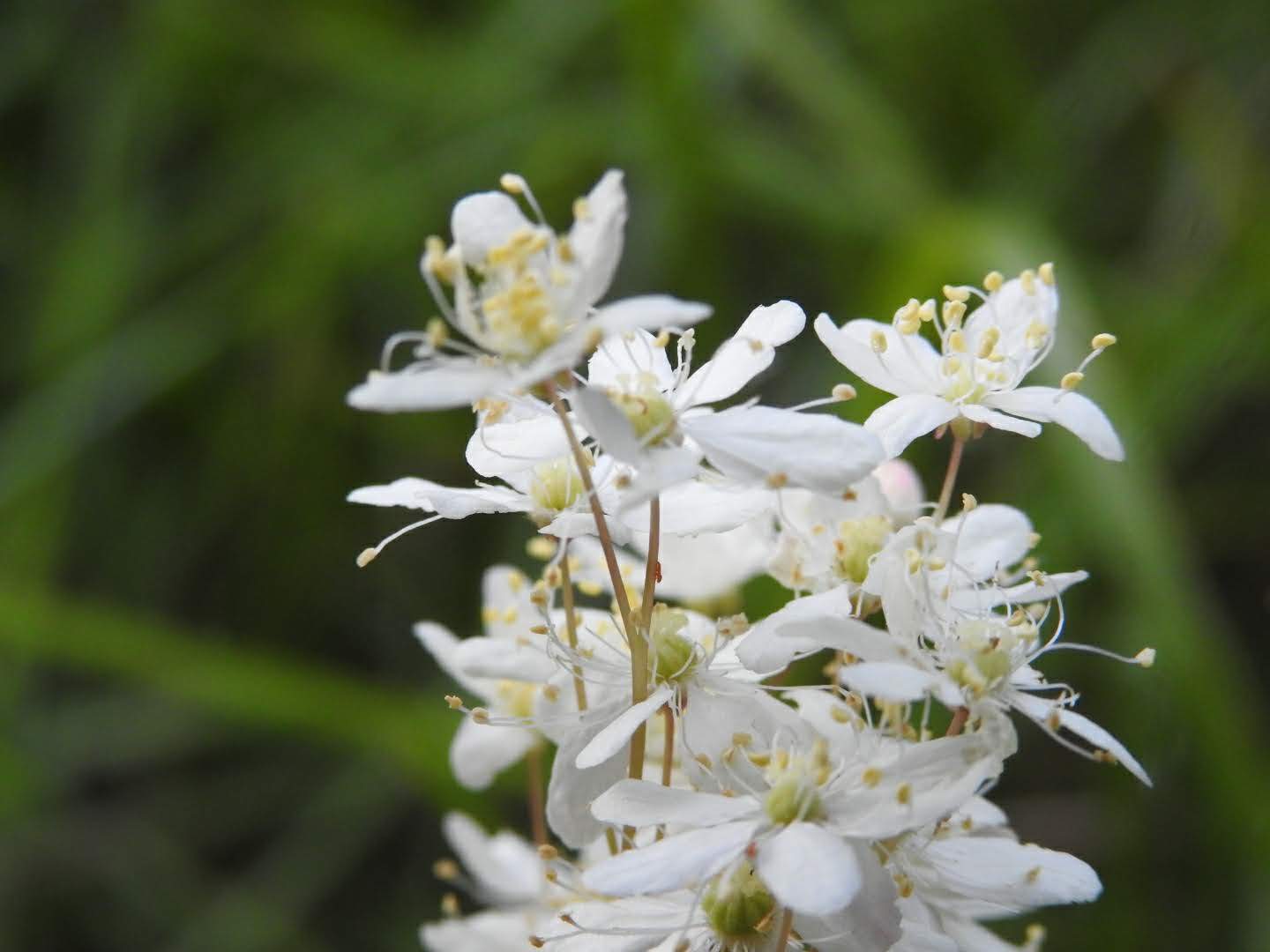
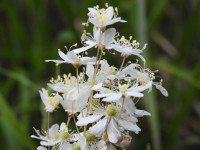
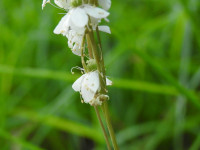
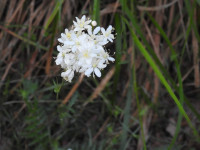
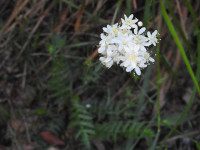
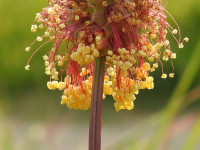
Perennial herbaceous plant belonging to the Rosaceae family, it has an erect habit with a height ranging from 30 to 80 cm. The stem is glabrous, striated, and hairless, supporting corymbose inflorescences, that is composed of flowers gathered in an umbrella shape with erect peduncles 1-3 mm long. The root system is characterized by a horizontal, short, woody, and dark-colored rhizome, with tubercles or nodules arranged as if threaded on a string, from which the genus name derives.
The basal leaves are large, up to 40 cm long, imparipinnate with 10-40 pairs of pinnately divided segments interspersed with smaller leaflets. The larger segments can reach 25-30 mm in length and are lanceolate and serrated, with a coarsely toothed margin. The blade is thin, 2-3 mm wide. The cauline leaves, instead, are smaller and less numerous.
The flowers are small, sweetly scented, and cream-white in color, sometimes with pinkish shades externally. Each flower generally has six petals (ranging from 5 to 9) about 3-6 mm long and 3 mm wide, arranged to form multiflorous corymbs. The androecium and gynoecium are clearly visible, with erect and pubescent carpels that do not coil spirally. The fruits are multiple, semi-elliptical achenes, flattened, brown in color with short hairs and some glands; they measure about 3-4 mm in length and 2-2.5 mm in width. The seeds, in turn, are flattened and dark brown in color.
Habitat and distribution
The species is widespread in temperate Europe, from Central Europe to Ukraine, and is also found in some areas of southern Siberia. In Italy, it is mainly present in areas with calcareous soils, preferring environments of dry meadows, poor pastures, edges of woods, and thermophilous shrublands, on well-exposed and sunny slopes. It grows from sea level up to 1,500 meters in altitude.
It adapts well to arid or poor soils, often calcareous or rocky, and frequents places with high solar exposure. Its typical habitat is that of poor grasslands with a steppe or hilly character, with optimal light and drainage conditions.
Flowering period
Flowering mainly occurs between May and July, with geographical variations that may slightly anticipate or delay this interval. In Italy and the Mediterranean area, the peak flowering period is generally concentrated between late spring and early summer.
Ecology and pollination
The flowers, cream-white and fragrant, are particularly attractive to a variety of pollinating insects, especially bees and other hymenopterans, which favor their pollination. The plant produces a good amount of nectar and pollen, representing an important melliferous resource in dry meadows and calcareous environments where it grows.
Seed dispersal occurs through achenes that can be spread by wind or animals, although there are no particular specialized adaptations for long-distance dissemination. The multiple fruit allows a certain autonomy in propagation, ensuring the species' survival in stable environments.
Curiosities and traditional uses
This species is known not only for its ornamental value but also for its medicinal and food properties. The flowers are used in phytotherapy for their diuretic and purgative properties, while the roots contain a starch and a bitter principle traditionally used against kidney stones and as astringents.
Both roots and leaves are edible and can be added raw to salads or cooked in soups, offering a slightly bitter and aromatic flavor. The plant is also known by popular names such as “erba peperina” or “olmaria peperina” for the slight spicy note it presents.
Despite these uses, caution is recommended in therapeutic or food applications, as traditional uses do not replace medical advice. The species is also valued for its contribution to the ecosystem as a melliferous plant.
Etymology
The genus name Filipendula derives from the Latin "filum" (thread) and "pendulus" (hanging), referring to the small tubercles or nodules of the roots that seem to hang as if threaded on a string. The specific name vulgaris means "common" or "widespread," highlighting the frequency of this species in many European regions.
The Italian common name "filipendola" directly recalls the scientific name, maintaining the Latin root that describes the characteristic appearance of the tuberous roots.
Sources
- Prof. S. Pignatti, "Flora d'Italia"
- Acta Plantarum - Flora delle regioni italiane (scheda di Marinella Zepigi)
- World Flora Online (WFO)
Characteristics
Where I found it (9 sightings)
Classification
- Kingdom
- Plantae
- Family
- Rosaceae
- Full name
- Filipendula vulgaris Moench
- Synonyms
- Spiraea filipendula
- Life form
- Emicriptofite scapose
Similar species
Search for species with similar characteristicsNoticed an error in the identification? Write to me
Other species of the same family
Rosaceae
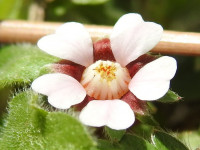
Explore
Other species of Rosaceae