Botanical species
Potentilla micrantha
Ramond ex DC.
Cinquefoglia fragola secca
Description
Morphological description
Perennial herbaceous plant of modest size, generally 5 to 15 cm tall, with an erect habit and short, thin stems characterized by a pubescent surface with soft hairs, spreading or directed downward. The root system, although not detailed in the sources, is typical of rosulate hemicryptophytes, with buds located at ground level.
The leaves are arranged in a basal rosette and are petiolate, composed of three segments (trifoliate) of oval or rounded shape. The leaf margins have 14-22 finely serrated teeth, of obtuse or triangular shape and shortly acuminate. The leaf surface is slightly hairy, giving a soft texture. The stipules are triangular-ovate with an acuminate apex and scarious margin. The cauline leaves, present in limited number (1-2), are subsessile and similar to the basal ones but smaller.
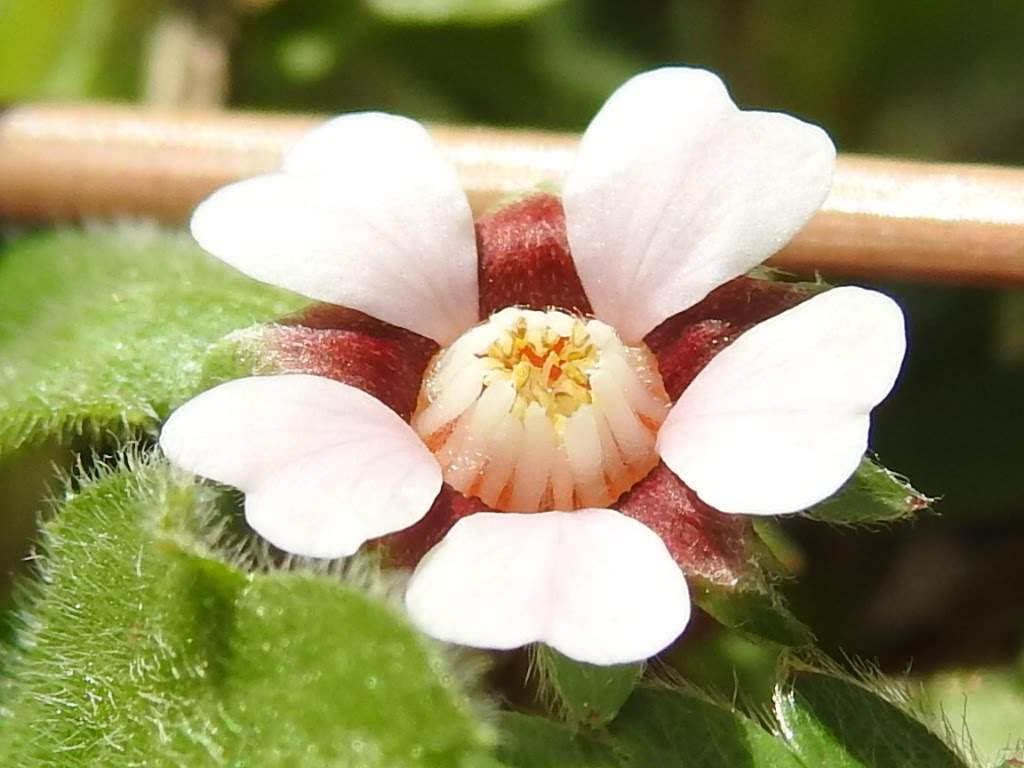
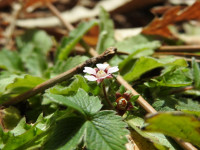
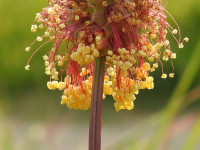
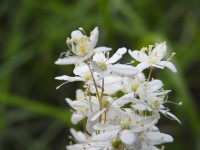
The flowers, small (6-8 mm in diameter), are usually white or pale pink, with petals up to 3 mm wide, shorter or equal in length to the sepals, which are 5, broadly triangular and also pubescent. The calyx is accompanied by a calyculus, that is a second smaller calyx. The petals reveal the receptacle of red color beneath them. The androecium has numerous stamens inserted in a yellow nectariferous disc, with wide, flat filaments contracted upwards, covered with hairs on the lower half. The anthers are ovoid in shape, similar or slightly narrower than the filaments. The gynoecium consists of numerous filiform styles. The stamen filaments join into a tube closed towards the apex.
The fruits are ovoid achenes, smooth or rough, equipped with a triangular elaiosome, a structure that facilitates dispersal by ants (myrmecochory).
The plant does not produce stolons, a characteristic that distinguishes it from similar species such as Potentilla sterilis, with which it can be confused due to trifoliate leaves similar to those of a Fragaria (strawberry). However, the absence of stolons and the small size of the flowers are key diagnostic elements.
Habitat and distribution
The species is mainly widespread in Mediterranean regions, with a eurymediterranean range extending from the Mediterranean coasts northwards and eastwards up to the area of the Vite. In Italy it grows from sea level up to about 1500 m altitude. It prefers open or semi-shaded habitats such as forest edges, not too dense woods, scrublands, and walls. It is a xerophilous and thermophilous plant that adapts well to usually sunny or partially shaded exposures, with well-drained soils.
The species is present in many areas of central and southern Europe and also in western Asia, reported also in Corsica. Its distribution in Italy is rather scattered, with a greater presence in Mediterranean and hilly regions.
Flowering period
Flowering generally extends from March to May, with variations related to climate and altitude. In warmer Mediterranean contexts flowering can start as early as March, while in cooler or mountainous areas it can last until May.
Ecology and pollination
The reproductive strategy is based on entomophilous pollination, favored by the presence of a yellow nectariferous disc that attracts various pollinating insects, mainly bees and other hymenopterans. The structure of the stamens, with wide and hairy filaments, can facilitate contact with pollinators. Seed dispersal occurs mainly through myrmecochory, thanks to the triangular elaiosome present on the achenes that attracts ants, which promote their distribution in the soil.
Curiosities and traditional uses
No specific ethnobotanical indications or traditional medicinal uses are known for this species. The common name “cinquefoglia fragola secca” (dry strawberry cinquefoil) refers to the similarity of its leaves to those of strawberries, but it does not produce edible fruits nor stolons, a feature that clearly differentiates it from true strawberries. The genus Potentilla, from the Latin "potens" (powerful), includes species historically used for tonic properties, but no specific use is documented for this species.
Etymology
The genus name Potentilla derives from the Latin “potens”, meaning powerful or mighty, referring to the tonic properties attributed to some species of the genus. The specific name micrantha comes from the Greek “mikros” (small) and “anthos” (flower), referring to the small size of the flowers of this species. The Italian common name “cinquefoglia fragola secca” derives from the characteristic trifoliate leaf resembling that of the strawberry, while the term “secca” (dry) emphasizes the fact that the plant does not produce juicy fruits or stolons like true strawberries.
Sources
- Acta Plantarum - Flora delle regioni italiane (actaplantarum.org)
- Acta Plantarum - Flora delle regioni italiane (scheda di Marinella Zepigi)
- Tela Botanica / H. Coste, "Flore descriptive et illustrée de la France"
- World Flora Online (WFO)
Characteristics
Scheda botanica
| Famiglia | Rosaceae |
|---|---|
| Fioritura | gennaio – maggio |
| Forma biologica | Rosulate |
| Habitat | with white flowers, with pink flowers, Perennial plant |
Domande frequenti
- Quando fiorisce Cinquefoglia fragola secca?
- Cinquefoglia fragola secca fiorisce gennaio – maggio.
- Che tipo di pianta è Cinquefoglia fragola secca?
- Cinquefoglia fragola secca è una Hemicryptophytes (Rosulate) secondo la classificazione di Raunkiaer.
- A quale famiglia appartiene Cinquefoglia fragola secca?
- Cinquefoglia fragola secca appartiene alla famiglia botanica Rosaceae.
Where I found it (7 sightings)
Classification
- Kingdom
- Plantae
- Family
- Rosaceae
- Full name
- Potentilla micrantha Ramond ex DC.
- Life form
- Hemicryptophytes rosulate
Similar species
Search for species with similar characteristicsFurther reading
Noticed an error in the identification? Write to me
Other species of the same family
Rosaceae
Explore
Other species of Rosaceae