Botanical species
Agrimonia eupatoria
L.
Agrimony
Description
Morphological description
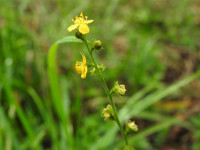
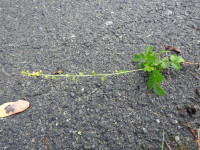
Perennial herbaceous plant, with an erect habit and a height generally ranging between 30 and 60 cm, although it can reach up to one meter. The stem is cylindrical, simple or slightly branched, pubescent with stiff hairs and sometimes glandular in the upper part, giving it a visibly velvety or rough surface. At the base, the plant has a robust woody portion and a short superficial rhizome from which new perennial buds originate.
The leaves are initially arranged in a basal rosette during the first year of life, while in subsequent years leaves appear along the lower part of the stem. They are petiolate, imparipinnate, with 5-9 pairs of oval or lanceolate segments, deeply toothed, alternating with smaller segments. The upper surface of the leaves is glossy dark green, while the lower surface is tomentose, whitish, with dense soft hair; the stipules, violet-colored, are broad, clasp the stem, and have incised and toothed margins.
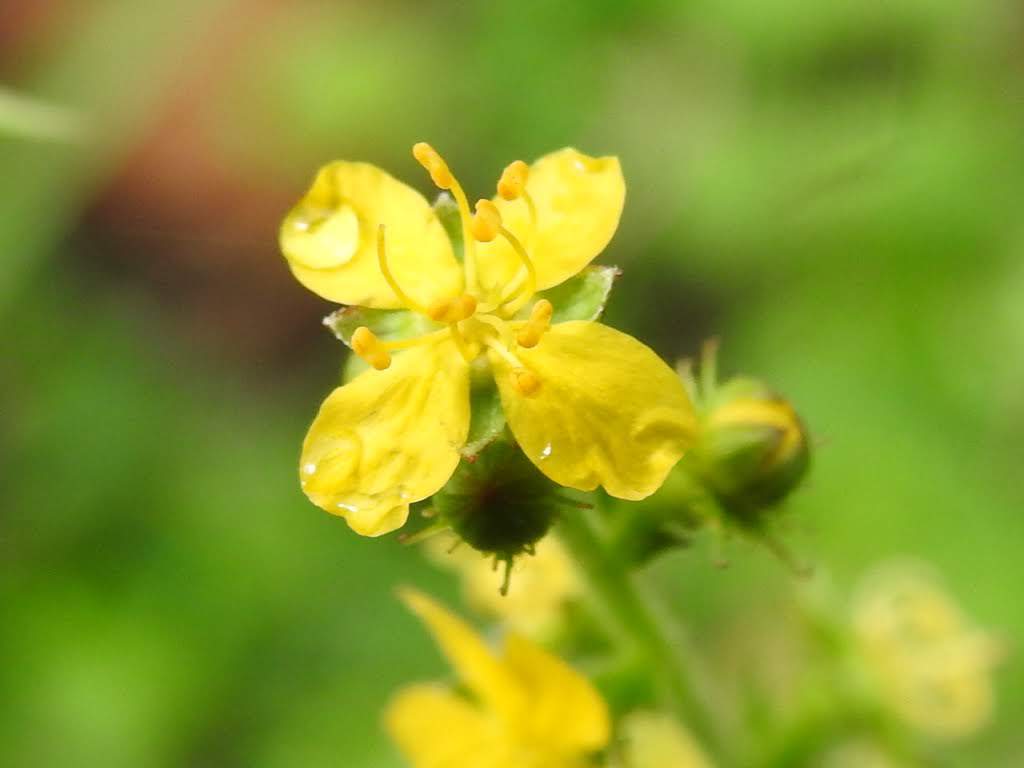
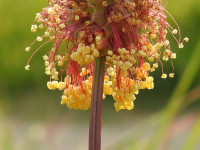
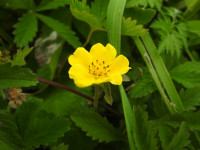
The flowers, of an intense yellow color, are arranged in elongated racemose inflorescences formed by small clusters with short peduncles. Each flower has a corolla composed of five obovate-elliptic petals, deciduous, and five sepals which, after fruiting, transform into a strongly ribbed obconical calyx, about 7 mm long and 3 mm wide, with robust and spreading hooks at the top. These hooks facilitate adhesion to animal hairs for fruit dispersal. The fruits are small woody pomes containing one or two achenes, enclosed in the persistent hypanthium.
The root system consists of a short and superficial rhizome that allows the plant's perennation.
Habitat and distribution
Agrimony is widespread throughout Europe, from Western Europe to Japan, also present in Western and Northern Asia and in some areas of North Africa. In Italy it grows spontaneously in numerous regions, preferring sunny environments such as pastures, roadside edges, uncultivated places, and clearings. It prefers well-drained soils, often calcareous or slightly acidic, and is commonly found from the plains up to 1000 meters altitude, more rarely up to 1500 meters.
In the Mediterranean basin it mainly adapts to hilly and submontane contexts, where it occupies open and bright spaces, avoiding overly shaded or humid areas.
Flowering period
Flowering extends from June to September, with possible variations linked to altitude and latitude. In warmer and lower areas, flowering can start as early as June, while in cooler or mountainous areas it tends to concentrate in July and August.
Ecology and pollination
Agrimony flowers are visited by various pollinating insects, particularly bees, bumblebees, and other hymenopterans, attracted by the intense yellow color and the nectar produced. The plant adopts an entomophilous reproductive strategy, relying on insects to ensure cross-fertilization.
Seed dispersal occurs mainly by epizoochory, thanks to the spreading hooks that attach to animal fur or people’s clothing, thus facilitating the spread of fruits into new environments. This dispersal mode is particularly effective for colonizing suitable nearby surfaces.
Curiosities and traditional uses
Agrimony has a long history of use in folk and herbal medicine. Rich in tannins, resins, and salicylic acid, it is known for its bitter, astringent, tonic, diuretic, anti-inflammatory, and antihemorrhagic properties. Traditionally, it was used to improve liver and bile functions, as well as to treat kidney disorders, colitis, dyspepsia, food allergies, diarrhea, gallstones, cystitis, and rheumatism.
For external use, agrimony has been employed to counteract skin eruptions, small wounds, oral cavity inflammations, conjunctivitis, and hemorrhoids. In Northern Europe, agrimony infusion is appreciated as a tonic and stimulating beverage, similar to tea.
Historically, the flowers were also used to dye hair a bright yellow. Its medicinal properties were known since antiquity: Neolithic finds testify to the presence of fruits in archaeological sites, while Mithridates Eupator, king of Pontus in the 1st century BC, promoted its herbal use for a wide range of ailments, from snake bites to visual problems.
Interestingly, in Bach flower classification, agrimony is associated with those who hide their torments behind apparent cheerfulness, although such use lacks scientific support.
Etymology
The genus name "Agrimonia" derives from the Greek “árgemon”, a term linked to a plant used in antiquity to treat an eye disease called “arghema”. This reflects the ancient properties attributed to the plant in therapeutic contexts, particularly for eye affections.
The specific epithet “eupatoria” is a tribute to Mithridates Eupator, king of Pontus in the 1st century BC, known for his scientific culture and for having recognized the virtues of the plant. Some scholars suggest that the name may also derive from “hepatoria”, indicating a beneficial action on the liver.
The Italian common name "agrimonia comune" reflects its widespread distribution and its belonging to the Rosaceae family.
Sources
- Acta Plantarum - Flora delle regioni italiane (actaplantarum.org)
- Acta Plantarum - Flora delle regioni italiane (scheda di Marinella Zepigi)
- Tela Botanica / H. Coste, Flore descriptive et illustrée de la France
- World Flora Online (WFO)
Characteristics
Scheda botanica
| Famiglia | Rosaceae |
|---|---|
| Fioritura | giugno – luglio |
| Forma biologica | Scapose |
| Habitat | with yellow flowers |
| Uso officinale | Pianta officinale |
Domande frequenti
- Quando fiorisce Agrimony?
- Agrimony fiorisce giugno – luglio.
- Che tipo di pianta è Agrimony?
- Agrimony è una Hemicryptophytes (Scapose) secondo la classificazione di Raunkiaer.
- A quale famiglia appartiene Agrimony?
- Agrimony appartiene alla famiglia botanica Rosaceae.
Where I found it (6 sightings)
Classification
- Kingdom
- Plantae
- Family
- Rosaceae
- Full name
- Agrimonia eupatoria L.
- Synonyms
- incl. Agrimonia eupatoria L. subsp. grandis (Asch. & Graebn.) Bornm.
- Life form
- Hemicryptophytes scapose
Similar species
Search for species with similar characteristicsFurther reading
Noticed an error in the identification? Write to me
Other species of the same family
Rosaceae
Explore
Other species of Rosaceae