Botanical species
Convolvulus althaeoides
L.
Mallow Bindweed
Description
Morphological description
Perennial herbaceous plant, with a semi-climbing or prostrate habit, the Mallow Bindweed has stems ranging from 30 to 60 cm long, with a woody base and twining, flexible herbaceous branches. The plant is completely rough due to patent hairs, often brown in color, which give it a rough and bristly surface to the touch.
The leaves are petiolate, gray-green in color, with blades of variable shape and size along the stem. The lower leaves are irregularly triangular, 15-25 mm wide and 20-30 mm long, with obtusely crenate or lobed margins. The upper leaves, positioned higher, are deeply divided into 5-9 unequal lobes: the central lobe is larger, lanceolate, and coarsely toothed. The leaf arrangement is alternate along the stem.
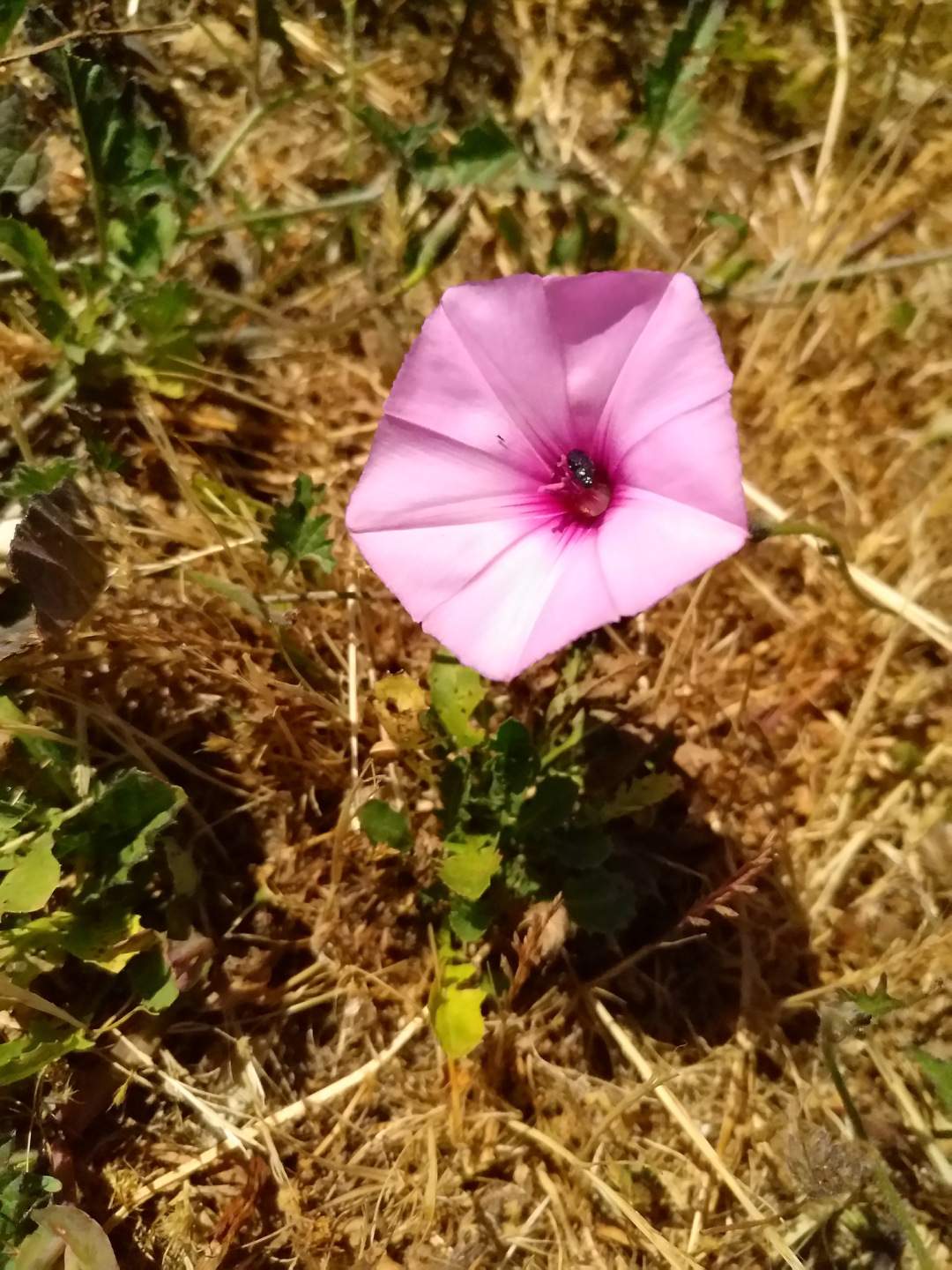
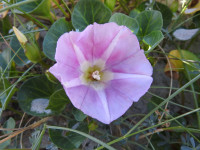
The flowers appear singly or in pairs in the axils of the smaller leaves, with peduncles 6-8 cm long that clearly exceed the size of the leaves themselves. At the base of the peduncles there are two linear bracteoles, located about one fifth from their tip. The calyx is formed by lanceolate and obtuse teeth, 7-10 mm long, with a velvety surface due to the presence of hairs. The corolla is conical, funnel-shaped, with a diameter of 2-3 (up to 4) cm and a length of 2-4 cm; the color is pink-lilac, more intense at the center, with darker shades towards the throat of the flower.
The fruit is a spherical capsule, sometimes slightly acuminate, about 6 mm in diameter, generally containing 1-2 locules with four seeds (tetraspermic capsule). The plant also develops through a long rhizome that allows perennation and vegetative spread.
Habitat and distribution
The Mallow Bindweed is a typically Mediterranean species, with a steno-Mediterranean distribution, limited to coasts and regions with a Mediterranean climate, including areas of central-southern and insular Italy. In Italy it grows in dry and open environments, preferring cliffs, clearings in the Mediterranean scrub, edges of roads and paths, up to an altitude of about 600 meters above sea level.
It prefers sunny exposures and poor, dry soils, often calcareous or rocky, typical of Mediterranean coastal and hilly areas. The presence of rhizomes gives the species a good ability to survive in drought conditions and in shallow soils.
Flowering period
Flowering mainly extends from April to June. In some Mediterranean areas, especially in warmer and coastal zones, flowering can start as early as April and continue until June, with peak flowering in May. The flowering period is relatively short and coincides with the milder and more humid spring months.
Ecology and pollination
The Mallow Bindweed is pollinated by pollinating insects, attracted by the colorful flowers and their funnel-shaped form that facilitates access to nectar and pollen. The pink-lilac corolla, darker at the center, acts as a visual signal for pollinators, which mainly include bees and butterflies.
The plant has a mixed reproductive strategy, being capable of reproducing both sexually, through seed production contained in the capsules, and vegetatively, through the rhizome which allows the formation of new plants even in the absence of pollination. Seed dispersal mainly occurs over short distances, favoring colonization of surrounding habitats.
Curiosities and traditional uses
The Mallow Bindweed is a toxic medicinal species, traditionally used for its laxative and purgative properties. The leaves and roots, collected in spring, contain starch, gums, resins, sugars, salts, and saponins, which confer more potent laxative effects compared to other species of the genus Convolvulus.
In Mediterranean folk medicine, this plant has been used to treat fevers of hepatic-biliary origin, hepatic dropsy, and intestinal inertia disorders due to liver insufficiency. The flowers have also been considered useful as febrifuges.
From a cultural and folkloric point of view, species of the genus Convolvulus have had a symbolic role in antiquity. Pliny the Elder and his contemporaries attributed ritual meanings to these plants, using them for sacrificial ornaments and funeral crowns. It was believed that the spirit of the Nymph Smilace, transformed into a plant for the love of the young Crocus, was trapped in these plants.
It should also be noted that medicinal use must be approached with caution, as the plant is toxic and the information provided is for informational purposes only.
Etymology
The genus name Convolvulus derives from the Latin convólvo, meaning "I roll up," referring to the twining and climbing stems typical of species in this genus.
The specific name althaeoides derives from the Greek term althaéa, which indicated a medicinal plant called Althea, and the suffix -oides meaning "similar to." It thus indicates a plant that resembles Althea, whose Greek name altháino means "I heal," "I cure," highlighting the medicinal value attributed to the species.
The Italian common name "vilucchio rosso" refers to the pink-reddish color of the flowers, a distinctive characteristic of the plant.
Sources
- Prof. S. Pignatti, Flora d'Italia
- Acta Plantarum - Flora delle regioni italiane (scheda di Daniela Longo)
- Tela Botanica / H. Coste, Flore descriptive et illustrée de la France
Characteristics
Scheda botanica
| Famiglia | Convolvulaceae |
|---|---|
| Fioritura | aprile – giugno |
| Forma biologica | Scandent |
| Habitat | with pink flowers, plant with leaves with irregularly toothed margin, plant with a prostrate-ascending habit |
Domande frequenti
- Quando fiorisce Mallow Bindweed?
- Mallow Bindweed fiorisce aprile – giugno.
- Che tipo di pianta è Mallow Bindweed?
- Mallow Bindweed è una Hemicryptophytes (Scandent) secondo la classificazione di Raunkiaer.
- A quale famiglia appartiene Mallow Bindweed?
- Mallow Bindweed appartiene alla famiglia botanica Convolvulaceae.
Where I found it (1 sightings)
Classification
- Kingdom
- Plantae
- Family
- Convolvulaceae
- Full name
- Convolvulus althaeoides L.
- Life form
- Hemicryptophytes scandent
Similar species
Search for species with similar characteristicsFurther reading
Noticed an error in the identification? Write to me
Other species of the same family
Convolvulaceae
Explore
Other species of Convolvulaceae