Botanical species
Aegonychon purpurocaeruleum
(L.) Holub
Blue Gromwell
Description
Morphological description
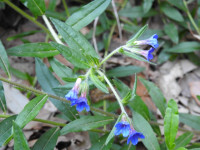
Perennial herbaceous plant belonging to the Boraginaceae family, Blue Gromwell has a scapose habit with erect stems, branched in the upper part, and can reach a height of about 70 cm. The plant has a rhizomatous system that allows it to overwinter and spread, with buds located at ground level.
The stem is covered with a rough pubescence, characterized by coarse hairs that give the plant a slightly rough texture to the touch. The habit can be both erect and, in some parts or conditions, prostrate.
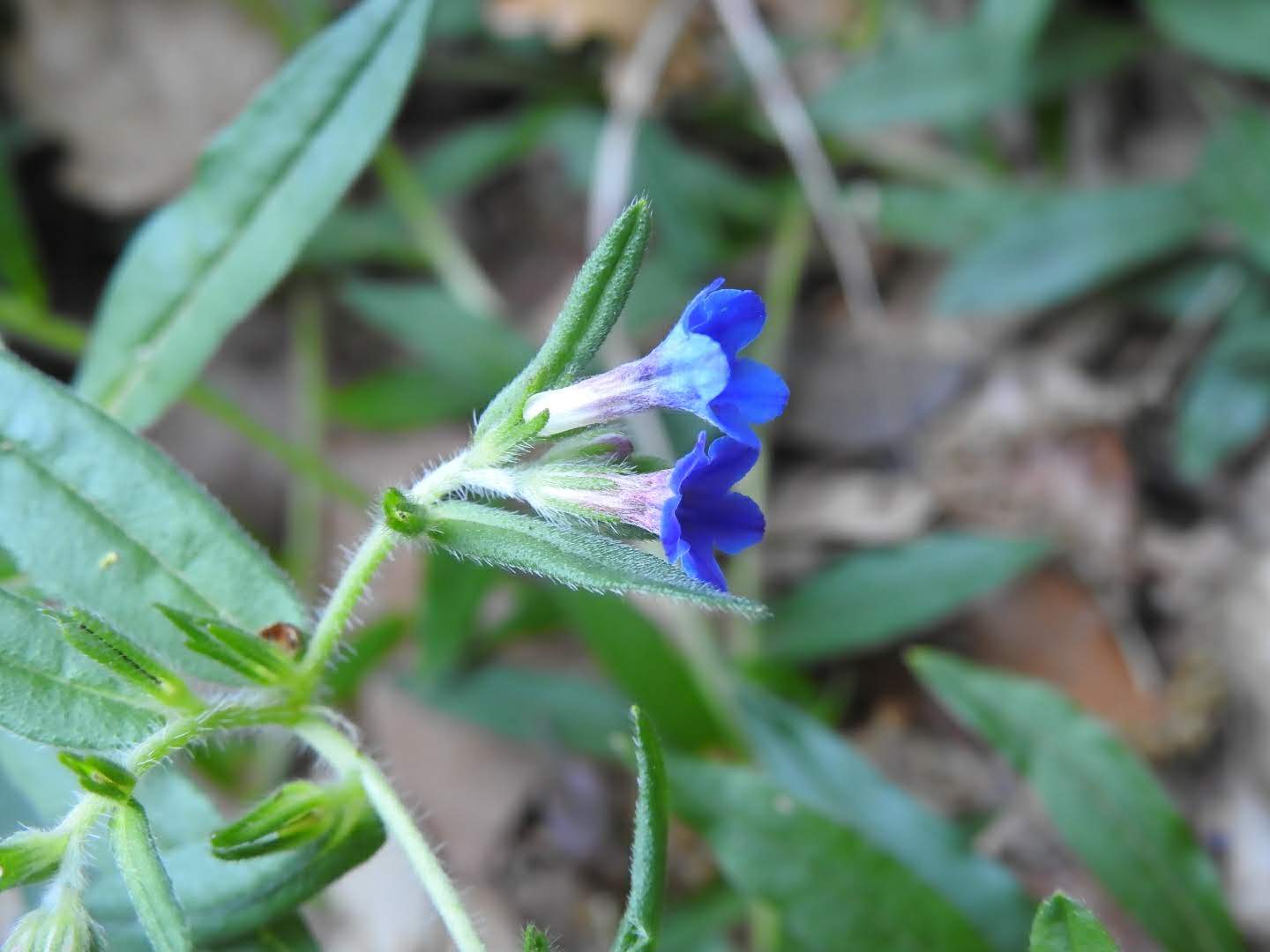
The leaves are lanceolate, with entire margins and an acute tip. The leaf surface is covered with coarse gray-green hairs, while the central vein is very prominent. The leaves also have cilia along the margin, contributing to their recognizability.
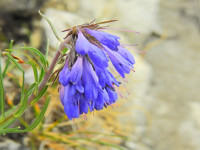
The flowers are grouped in racemes and characterized by a tubular corolla with five petals. The coloration is very particular and distinctive: at the beginning of flowering, the flowers are red-purple, then turn to blue-violet as maturation progresses. This color variation is related to the pH of the flower cell sap, which shifts from acidic (red or pink coloration) to neutral or alkaline (purple or blue coloration). The calyx is persistent, divided into five lobes, and has a hairy surface. The sepals are also five, hairy and purple in color.
The fruits are ovoid, stone-like in texture, smooth and shiny with a whitish coloration. The hardness of the envelope is due to the presence of calcium carbonate and silicate, an element that inspired some of the common names of the species referring to the "stone" seeds.
Habitat and distribution
Blue Gromwell has a Pontic-type range, with the distribution center around the Black Sea and spread in southern Europe, including Italy and other Mediterranean regions. In Italy, it mainly grows on calcareous and humus-rich soils, favoring dry meadows and sparse broadleaf woods.
The species is generally found from the plains up to about 1000 meters altitude, adapting to well-drained soils and sunny exposure. It is typical of forest edges and open grasslands, where the substrate is calcareous and the climate tends to be Mediterranean with mild winters and hot summers.
Flowering period
Flowering extends from April to June, a period that allows the plant to take advantage of spring climatic conditions for pollination and reproduction. Depending on altitude and geographic area, slight variations in peak flowering time can be observed, with specimens from higher zones flowering slightly later.
Ecology and pollination
The reproductive strategy of Blue Gromwell is based on entomogamous pollination: the tubular and colorful flowers attract various pollinating insects, particularly bees and bumblebees, which collect nectar and pollen facilitating cross-fertilization. The color variation of the flowers, from red to blue, may influence attractiveness to pollinating insects, signaling flower maturity and resource availability.
Seed dispersal occurs through the stone-like fruits, which, thanks to their hardness and shininess, can be transported by falling or partly by external agents, although no specific dispersal mechanisms such as wind or animals are known.
Curiosities and traditional uses
This species is also known for its medicinal properties. The roots contain active principles with antioxidant and hepatoprotective effects, which in the past were used in traditional medicine. Moreover, a coloring principle can be extracted from the roots, occasionally used to dye foods, exploiting the natural coloration.
The common name “Erba perla” refers precisely to the hard and pearly fruits, similar to small shiny stones. The color change of the flowers, from initial red to final blue, is a relatively rare and fascinating phenomenon that has attracted attention also in floristic and cultural contexts.
It should be emphasized that the pharmaceutical and food uses described here are for informational purposes: the plant should not be used without prior specialist consultation, as there are not sufficient data for safe medicinal or food use.
Etymology
The generic name Aegonychon derives from the combination of the Greek words αἴξ (aix, aigós), meaning “goat”, and ὄνυξ, ὄνυχος (ónyx, ónichos), meaning “hoof” or “nail”, probably referring to the shape or hardness of the seeds.
The specific name purpurocaeruleum highlights the peculiar characteristic of the species of having flowers that change color during the flowering phase, shifting from purple (purpureus) to blue (caeruleus).
The synonym “Lithospermum” literally means “stone seed”, a reference to the hardness and shininess of the fruits.
The Italian common name “Blue Gromwell” instead recalls the pearly aspect of the fruits and the blue coloration of the flowers in the mature phase.
Sources
- Acta Plantarum - Flora delle regioni italiane (scheda di Marinella Zepigi)
Characteristics
Where I found it (6 sightings)
Classification
- Kingdom
- Plantae
- Family
- Boraginaceae
- Full name
- Aegonychon purpurocaeruleum (L.) Holub
- Synonyms
- Buglossoides purpurocaerulea, Lithospermum purpurocaeruleum
- Life form
- Emicriptofite scapose
Similar species
Search for species with similar characteristicsFurther reading
Noticed an error in the identification? Write to me
Other species of the same family
Boraginaceae
Explore
Other species of Boraginaceae