Botanical species
Cistus salviifolius
L.
Sage-leaved Rock-rose
Description
Morphological description
Shrubby plant belonging to the family Cistaceae, it has a compact bushy habit, with a height generally ranging between 30 and 60 cm, but it can also reach 80 cm. It is an evergreen dwarf phanerophyte, characterized by lignified stems at the base, branched and covered by a dense pubescence formed by stellate and fasciculate hairs, giving the plant a woolly and slightly grey-green appearance.
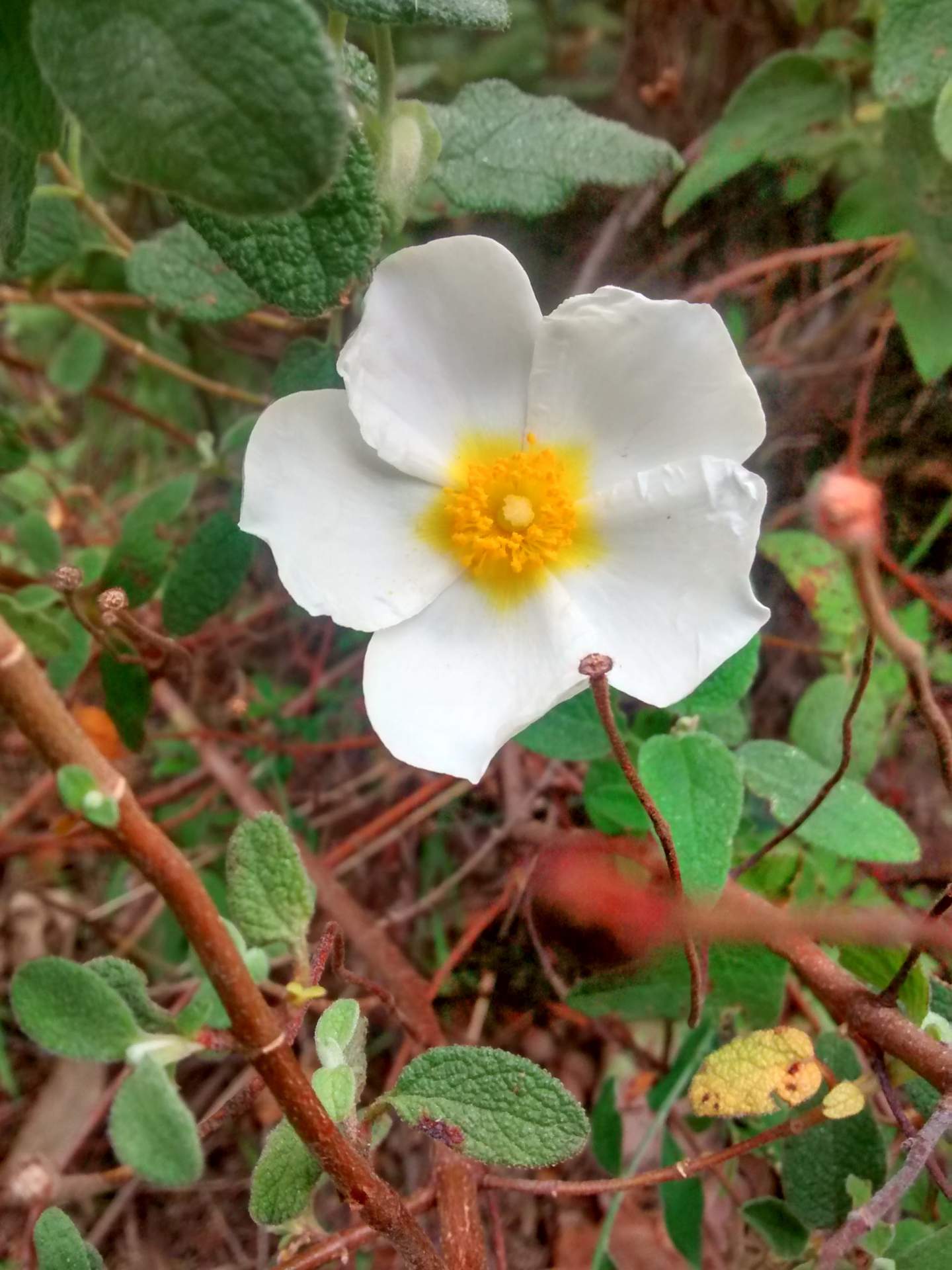
The leaves are arranged oppositely along the branches, oval or elliptical in shape, with sizes ranging from 8 to 40 mm in length and 6 to 20 mm in width. The petiole is short (2-10 mm), sometimes almost absent, and the leaves are covered by a pubescence similar to that of the stems, especially on the lower surface, which appears lighter and green-grey. The leaf blade is wrinkled-reticulate, with a well-evident pinnate venation, entire margin and often rounded apex. The leaves resemble those of salvia, from which the specific name derives.
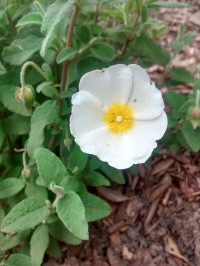
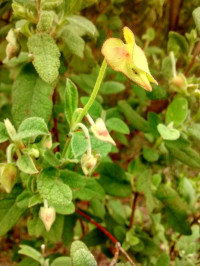
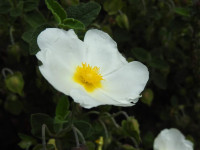
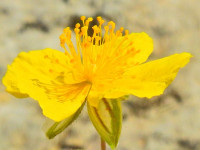
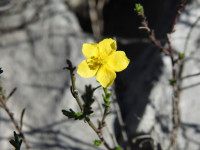
The flowers are hermaphroditic, medium-sized (4-5 cm in diameter), with corollas composed of five pure white petals, sometimes slightly notched at the apex, with a yellowish base (claw). They are solitary or sometimes paired, borne on peduncles 3-10 cm long originating from the leaf axils. The flowers are pendulous before anthesis and appear without bracts. The calyx is persistent, composed of five oval-cordate sepals, with the three outer ones larger and all pubescent. The androecium is numerous, with stamens having thin filaments and yellow-orange anthers. The style is very short or almost absent.
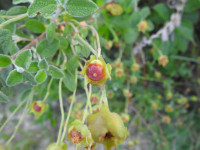
The fruit is a pentagonal capsule, globose and truncated at the apex, brown-black in color and covered by a light pubescence. The capsule opens by 5 valves releasing numerous small, almost smooth seeds of dark brown color.
The root system, although not widely described in the sources, is typical of Mediterranean shrubs, generally well developed to anchor the plant in poor soils and to withstand periods of drought.
Habitat and distribution
Cistus salviifolius is a typical species of the Mediterranean maquis and garrigue, preferring siliceous substrates and acidic soils. It grows mainly in sunny environments, in warm and dry positions, from sea level up to about 1200 m altitude, often at the edge of woods dominated by holm oak. It is common especially in coastal areas and hilly regions of central-southern Italy, but is present throughout almost the entire national territory, including some northern reliefs (for example on the volcanic substrates of the Colli Euganei, where it can be abundant).
Its distribution extends across the European, Asian, and African Mediterranean area, with significant presence also in Corsica. The species is steno-Mediterranean, i.e. confined to the Mediterranean coastal regions, where it forms an integral part of the heliophilous and thermophilous shrub vegetation.
Flowering period
Flowering mainly occurs between April and May, with possible extensions until June in warmer or higher altitude areas. In general, the species follows the typical Mediterranean vegetative cycle, adapting to local climatic conditions.
Ecology and pollination
The plant is entomogamous, i.e. pollinated by insects, which are attracted by the white flowers and petals with yellow base. Pollination is ensured by numerous pollinating insects that visit the flowers to collect pollen and nectar.
An important ecological feature is the species' response to forest fires: the seeds of Cistus salviifolius show significantly increased germination after fire passage. Heat and chemicals released by fire facilitate the breaking of the hard seed coat that protects the seed, or eliminate phenolic substances that hinder embryo oxygenation, thus promoting rapid colonization of burnt and exposed soils.
Seed dispersal occurs mainly by gravity (barochory), with possible secondary contribution from animals or external agents, but no known long-distance dispersal strategies are documented.
Curiosities and traditional uses
The genus name Cistus derives from the Greek “kìst(h)os”, meaning “capsule” or “basket”, probably referring to the leathery shape of the fruit, used since ancient times to extract a resin (labdanum) employed as incense and in medicinal preparations.
The specific epithet “salviifolius” recalls the similarity of the leaves to those of salvia, for their shape and wrinkled texture.
From an ethnobotanical point of view, the plant has been traditionally used for its aromatic and resinous properties, but it is not particularly known for direct food uses. The extracted resin has been used in the past as incense or for therapeutic purposes, exploiting the antiseptic and anti-inflammatory properties attributed to labdanum.
The species is also an important ecological indicator of the Mediterranean maquis and contributes to the biodiversity of coastal shrub ecosystems thanks to its ability to regenerate after fires and to colonize poor soils.
Etymology
The scientific name Cistus salviifolius derives from two elements: “Cistus”, from the ancient Greek “kìst(h)os”, indicating the capsule or basket, alluding to the characteristic fruit type of the genus; and “salviifolius”, from Latin, composed of “salvia” (sage) and “folius” (leaf), describing the similarity of the leaves of this species to those of salvia.
The Italian common name “cisto bianco” refers to the pure white color of the flowers, which constitute one of the distinctive traits of the plant within the genus Cistus, which also includes species with pink or purple flowers.
Sources
- Acta Plantarum - Flora delle regioni italiane (scheda di Anja Michelucci)
- Tela Botanica / H. Coste, Flore descriptive et illustrée de la France
- World Flora Online (WFO)
Characteristics
Where I found it (9 sightings)
Classification
- Kingdom
- Plantae
- Family
- Cistaceae
- Full name
- Cistus salviifolius L.
- Life form
- Fanerofite nano-fanerofite
Similar species
Search for species with similar characteristicsFurther reading
Noticed an error in the identification? Write to me
Other species of the same family
Cistaceae
Explore
Other species of Cistaceae