Botanical family
Solanaceae
Description
Botanical characteristics
Plants belonging to this family appear as herbs, shrubs, lianas, and sometimes small trees, with generally alternate, simple leaves without stipules. The leaf arrangement is usually alternate and their shape can vary widely, from entire to complexly divided.
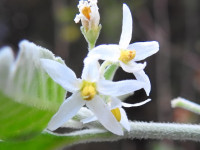
The flowers, generally hermaphroditic and actinomorphic, have a typical structure composed of a calyx and a corolla each made up of five elements. The sepals are partially fused together and often persistent, sometimes forming particular structures around the fruit, as in the genus Physalis. The petals are partially united to form bell-shaped or tubular corollas. The androecium generally consists of 4 or 5 stamens, with anthers that may be fused. The ovary is superior and bicarpellary.
The fruits are very variable and can be berries, as in the tomato (Solanum lycopersicum), or capsules, as in Datura. The seeds are usually flat and rounded with a diameter of 2-4 mm. The flowers are often showy and attract various pollinating insects, including bees, wasps, flies, lepidoptera, and beetles, although some species such as those of the genus Solanum do not produce nectar and attract insects only for pollen.
Distribution and diversity
The family is cosmopolitan, present on all continents, with a higher concentration of species in the American continent. These plants adapt to a wide range of ecosystems, preferring warm and temperate climates rather than environments with intense cold.
The family includes about 102 genera distributed in 8 subfamilies and 16 tribes, for a total of thousands of species. Some of the most important subfamilies are Nicotianoideae, Petunioideae, Solanoideae, and Cestroideae.
Main genera and representative species
Among the best-known and most important genera are Solanum, which includes fundamental species such as the potato (S. tuberosum), the eggplant (S. melongena), and many spontaneous Italian species. The genus Capsicum includes peppers and chili peppers, while Nicotiana is known for tobacco. The genus Physalis is known for its fruits enclosed in a lantern-shaped calyx.
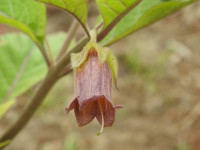
Other notable genera are Datura and Brugmansia, known for their toxicity and the presence of psychoactive alkaloids; Atropa, with the dangerous belladonna; Petunia, widely cultivated as an ornamental plant; and Lycium, which includes Goji berries.
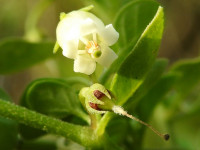
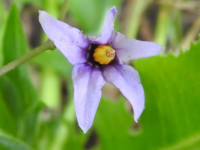
In Italy, several spontaneous species belonging to Solanum (such as S. nigrum), Datura, and Physalis are present, some of which have ecological and cultural importance.
Etymology
The family name derives from the genus Solanum, a term that could derive from the Latin “solamen” (comfort, relief), probably referring to the medicinal properties of some species or to the relief given by the consumption of some cultivated plants.
Curiosities and uses
The family plays a fundamental role for humans, including species of great food importance such as potatoes, tomatoes, eggplants, peppers, and chili peppers. Some plants are used to produce pharmaceutical substances and drugs, such as atropine extracted from belladonna and nicotine from tobacco.
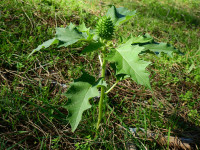
Many species contain psychoactive and toxic alkaloids, especially tropanic ones, such as atropine, scopolamine, and hyoscyamine, as well as solanine, a toxic alkaloid present in green parts of potatoes, tomatoes, and other species. These compounds often have defensive functions against herbivores but can cause severe poisoning in animals and humans. Toxicity is particularly relevant in some species such as Datura stramonium (jimsonweed), which can cause severe neurological effects.
Ecologically, the flowers attract numerous pollinating insects and contribute to the maintenance of biodiversity.
Sources
- Wikipedia
Species of the family
5 species catalogued
Explore
Other botanical families